Skip to content
  • Close
  • Home
  • Events
  • News
  • Donate
  • Contact
  • Who We Are
    • About The Alliance
      • Staff
      • Board of Directors
  • What is Longleaf?
    • The Tree
      • Life Stages
      • The History
      • The Economics
      • The Misconceptions
    • The Ecosystem
      • Built by Fire
      • Habitats
      • Species Diversity
    • Restoration & Management
      • Groundcover Restoration
      • Herbicides
      • Longleaf Regeneration
      • Prescribed Fire
    • Photo Gallery
  • What We Do
    • Restoration Through Partnerships
      • America’s Longleaf
      • Mapping
      • Corporate Sustainability Programs
      • Nurseries
      • Longleaf Enhancement Fund
    • Longleaf Assistance
      • TLA Planting Fund
    • Conserving Diverse Forests
      • Rare Species
      • Forests & Water
    • Education & Outreach
      • Longleaf Academy Program
      • Biennial Longleaf Conference
      • Burner Bob®
      • Next Generation
      • The Longleaf Leader
      • The Longleaf Library
      • The Owen Fellowship
  • What You Can Do
    • Support The Alliance
    • Conservation Partners
    • Get Involved
    • Merchandise
    • Subscribe
logo
  • Contact
  • Events
  • Donate
search
newsearch

About The Alliance

HomeWho We AreAbout The Alliance

About The Alliance

Our mission is to ensure a sustainable future for longleaf pine ecosystems.

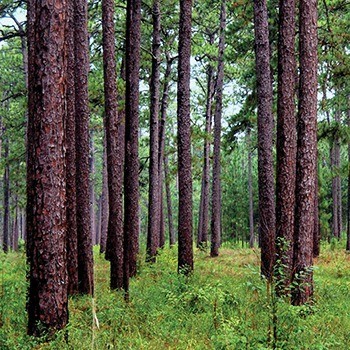
Longleaf pine ecosystems historically dominated the Southeast, stretching from Eastern Texas to Southern Virginia. With only a fraction of longleaf remaining today, The Longleaf Alliance strives to promote functional longleaf forest ecosystems where appropriate in today's southern forests.
imgtree

Science-based outreach provides assistance across the longleaf range.

The Longleaf Alliance works throughout the range of longleaf pine to emphasize the ecological, economic, social, and historic importance of this once vast ecosystem. Since its inception, The Longleaf Alliance has used outreach, education, research, direct involvement, and hands-on experience to develop and provide the best available information and support in an unbiased manner to landowners, managers, policy makers, educators, and the public.

Collaborative partnerships strengthen our work.

The Longleaf Alliance was established in 1995 by Rhett Johnson and Dean Gjerstad as interest in longleaf ecosystems and the longleaf pine tree itself was growing rapidly, but there was no outlet available for people to connect, learn, and share their efforts. TLA was created with the express purpose of coordinating a partnership between private landowners, forest industries, state and federal agencies, conservation groups, researchers, and other enthusiasts interested in managing and restoring longleaf pine forests for their ecological and economic benefits.

All are welcome.

Since its inception, The Longleaf Alliance has served diverse communities of landowners, managers, policy makers, partners, educators, students and more, across the natural longleaf range and beyond. Just as every tract of land and habitat is unique, so are our staff and the people we serve. We strive to create an organization where everyone interested in longleaf feels welcome, respected, and valued for the perspectives they bring to the table.

Explore The Longleaf Alliance's 30 Year History

Staff

  • Carol Denhof

    President

  • Lynnsey Basala

    Vice President for Development

  • Lisa Lord

    Vice President for Operations

  • Ryan Bollinger

    Regional Initiatives Director & LIT Consul

View all

board

  • William Owen

    Chair

  • Patrick Franklin

    Vice Chair

  • Ruth Cook

    Secretary/Treasurer

  • David Dyson

View all

From our feed

Join the Longleaf Conference Field Tour on October Join the Longleaf Conference Field Tour on October 29th to experience the northernmost reaches of the longleaf pine ecosystem and hear firsthand from the partners and landowners leading restoration efforts across Virginia.Departing from Williamsburg Lodge, passengers will experience a short ferry boat ride across the James River, to the heart of Virginia’s pineywoods.🌲Piney Grove Preserve – See longleaf restoration in action at this 4,000-acre preserve, home to the most northern population of Red-cockaded Woodpeckers and a thriving, fire-maintained landscape rich in wildlife.🦝Raccoon Creek Pinelands – Over 1,400 acres of longleaf pine have been planted on the 2,000-acre private property, seeing a resurgence of native plant and wildlife species (especially bobwhite quail). Visit notable projects including a longleaf underplanting demonstration and forest carbon study before enjoying lunch under the pavilion built out of sustainable-sourced old-growth longleaf pine.🌱Sussex Nursery – Go behind the scenes at Virginia’s longleaf seedling production hub and learn how local genetics are supporting the future of longleaf restoration.Register for the field tour (and other Biennial Longleaf Conference offerings) at longleafconference.com > registration (link in bio).
The people behind longleaf restoration deserve the The people behind longleaf restoration deserve the spotlight! 🌲✨ We're honored to recognize the 2026 Regional Longleaf Award recipients at the 16th Biennial Longleaf Conference, October 27-30 in Williamsburg, Virginia. Meet this year's recipients and follow along as we celebrate each honoree in the weeks ahead >> longleafalliance.org > news (link in bio)
Multi-Aged Longleaf Management and Markets Field D Multi-Aged Longleaf Management and Markets Field Day 🌲Join us at the Solon Dixon Forestry Education Center in Andalusia, Alabama on October 8th. What you’ll learn:– Management of Multi-aged Longleaf– Timber Stand Regeneration Considerations– Prescribed Fire Timing and Rotations– Harvest and Market Insights– Cost-share Programs for LandownersLunch is on us! RSVP at longleafalliance.org > events (link in bio)
Red-cockaded Woodpeckers (RCWs, Leuconotopicus bor Red-cockaded Woodpeckers (RCWs, Leuconotopicus borealis) are unique among woodpeckers, nesting only in LIVING pine trees rather than dead ones. Mature longleaf pines infected with red heart disease (Porodaedalea pini) are ideal cavity trees because the fungus softens the interior heartwood, making excavation easier. As mature pine forests declined due to logging, development, and fire suppression, RCW populations became increasingly fragmented, and the fire-dependent ecosystems they relied on were disappearing. Biologists have been working since the 1970s to secure the future of this iconic species. One of the most important factors in its recovery was ensuring adequate nesting habitat. Early efforts focused on drilling cavity starts in suitable trees, eventually leading to the development and installation of artificial cavity inserts. While artificial cavities are not a long-term solution for sustaining RCW populations, they have played a critical role in the species’ recovery. After 51 years on the endangered species list, the Red-cockaded Woodpecker was down-listed to threatened in 2024. This significant milestone reflects decades of collaborative conservation efforts across the Southeast and demonstrates the success of targeted strategies to protect and improve habitat for rare species. 📷 Photo credits: Michael Hubbard, Brady Beck, and Macey Kenney #Longleafpine #conservation #rcw #goodfire #redcockadedwoodpecker

Conservation partners

Manulife

Manulife

PRT

PRT

RMS

RMS

Norfolk Southern

Norfolk Southern

Bartlett

Bartlett

advantage

advantage

Blanton

Blanton

Drax

Drax

Enviva

Enviva

Graphic Packaging International

Graphic Packaging International

Kronospan

Kronospan

  • Home
  • Who We Are
  • What is Longleaf?
  • What We Do
  • What You Can Do
  • The Longleaf Library
  • Photo Gallery
  • Merchandise
  • Events
  • News
  • Donate
  • Contact
  • Subscribe
footer-logo

12130 Dixon Center Road
Andalusia, Alabama 36420
Phone: 334.427.1029


©2025 The Longleaf Alliance
HLJ Creative Web Design