Skip to content
  • Close
  • Home
  • Events
  • News
  • Donate
  • Contact
  • Who We Are
    • About The Alliance
      • Staff
      • Board of Directors
  • What is Longleaf?
    • The Tree
      • Life Stages
      • The History
      • The Economics
      • The Misconceptions
    • The Ecosystem
      • Built by Fire
      • Habitats
      • Species Diversity
    • Restoration & Management
      • Groundcover Restoration
      • Herbicides
      • Longleaf Regeneration
      • Prescribed Fire
    • Photo Gallery
  • What We Do
    • Restoration Through Partnerships
      • America’s Longleaf
      • Mapping
      • Corporate Sustainability Programs
      • Nurseries
    • Longleaf Assistance
      • TLA Planting Fund
    • Conserving Diverse Forests
      • Rare Species
      • Forests & Water
    • Education & Outreach
      • Longleaf Academy Program
      • Biennial Longleaf Conference
      • Burner Bob®
      • Next Generation
      • The Longleaf Leader
      • The Longleaf Library
      • The Owen Fellowship
  • What You Can Do
    • Support The Alliance
    • Conservation Partners
    • Get Involved
    • Merchandise
    • Subscribe
logo
  • Contact
  • Events
  • Donate
search
newsearch

Education & Outreach

HomeWhat We DoEducation & OutreachBurner Bob®

Meet Burner Bob®

Burner Bob® is a Bobwhite Quail who lives in the longleaf forest with other animal friends such as gopher tortoises, indigo snakes, and Red-cockaded Woodpeckers. He devotes his life to explaining that the longleaf forest with its many plants and animals has evolved over time to being burned on a regular basis. The forests need fire to survive and thrive so Burner Bob® shows people how to burn them safely.

Burner Bob® – A Cool Dude with a Hot Message!®

Pyrodiversity Enkindles Biodiversity™

Burner Bob® and The Longleaf Alliance support prescribed fire to create healthy habitats for the plants and animals that call the longleaf ecosystem home.

Plant diversity in regularly burned longleaf pine habitats rivals the diversity in tropical rainforests. An area with a variety in fire characteristics — or pyrodiversity — will support more species of plants and, in return, more animals.

Walk in the Woods  | Save the Indigo |  Coloring Books  |  Request An Appearance

A Walk in the Woods with Burner Bob® & Friends

Take a walk with Burner Bob®, prescribed burner Shan Cammack, and their spunky fire ecologist friends as they visit The Fire Forest. 🔥🌲🔥

Along the way, they meet Burner Bob®'s plant and animal friends including the longleaf pine, gopher tortoise, and indigo snake, who thrive when their longleaf home is burned regularly.

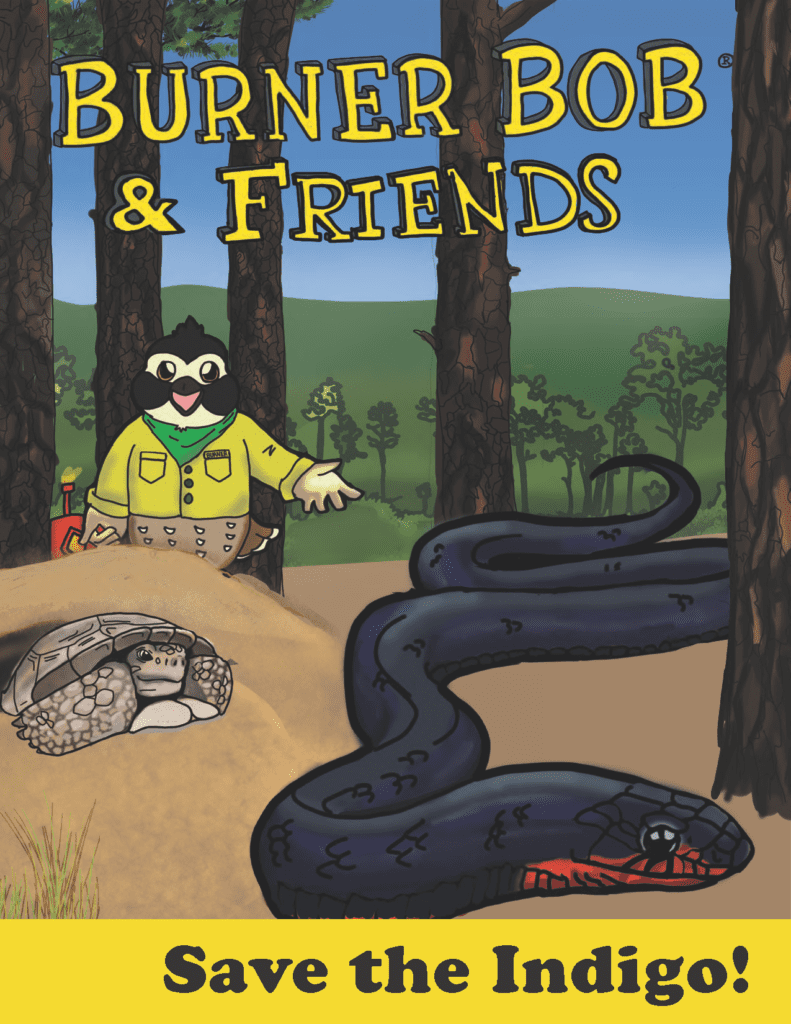
Save the Indigo - NEW Video and Coloring Book!

Introducing the Indigo is an award-winning short film for young people about a threatened species in the Southeast - the eastern indigo snake.

The longest snake native to North America, the indigo faces loss of habitat and other challenges.

Watch Now

Learn more about the eastern indigo snake and his friend the gopher tortoise with Burner Bob® & Friends newest coloring book - Save the Indigo.
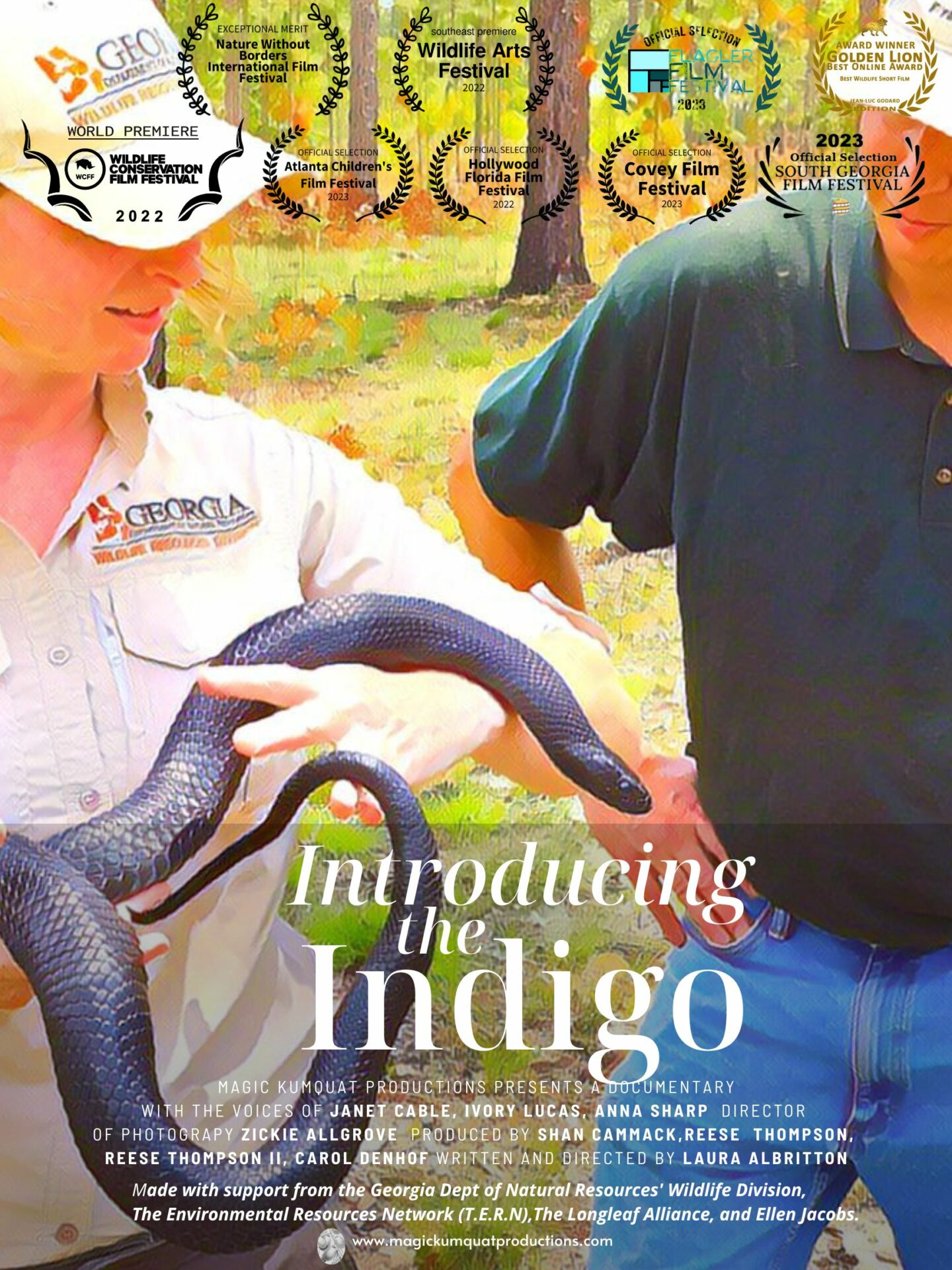
Introducing the Indigo

Burner Bob® & Friends Educational Resources

Learn more about Bob and why his longleaf home needs prescribed fire in his coloring book series Burner Bob® & Friends.
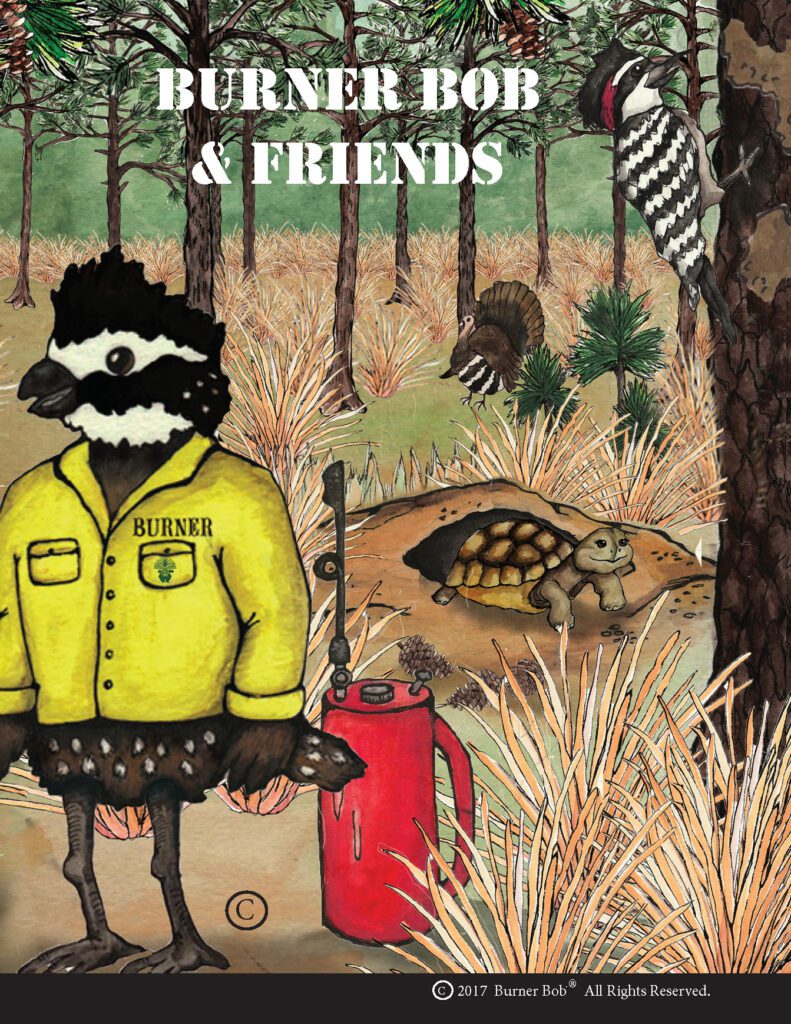
Burner-Bob-and-Friends_Coloring Book
Burner Bob® & Friends
Save the Indigo Coloring Book Cover
Save the Indigo

Request FREE printed copies of Burner Bob®'s coloring books using this form.

If your organization needs a special printing of the coloring book for distribution, please use this form instead.

Spread the Flame

Would you like to meet Burner Bob® in person?  Please contact us to request an appearance at your next fire or longleaf related event.

Burner Bob® Appearance request form

BROWSE THIS SECTION

  • Restoration Through Partnerships
    • America’s Longleaf
    • Mapping
    • Nurseries
    • Longleaf Enhancement Fund for Seed & Seedling Production
    • Corporate Sustainability Programs
  • Longleaf Assistance
  • Conserving Diverse Forests
    • Rare Species
    • Forests & Water
    • Georgia Sentinel Landscape Prescribed Fire Program
  • Education & Outreach
    • Longleaf Academy Program
    • Biennial Longleaf Conference
    • Burner Bob®
    • Next Generation
    • The Longleaf Leader
    • The Longleaf Library
    • The Owen Fellowship

From our feed

The Longleaf Alliance is hiring! We're looking f The Longleaf Alliance is hiring! We're looking for a Longleaf Forester and two Ecosystem Support Team members to join our staff in NW Florida and South Alabama, home to the largest remaining concentration of old-growth longleaf pine, offering a chance to work in one of the most ecologically significant longleaf landscapes in the Southeast.Details at longleafalliance.org > get-involved (link in bio)📷 The Ecosystem Support Team carries out a wide range of conservation activities, including installing artificial cavities to increase nesting opportunities for Red-cockaded Woodpeckers. The team supports partners in the Gulf Coastal Plain Ecosystem Partnership in implementing a variety of ecosystem management projects – prescribed burning, invasive species control, mechanical treatments, ecological monitoring, rare species recovery, and more. [Alan Patterson, EST member, places a new cavity insert in a pine tree. Photo by Michael Hubbard.]
Carnivorous pitcherplants don’t just trap their di Carnivorous pitcherplants don’t just trap their dinner — they also host a surprising array of wildlife. It’s not uncommon to find a treefrog tucked into a long, tubular pitcher, using it as shelter while waiting for insects drawn in by the plant’s nectar. In return, the frogs leave behind nitrogen-rich “deposits” that the plant desperately needs to thrive in nutrient-poor soils.📷Pinewoods treefrog perches on top a yellow pitcherplant [Julianne Jones]#WorldCarnivorousPlantDay #AmphibianWeek
Wetlands are important functional communities with Wetlands are important functional communities within the longleaf landscape, providing critical water storage and filtering services and serving as high-quality habitat for wildlife and native plants.The Coastal Plain alone has over a half million bays and isolated wetlands which provide essential breeding habitat for amphibians. Because amphibians rely on clean water, they’re powerful indicators of ecosystem health.It’s no coincidence that we celebrate #AmphibianWeek during American Wetlands Month! Photos by Julianne Jones, Ashlynn Moretti, and Rob Tiffin.
Amphibians are some of the coolest creatures on th Amphibians are some of the coolest creatures on the planet, and this Amphibian Week we’re celebrating them all! 🐸 Anura – frogs & toads 🦎 Urodela (or Caudata) – salamanders & newts 🪱 Gymnophiona – caecilians, legless and often underground (but not native to the U.S.) 🆚 Amphibian or Reptile?While both are cold‑blooded, amphibians have moist, permeable skin, undergo metamorphosis (full or partial), and often lay eggs in wet areas. Reptiles, on the other hand, have dry, scaly skin, typically lay eggs on land, and include crocodilians, turtles, lizards/snakes, and tuataras (found only in New Zealand)🐢🐍.Photos by Julianne Jones and Ashlynn Moretti; Illustrations by Ashlynn Moretti#AmphibianWeek #amphibians #frog #salamander

Conservation partners

Manulife

Manulife

PRT

PRT

RMS

RMS

Norfolk Southern

Norfolk Southern

Bartlett

Bartlett

advantage

advantage

Blanton

Blanton

Drax

Drax

Enviva

Enviva

Graphic Packaging International

Graphic Packaging International

Kronospan

Kronospan

  • Home
  • Who We Are
  • What is Longleaf?
  • What We Do
  • What You Can Do
  • The Longleaf Library
  • Photo Gallery
  • Merchandise
  • Events
  • News
  • Donate
  • Contact
  • Subscribe
footer-logo

12130 Dixon Center Road
Andalusia, Alabama 36420
Phone: 334.427.1029


©2025 The Longleaf Alliance
HLJ Creative Web Design