Skip to content
  • Close
  • Home
  • Events
  • News
  • Donate
  • Contact
  • Who We Are
    • About The Alliance
      • Staff
      • Board of Directors
  • What is Longleaf?
    • The Tree
      • Life Stages
      • The History
      • The Economics
      • The Misconceptions
    • The Ecosystem
      • Built by Fire
      • Habitats
      • Species Diversity
    • Restoration & Management
      • Groundcover Restoration
      • Herbicides
      • Longleaf Regeneration
      • Prescribed Fire
    • Photo Gallery
  • What We Do
    • Restoration Through Partnerships
      • America’s Longleaf
      • Mapping
      • Corporate Sustainability Programs
      • Nurseries
    • Longleaf Assistance
      • TLA Planting Fund
    • Conserving Diverse Forests
      • Rare Species
      • Forests & Water
    • Education & Outreach
      • Longleaf Academy Program
      • Biennial Longleaf Conference
      • Burner Bob®
      • Next Generation
      • The Longleaf Leader
      • The Longleaf Library
      • The Owen Fellowship
  • What You Can Do
    • Support The Alliance
    • Conservation Partners
    • Get Involved
    • Merchandise
    • Subscribe
logo
  • Contact
  • Events
  • Donate
search
newsearch

Conserving Diverse Forests

HomeWhat We DoConserving Diverse ForestsForest & Water

Forests & Water

Healthy forests produce safe and reliable drinking water.

Two-thirds of the freshwater in the United States comes from forested watersheds. Watersheds that are healthy and well-managed, produce clean water. That means that well managed, fire-maintained longleaf ecosystems help to protect our water supply.

Clean water is less expensive to treat, benefits local economies and communities, provides wildlife habitat, scenic vistas, carbon sequestration, recreational opportunities, and human health and well-being.

Georgia and South Carolina – Lower Savannah River Watershed

Forest landowners are a key part of supporting health watersheds and our drinking water. In South Carolina and Georgia, The Longleaf Alliance partners with the Southeastern Partnership for Forests and Water, the Savannah River Clean Water Fund, and the Georgia and South Carolina Forestry Commissions to provide assistance to forest landowners.
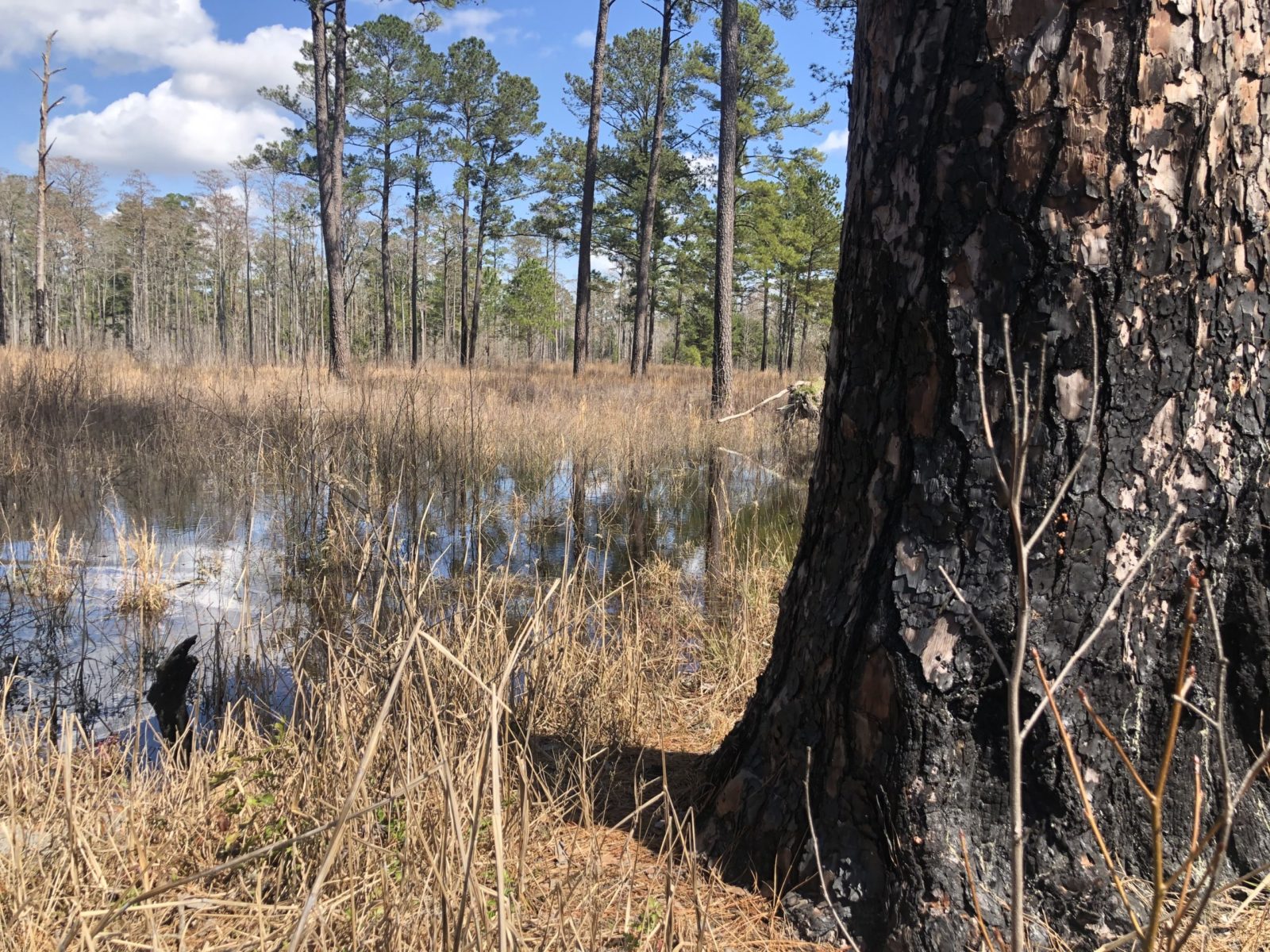
Wetland_Lisa Lord (1)

We work closely with our natural resource partners, land trusts, drinking water utilities, and landowners to manage and permanently protect and restore forests, with a focus on lands that contribute to protecting water quality in the lower Savannah River Basin. The overall goal is to retain 60% of the forest cover in the watershed.

Savannah River Web Mapping Application
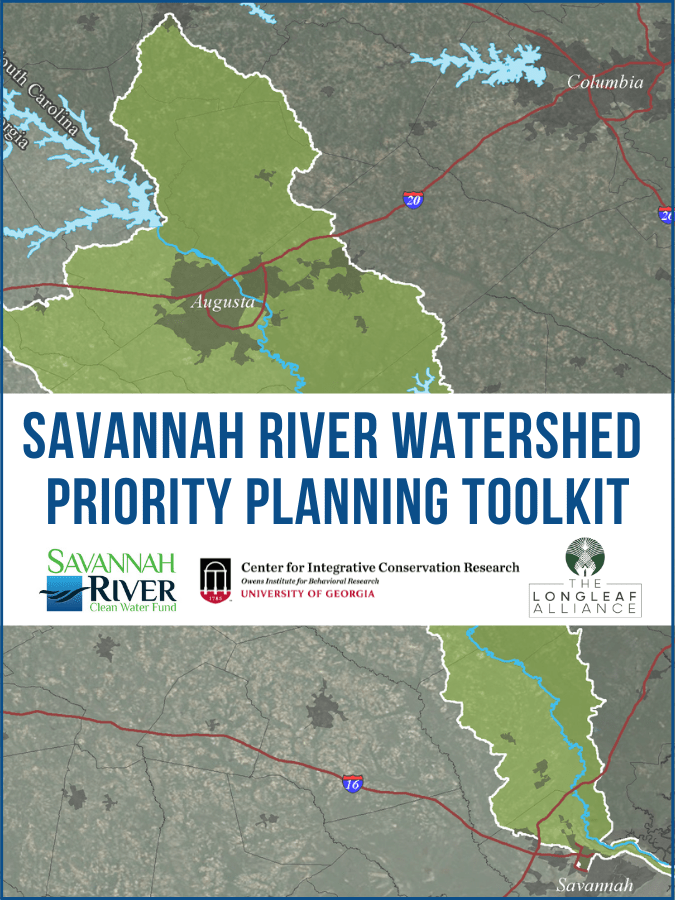
Savannah River Watershed Priority Planning Toolkit

The Savannah River Watershed Conservation Priority Index (CPI) Map shows the areas of greatest importance for the conservation of clean drinking water by protecting health forests in the lower Savannah River watershed.

Savannah River Conservation Priority Map
User Guide - ArcGIS Online Web Mapping
Data Use Agreement & Request Form

Additional Resources

Longleaf Pine: A Tall Drink of Water

Healthy Forests = Clean Water Fact sheet

Clean Water Fact Sheet

BROWSE THIS SECTION

  • Restoration Through Partnerships
    • America’s Longleaf
    • Mapping
    • Nurseries
    • Longleaf Enhancement Fund for Seed & Seedling Production
    • Corporate Sustainability Programs
  • Longleaf Assistance
  • Conserving Diverse Forests
    • Rare Species
    • Forests & Water
    • Georgia Sentinel Landscape Prescribed Fire Program
  • Education & Outreach
    • Longleaf Academy Program
    • Biennial Longleaf Conference
    • Burner Bob®
    • Next Generation
    • The Longleaf Leader
    • The Longleaf Library
    • The Owen Fellowship

From our feed

This is what land stewardship looks like. See i This is what land stewardship looks like. See it for yourself at the West Florida Fire & Nature Festival on March 7th, where you can experience a live prescribed burn demonstration and learn how fire professionals use good fire to protect people, property, and nature.Don’t just watch fire work, come learn why it matters!#goodfire #fireecology #prescribedfire #rxfire #floridawildlife #longleafalliance
Many of Florida’s most iconic species depend on fi Many of Florida’s most iconic species depend on fire to thrive. Prescribed burns help keep habitats healthy—opening forests, encouraging herbaceous plant growth, and creating the conditions that our native wildlife needs to thrive.Come celebrate the science, stewardship, and stories behind good fire at the West Florida Fire & Nature Festival on March 7th in Pensacola, FL!Thank you to Brady Beck, Samantha Dillon, Julianne Jones, Haley Welshoff, and Jacob Barrett for contributing these beautiful photos.#goodfire #prescribedfire #longleaf #firedependent #wildlife #florida #floridawildlife #rxfire #nativeplants #keepflwild
Thank you to everyone who followed along with #WeL Thank you to everyone who followed along with #WeLoveOurMembers last week!!!Congrats to our lucky giveaway winners...❤ Bill Pickens❤ Nic Smith❤ Tate ErvinWe ask that our winners reach out to Casey at office@longleafalliance.org to confirm your t-shirt size and preferred shipping address to claim your prizes. P.S. If you want to snag your own "I Support Good Fire" shirt or sticker, they will be available for purchase at the West Florida Fire & Nature Festival on March 7th in Pensacola!#WLOM #WLOMW2026 #BeOurValentine #ForTheLoveOfLongleaf #WeHeartLongleaf #LongleafLove #RestoreLongleaf #longleafalliance #longleafpineecosystem #longleaf #longleafpine #longleafpines #Pinuspalustris
The longleaf pine ecosystem is home to some iconic The longleaf pine ecosystem is home to some iconic southern birds — each with its own special range:Northern Bobwhite Quail – Famous for their “bob WHITE!” call, these ground dwelling birds love open habitat with native forbs and good cover. In the Southeast, that often means fire-maintained longleaf pine habitats make a great place to call home!Red cockaded Woodpecker – The only species of woodpecker that creates cavities in living pine trees! While RCWs are longleaf specialists, they are also found in other open pine habitats and were historically found as far north as New Jersey and into the Mid-West.Bachman’s Sparrow – Also known as the Pinewoods Sparrow, this songbird thrives in open, frequently burned pine woodlands where it sings its rich, whistled tune. Bachman's Sparrows walk and hop along the ground foraging for seeds and insects.Three different birds but all find a home in longleaf, all rely on fire-maintained habitat, and all are species of conservation concern. #WLOM2026 Trivia answer – Map B depicted the species range of the bobwhite quail.#BirdsOfThePine #WeLoveOurMembers #WLOMW2026 #BeOurValentine #ForTheLoveOfLongleaf #WeHeartLongleaf #LongleafLove #RestoreLongleaf #longleafalliance #longleafpineecosystem #longleaf #longleafpine #longleafpines #Pinuspalustris

Conservation partners

Manulife

Manulife

PRT

PRT

RMS

RMS

Norfolk Southern

Norfolk Southern

Bartlett

Bartlett

advantage

advantage

Blanton

Blanton

Drax

Drax

Enviva

Enviva

Graphic Packaging International

Graphic Packaging International

Kronospan

Kronospan

  • Home
  • Who We Are
  • What is Longleaf?
  • What We Do
  • What You Can Do
  • The Longleaf Library
  • Photo Gallery
  • Merchandise
  • Events
  • News
  • Donate
  • Contact
  • Subscribe
footer-logo

12130 Dixon Center Road
Andalusia, Alabama 36420
Phone: 334.427.1029


©2025 The Longleaf Alliance
HLJ Creative Web Design