Skip to content
  • Close
  • Home
  • Events
  • News
  • Donate
  • Contact
  • Who We Are
    • About The Alliance
      • Staff
      • Board of Directors
  • What is Longleaf?
    • The Tree
      • Life Stages
      • The History
      • The Economics
      • The Misconceptions
    • The Ecosystem
      • Built by Fire
      • Habitats
      • Species Diversity
    • Restoration & Management
      • Groundcover Restoration
      • Herbicides
      • Longleaf Regeneration
      • Prescribed Fire
    • Photo Gallery
  • What We Do
    • Restoration Through Partnerships
      • America’s Longleaf
      • Mapping
      • Corporate Sustainability Programs
      • Nurseries
    • Longleaf Assistance
      • TLA Planting Fund
    • Conserving Diverse Forests
      • Rare Species
      • Forests & Water
    • Education & Outreach
      • Longleaf Academy Program
      • Biennial Longleaf Conference
      • Burner Bob®
      • Next Generation
      • The Longleaf Leader
      • The Longleaf Library
      • The Owen Fellowship
  • What You Can Do
    • Support The Alliance
    • Conservation Partners
    • Get Involved
    • Merchandise
    • Subscribe
logo
  • Contact
  • Events
  • Donate
search
newsearch

The Ecosystem

HomeWhat is Longleaf?The EcosystemSpecies Diversity

Species Diversity

Though typically thought of as a sandhill species, longleaf pine once covered about 2/3 of the Southeast. At a landscape level, longleaf pine forests cover a variety of different habitat types (mountains, rolling hills, sandhills, and flatwoods). A longleaf pine stand maintained by fire is among the most biologically diverse habitats in North America.

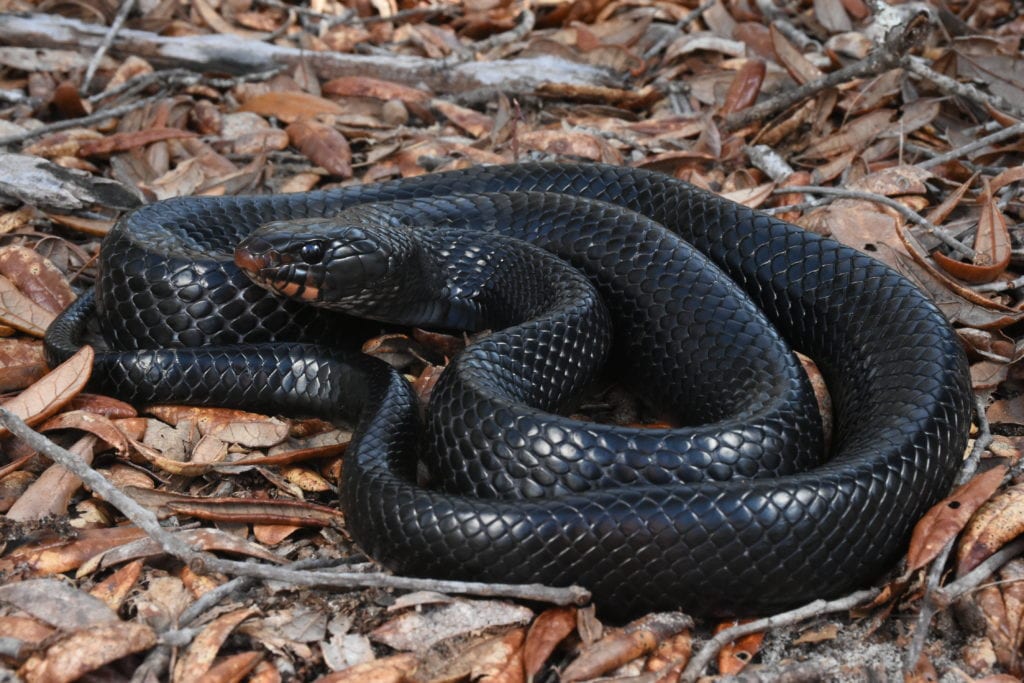
Well-managed longleaf pine forests provide quality habitat for a variety of desirable plant and animal species. For example, bobwhite quail populations thrive in frequently burned longleaf pine stands, which typically support high legume populations. Fox squirrels, wild turkeys, whitetail deer, countless varieties of songbirds, and many native butterflies flourish in longleaf pine forests as well. Reptiles and amphibians are frequent inhabitants of these forests, many found nowhere else.
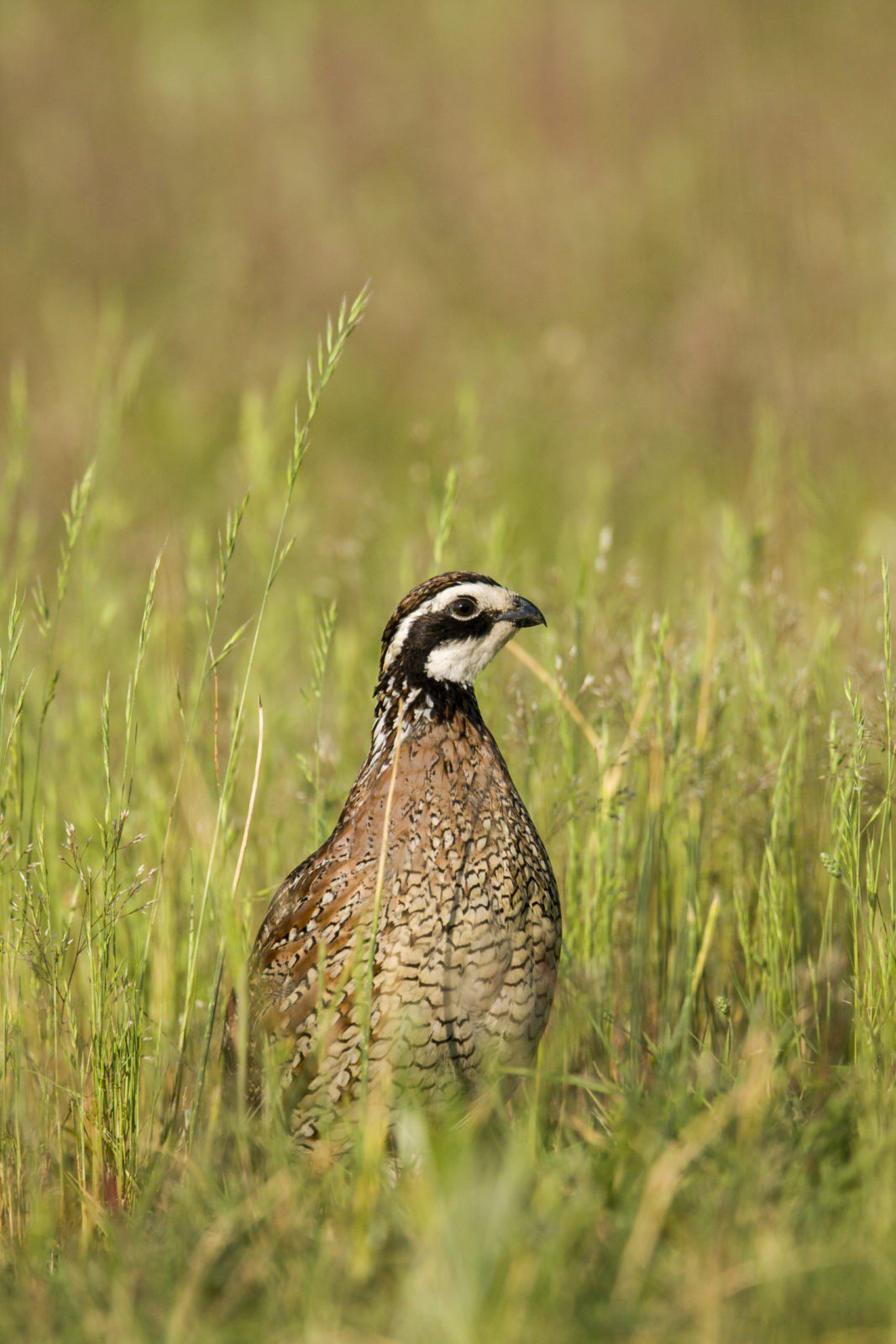
Prescribed burning to maintain quail habitat benefits many habitats, including longleaf pine savannas. Photo by Brady Beck.
The Eastern indigo snake uses both the uplands and the wetlands within the longleaf landscape. Photo by Ben Stegenga.
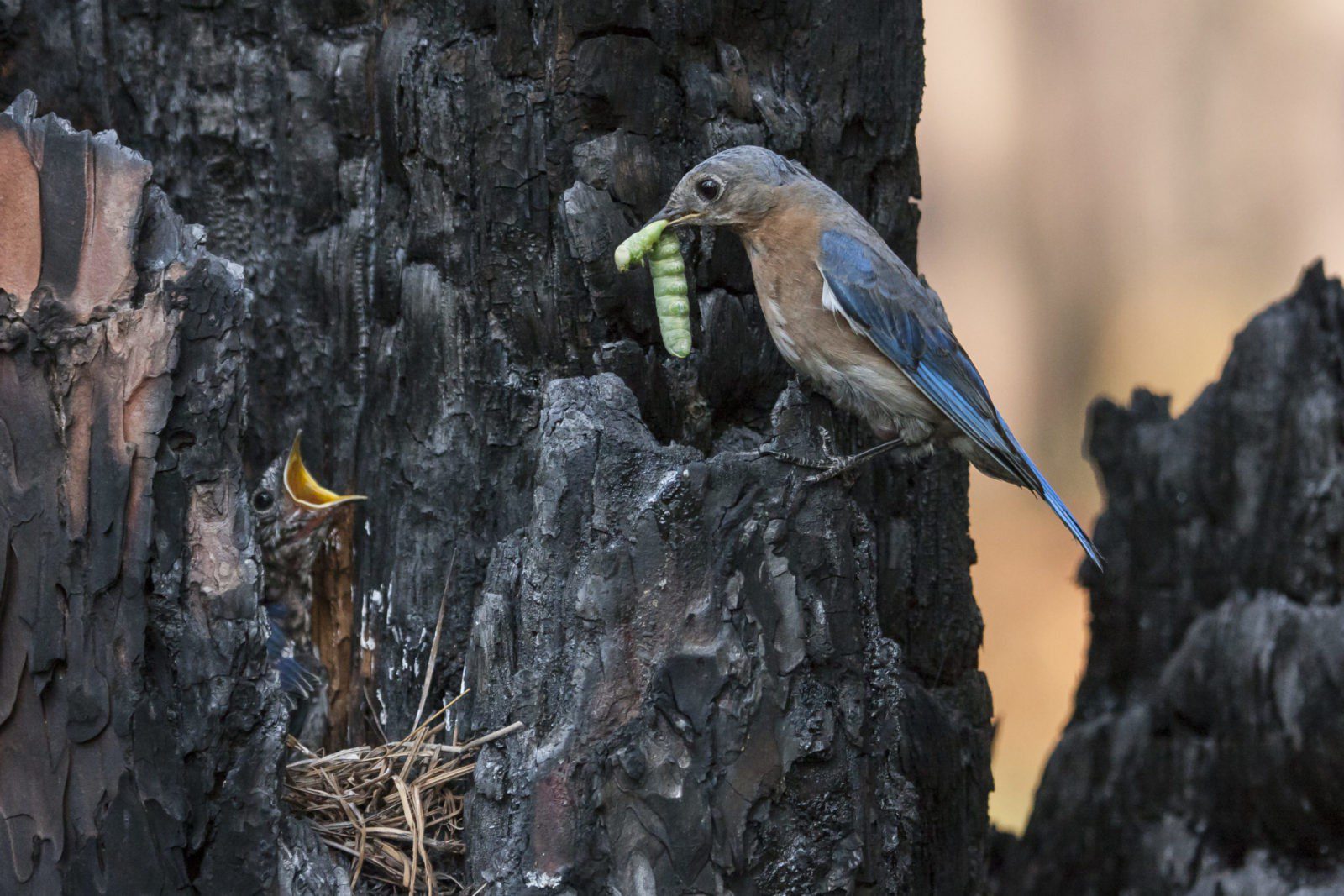
An eastern bluebird feeds young in its charred stump nest cavity. Photo by Brady Beck.
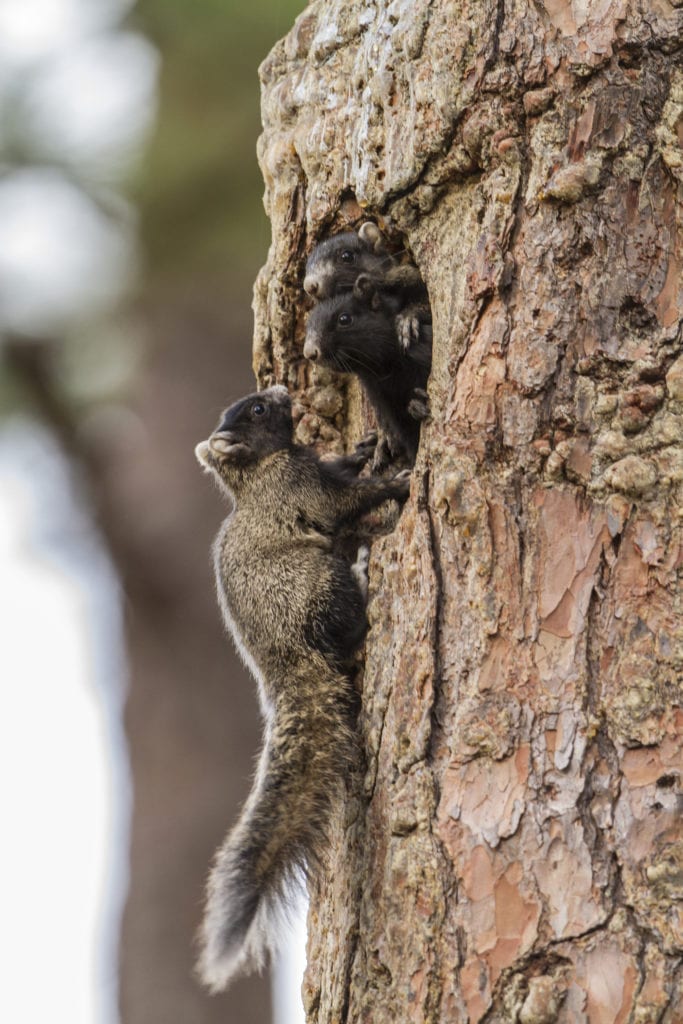
The eastern fox squirrel's large size allows it to consume unopened longleaf cones. Photo by Brady Beck.
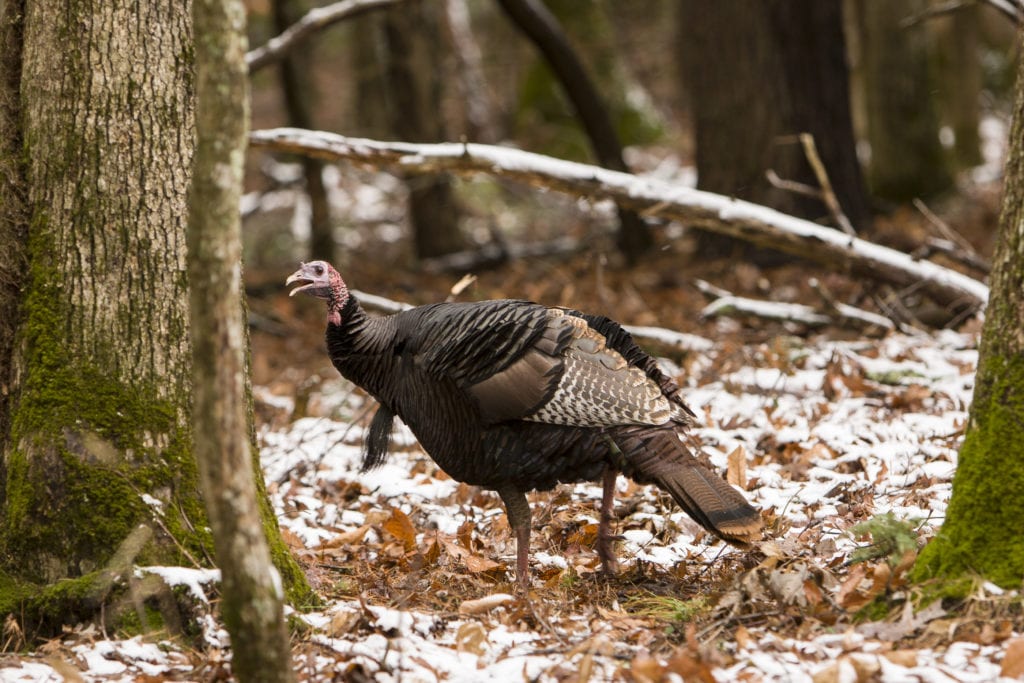
Wild turkeys have been shown to prefer longleaf woods that are frequently burned. Photo by Brady Beck.
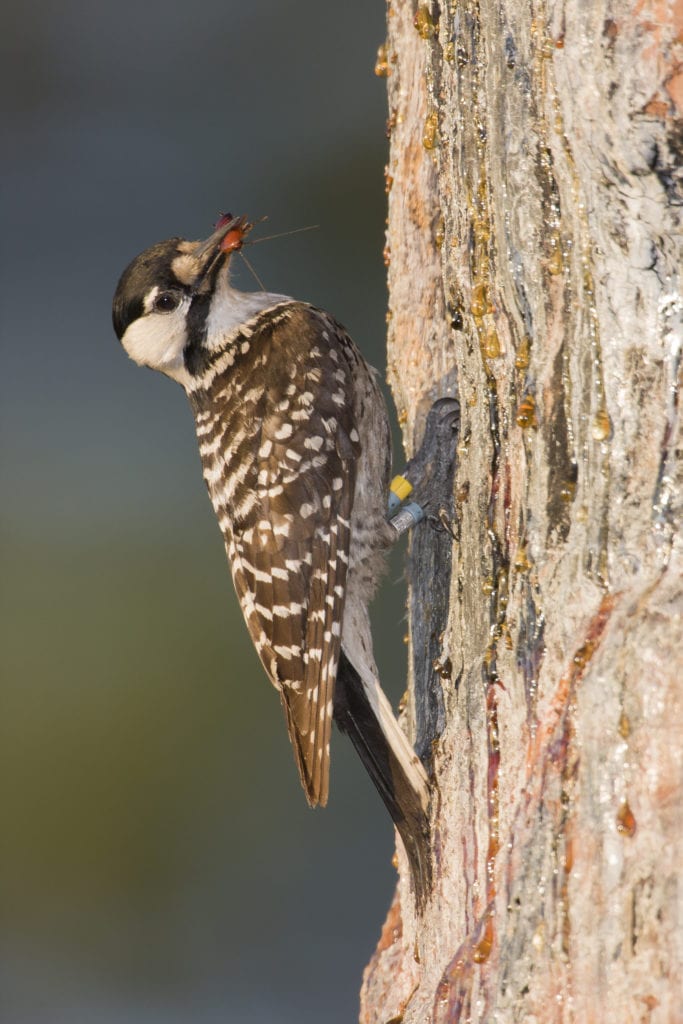
Longleaf pine savannas provide ideal habitat for the endangered red-cockaded woodpecker. Photo by Brady Beck.
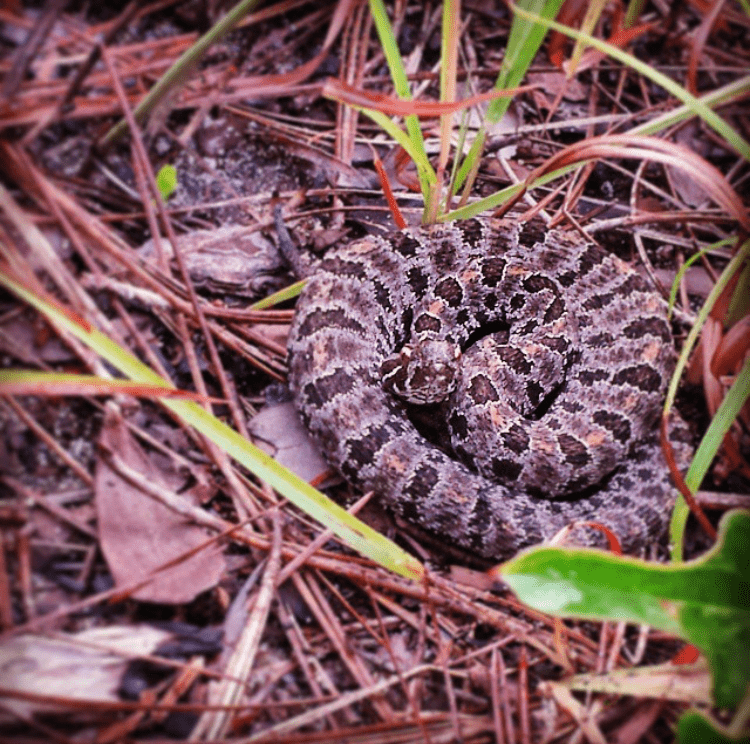
The small pygmy rattlesnake is seldom seen but fairly common in longleaf woodlands. Photo by Kris Dwitter.
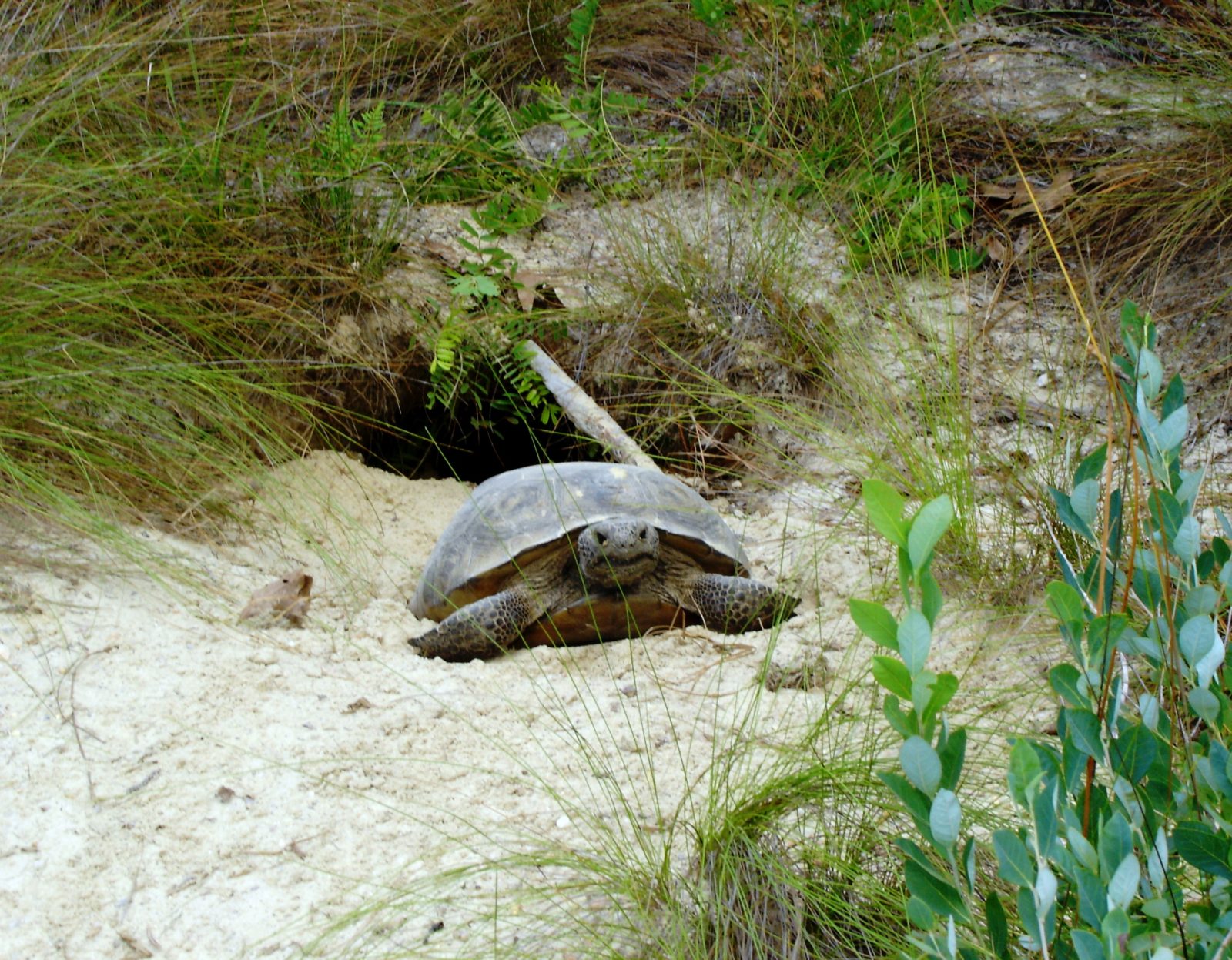
A gopher tortoise on the apron of its burrow. Photo by Randy Tate.
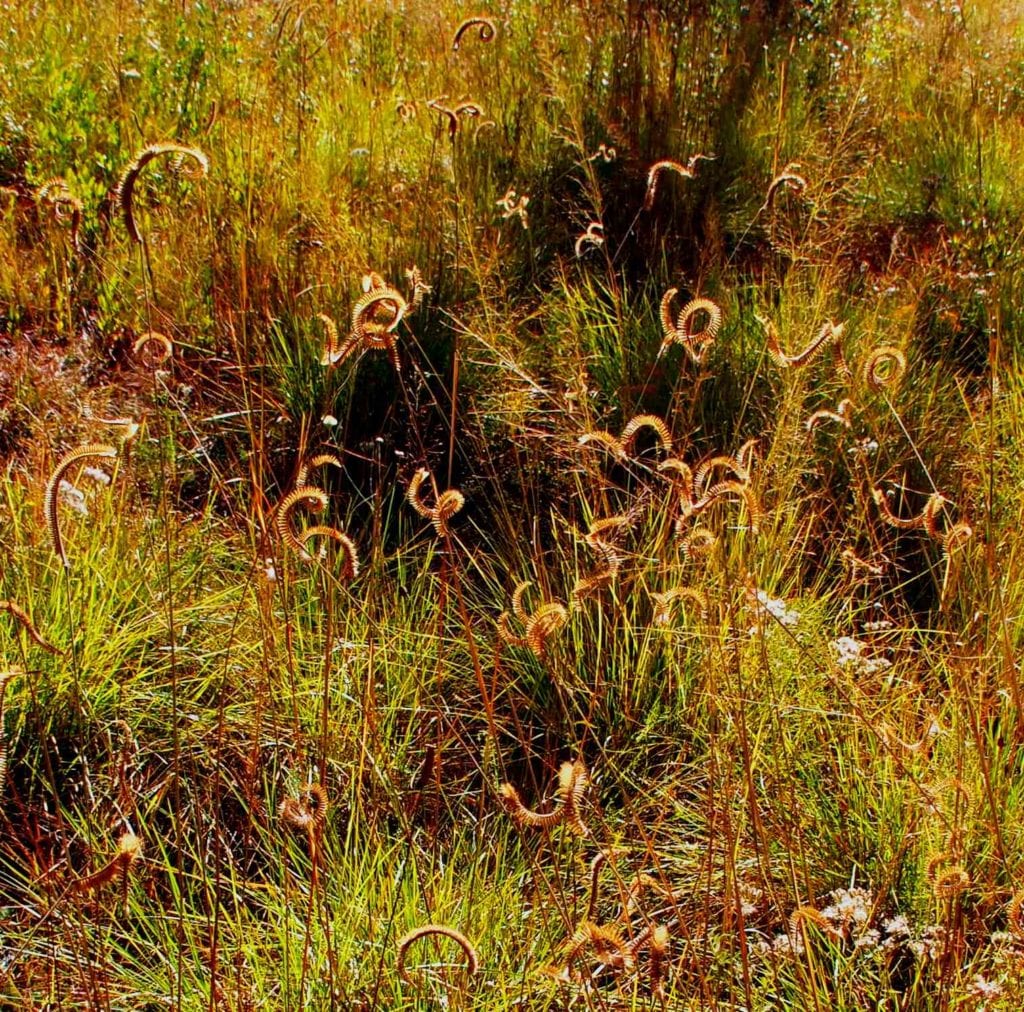
Toothache grass gets its common name from the fact that it makes your mouth numb if chewed. Photo by Randy Tate.
The white-topped pitcher plant is endemic to the Southeast and found in wetlands embedded in longleaf forests. Behind it is Liatris spicata. Photo by JJ Bachant.
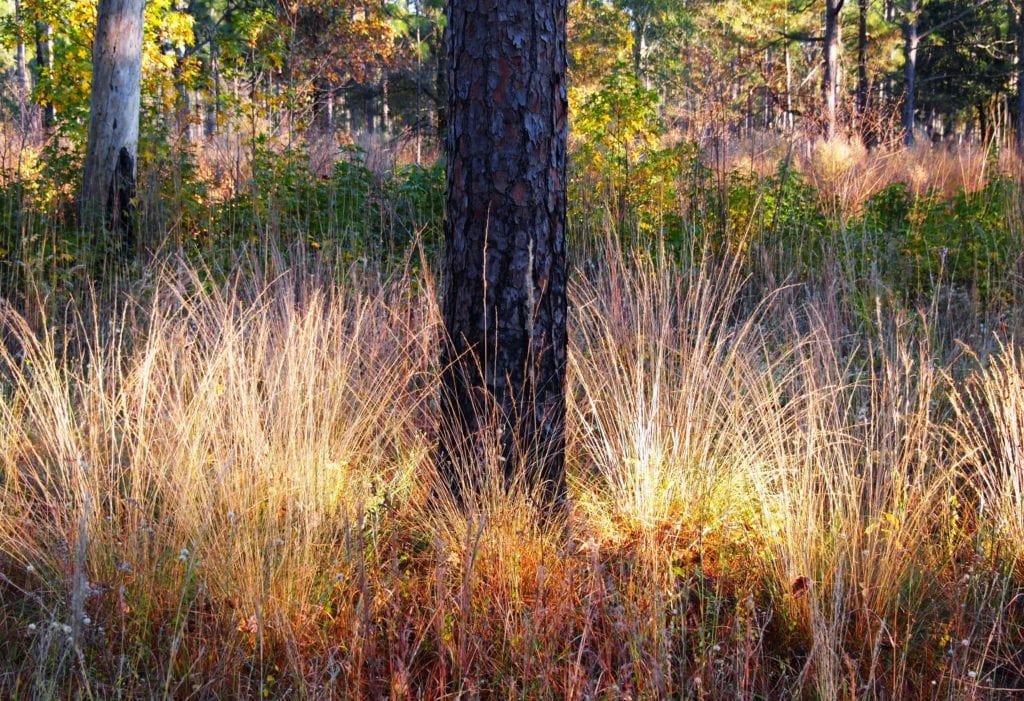
Wiregrass is an essential component to the understory in much of the range of longleaf and provides fuel to help carry fire. Photo by Randy Tate.
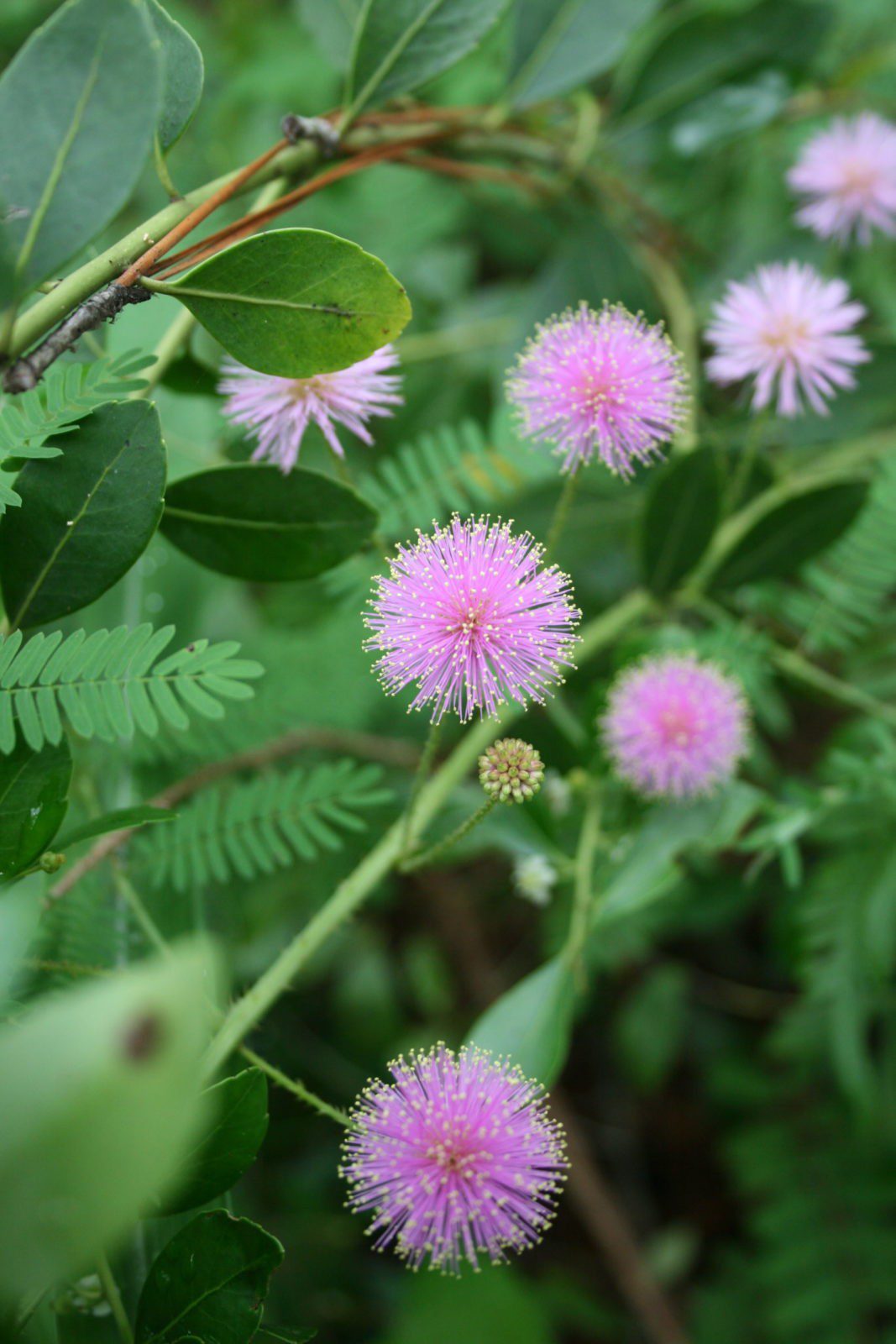
The sensitive briar is named for the fact that its leaves fold up when touched. Photo by Carol Denhof.
A tiger swallowtail resting on a blazing star. Photo by Carol Denhof.
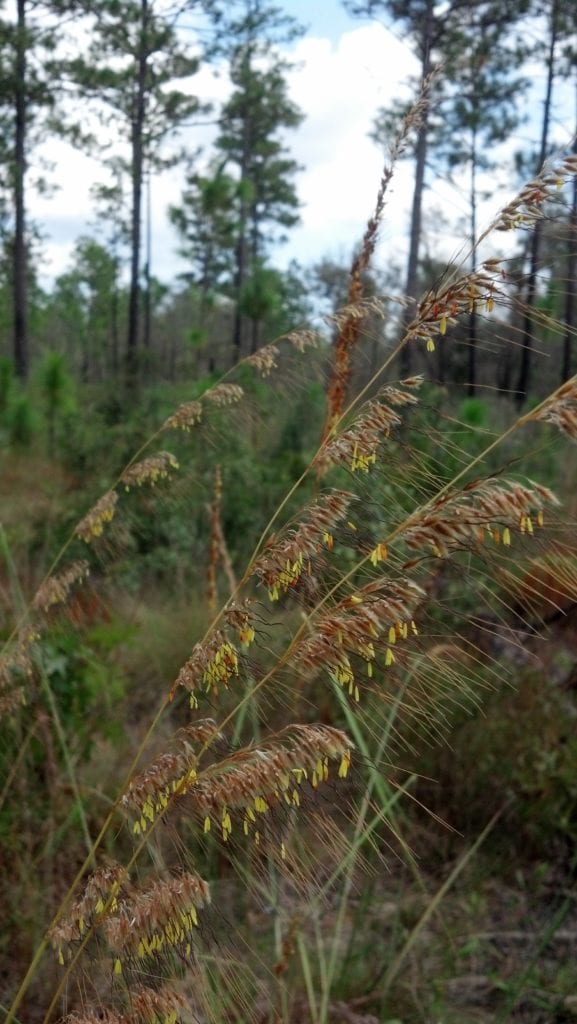
Lopsided-indiangrass is one of several native bunchgrasses found in longleaf habitats. Photo by Carol Denhof.
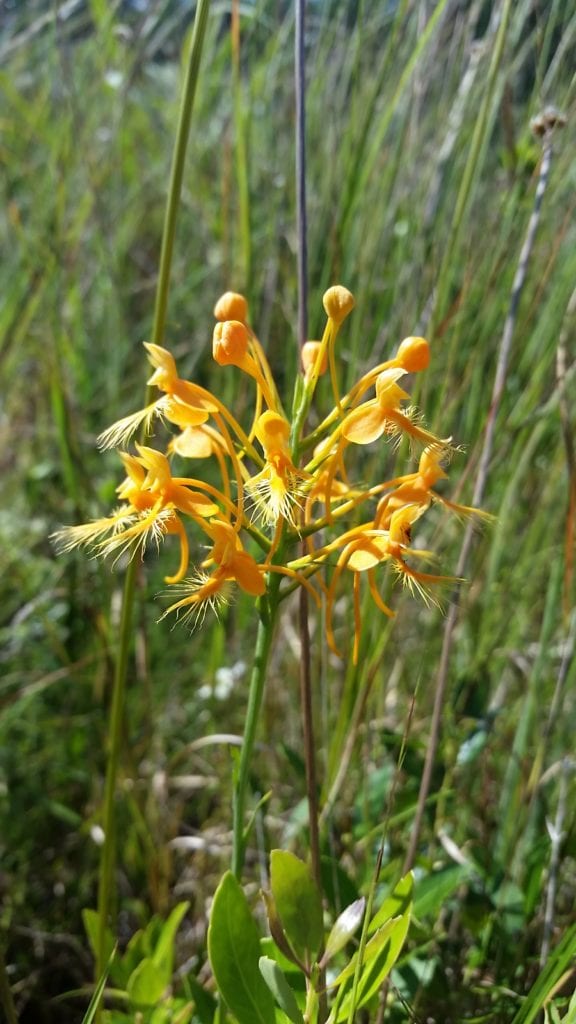
The beautiful oranged-fringed orchid is often found in longleaf sandhills. Photo by Carol Denhof.

BROWSE THIS SECTION

  • The Tree
    • Life Stages
    • The Economics
    • The History
    • The Misconceptions
  • The Ecosystem
    • Built by Fire
    • Habitats
    • Species Diversity
  • Restoration & Management
    • Groundcover Restoration
    • Herbicides
    • Longleaf Regeneration
    • Prescribed Fire
  • Photo Gallery

From our feed

Check out this workshop from our friends at the So Check out this workshop from our friends at the Solon Dixon Forestry Education Center, Covington Count Forestry Planning Committee, and Alabama Forestry Foundation.Passing It On: Navigating Generational Land TransferApril 22 | Andalusia, ALThis FREE workshop is in-person with a virtual option also available!Register by April 17th! Contact Melissa Wise (mlw0025@auburn.edu) to secure your spot.
Today is the day to appreciate a longleaf keystone Today is the day to appreciate a longleaf keystone species - the gopher tortoise! The gopher tortoise is one of six tortoises found in North America, and the only one found in the Southeast. The tortoise and its burrows support over 350 species and are a vital part of the longleaf landscape.Every year, the gopher tortoise continues to suffer habitat loss as land continues to be developed. By learning how to protect local tortoise populations and supporting conservation efforts, we can help preserve this keystone species and maintain the delicate balance of the ecosystem, reducing the risk of ecological decline.#GopherTortoise #HappyGopherTortoiseDay #LongleafPine #KeystoneSpecies #Tortoise
Do you know a landowner, colleague, partner, or or Do you know a landowner, colleague, partner, or organization making a meaningful impact on longleaf pine conservation and restoration? Help us celebrate these efforts by submitting a nomination for the Regional Longleaf Awards!The Regional Longleaf Awards Program recognizes individuals and organizations with outstanding commitment, innovation, and leadership in sustaining longleaf ecosystems across the Southeast. Awardees will be recognized at the 16th Biennial Longleaf Conference in Williamsburg, Virginia, on October 28, 2026.�To nominate an individual or team for a Regional Longleaf Award, submit nomination materials online by May 1st. Learn more at longleafconference.com >> awards (link in bio)
A common concern about prescribed fires is how fir A common concern about prescribed fires is how fire affects wildlife. The good news? Animals have a lot of ways to stay safe, and it’s not just by running or flying away. Some take refuge inside the burn unit, finding underground hideouts or moving to areas unlikely to burn, like wet or rocky spots.Prescribed burners often get to witness “wildlife moments” on the fire line. In this video, this bunny simply waited the fire out then hopped right back to its business after it moved through. 🐇🌿Prescribed fire helps restore healthy longleaf ecosystems while wildlife does what it’s always done.#longleaf #longleafpine #PrescribedFire #EasterBunny

Conservation partners

Manulife

Manulife

PRT

PRT

RMS

RMS

Norfolk Southern

Norfolk Southern

Bartlett

Bartlett

advantage

advantage

Blanton

Blanton

Drax

Drax

Enviva

Enviva

Graphic Packaging International

Graphic Packaging International

Kronospan

Kronospan

  • Home
  • Who We Are
  • What is Longleaf?
  • What We Do
  • What You Can Do
  • The Longleaf Library
  • Photo Gallery
  • Merchandise
  • Events
  • News
  • Donate
  • Contact
  • Subscribe
footer-logo

12130 Dixon Center Road
Andalusia, Alabama 36420
Phone: 334.427.1029


©2025 The Longleaf Alliance
HLJ Creative Web Design