




Habitats
Longleaf pine forests covered an extensive geographical range. Perhaps what is taken for granted is how diverse this forest type was (and is) across the landscape.
Seeing longleaf pine forests today, many people often (erroneously) assume that the species is relegated to dry sandy ridges or steep south-facing slopes. On the contrary, areas too steep, too dry to farm or too poor to grow loblolly or slash pine are, for the most part, merely a vestige of the richness that once was the longleaf pine ecosystem.
For thousands of years, subtle differences in soils and topography influenced fire behavior, site productivity etc. This affected the composition of the forest, e.g., groundcover plants, insect and animal species, and tree height, to name a few.
These habitat types can generically be lumped into four groups: montane, sandhill, rolling hill, and flatwoods/savannas. Follow the links below to learn more about these remarkable habitats of the longleaf pine ecosystem.
Montane
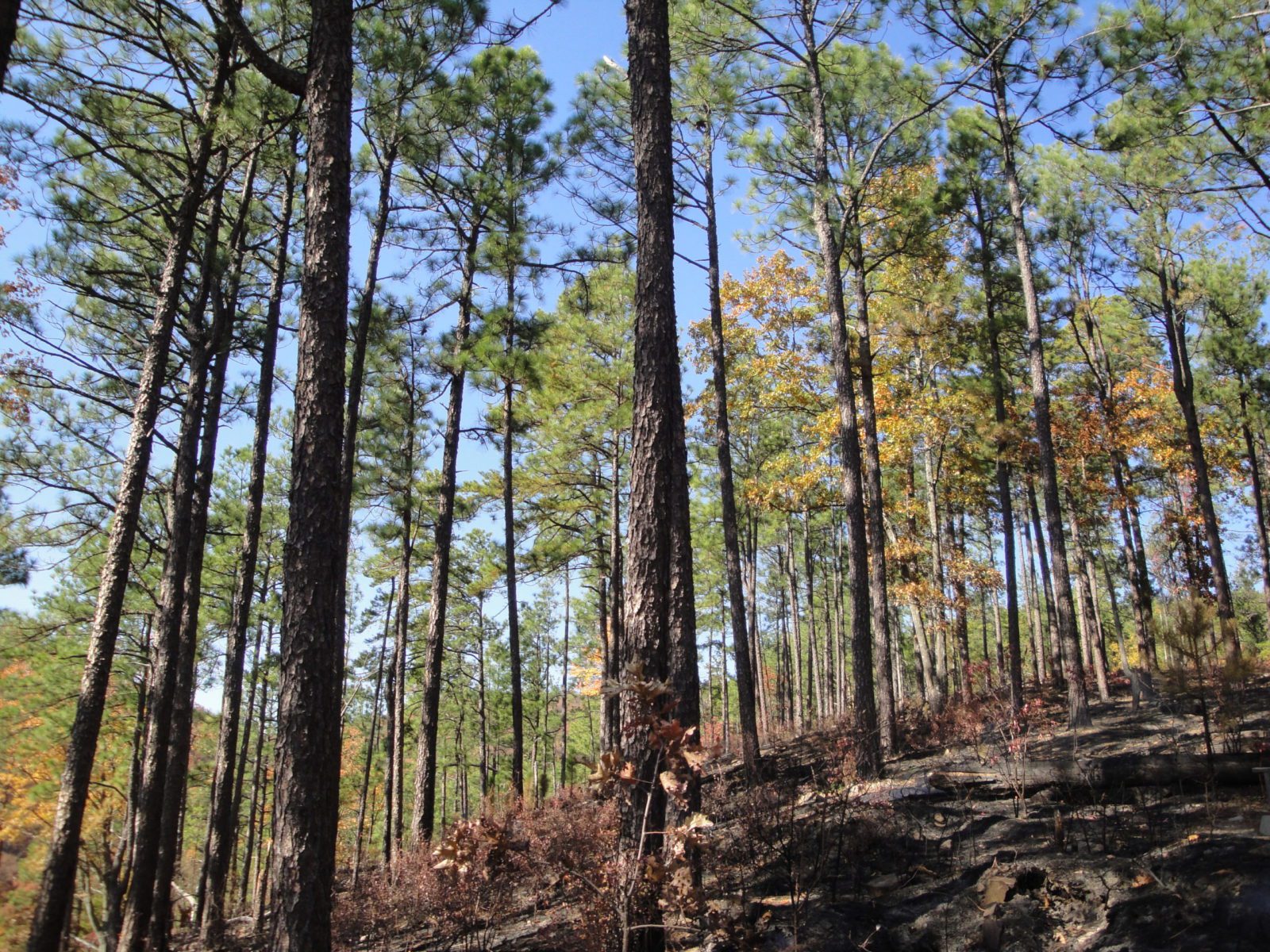
Montane longleaf pine was found dominating the southern and southwestern slopes (though not confined to them) and ridgelines up to about 2000 ft. elevation in north Alabama and northwest Georgia. This habitat also includes an isolated ridge starting at Pine Mountain, GA and extending to Thomson, GA. Since much of longleaf pine's northern boundary is found in this habitat type, the forest is seen to subtly grade from a pure longleaf pine overstory to an overstory of mixed southern pines at its fringes. About 20 % of the pre-settlement longleaf pine ecosystem was covered by this habitat type.
Soils
The soils in which montane longleaf grow are well drained with beds of flinty pebbles, sandstone ridges and even rock outcrops. In particular, they grow on rocky ridges and slopes that contains sandstone, quartzite, phyllite, mica schist and gneiss.
Common Plants
Broomstraws, bluestems, goat's rue, bracken ferns, rushes, sedges, and sensitive briar
Common Trees and Shrubs
Scarlet oak, mountain blueberry, mountain laurel, American chestnut, blackjack oak, Virginia pine, shortleaf pine, pig nut hickory, mockernut hickory, rock chestnut oak, and southern red oak
Fire Frequency
One to five years; fire either crept down ridgelines or roared up steep slopes
Without Fire
Quickly turns into a hardwood/mixed pine forest (especially Virginia and shortleaf pines)
Sandhills
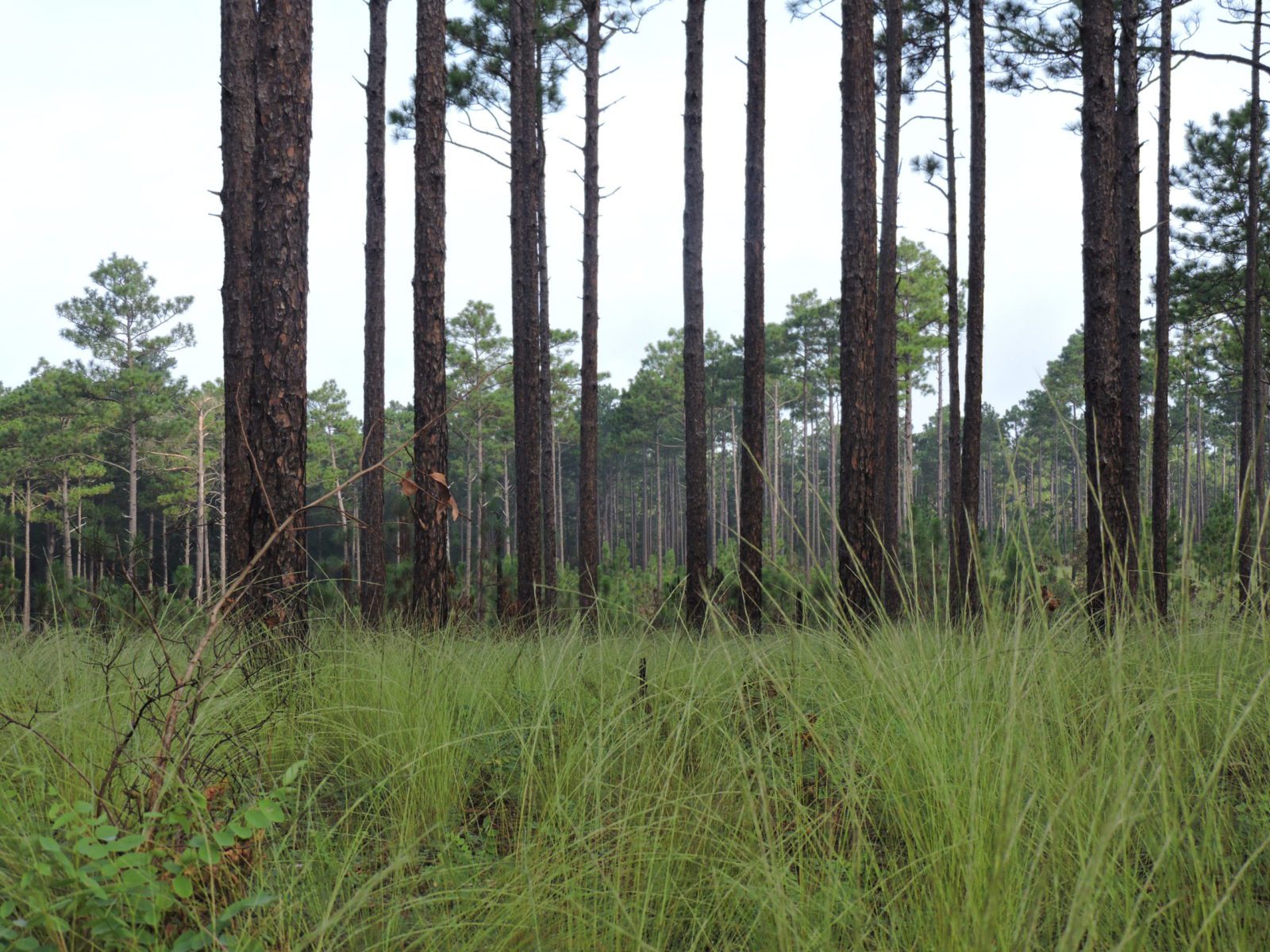
The Sandhills are characterized as ridges of loose, porous sand that begin in southern Virginia and runs through west Georgia at about 500 to 600 feet above sea level. Isolated sand ridges also exist in the Florida panhandle and peninsula. Longleaf pine sandhills are characterized as a forest of widely spaced pine trees with a fire-stunted understory of deciduous (scrub) oaks and a sparse to continuous ground cover of bunchgrasses and herbs. Today, sandhill longleaf sites make up some of the largest acreages of the remaining longleaf pine habitat (despite comprising roughly 10% of the original landscape).
Soils
Sandhill soils are droughty, deep beds of white sands that are relatively low in fertility and result (often) in lower species diversity and usually shorter longleaf pine. In some areas sands can be 2-15 feet deep. In some areas of the Carolinas, sands can be 100 - 150 feet deep without changing.
Common Plants
Pricky pear cactus, wiregrass, bluestems, hairsedge, piney woods dropseed, gopher apple, golden aster, hairawn muhly, pineland phlox, sandhill lupine, bird's foot violet, dwarf iris, fringed bluestar, pinebarren frostweed, pineland wild indigo, man-root (morning glory), sandhill roseling, orange-fringed orchids, yellow-eyed grasses, narrowleaf sabatia, threadleaf gererdia, goat's rue, butterfly pea, and Carolina indigo
Common Trees and Shrubs
Turkey oak, bluejack oak, southern red oak, blackjack oak, sand post oak, myrtle oak, Arkansas oak, mockernut hickory, sand hickory, black cherry, sassafras, blackberry, sparkleberry, persimmon, low-bush blueberry, and pawpaw
Fire Frequency
Two to seven years carried almost exclusively by bunch grasses
Without Fire
Usually succeeds to canopy-dominated by scrub oaks (like turkey oak)
Rolling Hills
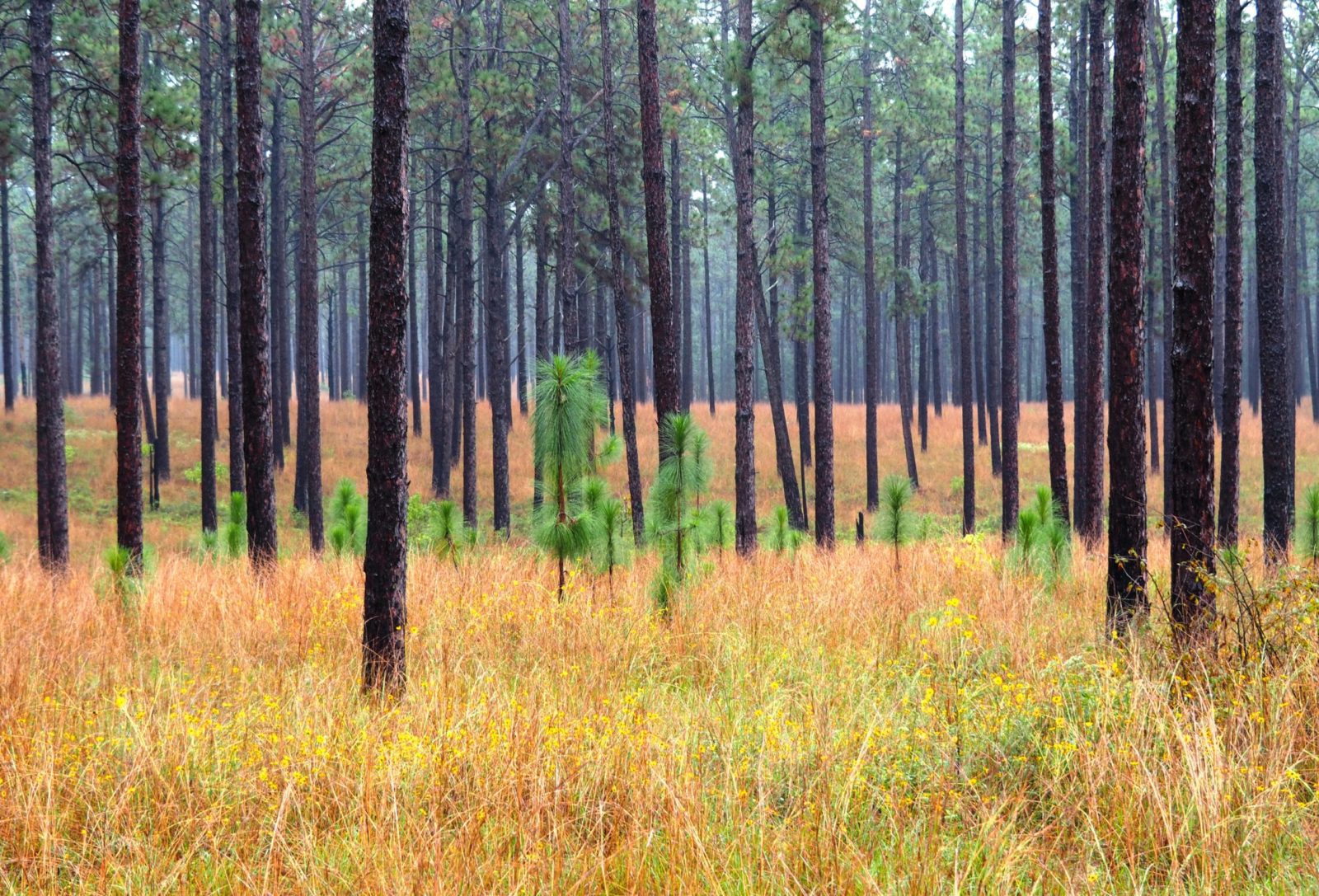
Characterized as having a sufficiently rolling habitat to insure good drainage. Often very productive sites capable of producing excellent longleaf pine timber. Found at 130 to 250 feet above sea level. It is speculated that 30% of the pre-settlement landscape was rolling hill habitat.
Soils
Brown, sandy loam uplands 10 - 15 inches in depth, often with fossiliferous materials. In some areas, the underlying parent material is limestone. Occasionally, limestone pushes through the sandy loam and forms outcroppings.
Common Plants
Beargrass, bluestems, wiregrass, rattlebox, dollar pea, lespedeza, candyroot, procession flower, orange milkwort, pinebarren, and goldenrod
Common Trees and Shrubs
Blackjack oak, turkey oak, willow oak, sand post oak, southern red oak, Florida dogwood, mockernut hickory, black hickory, persimmon, gallberry, yaupon, and wax myrtle
Fire Frequency
One to three years; numerous native bunchgrasses to help carry fire
Without Fire
Hardwoods (often willow oak or sweet gum) capture the forest midstory and overstory shading out ground cover plants
Flatwoods and Savannas
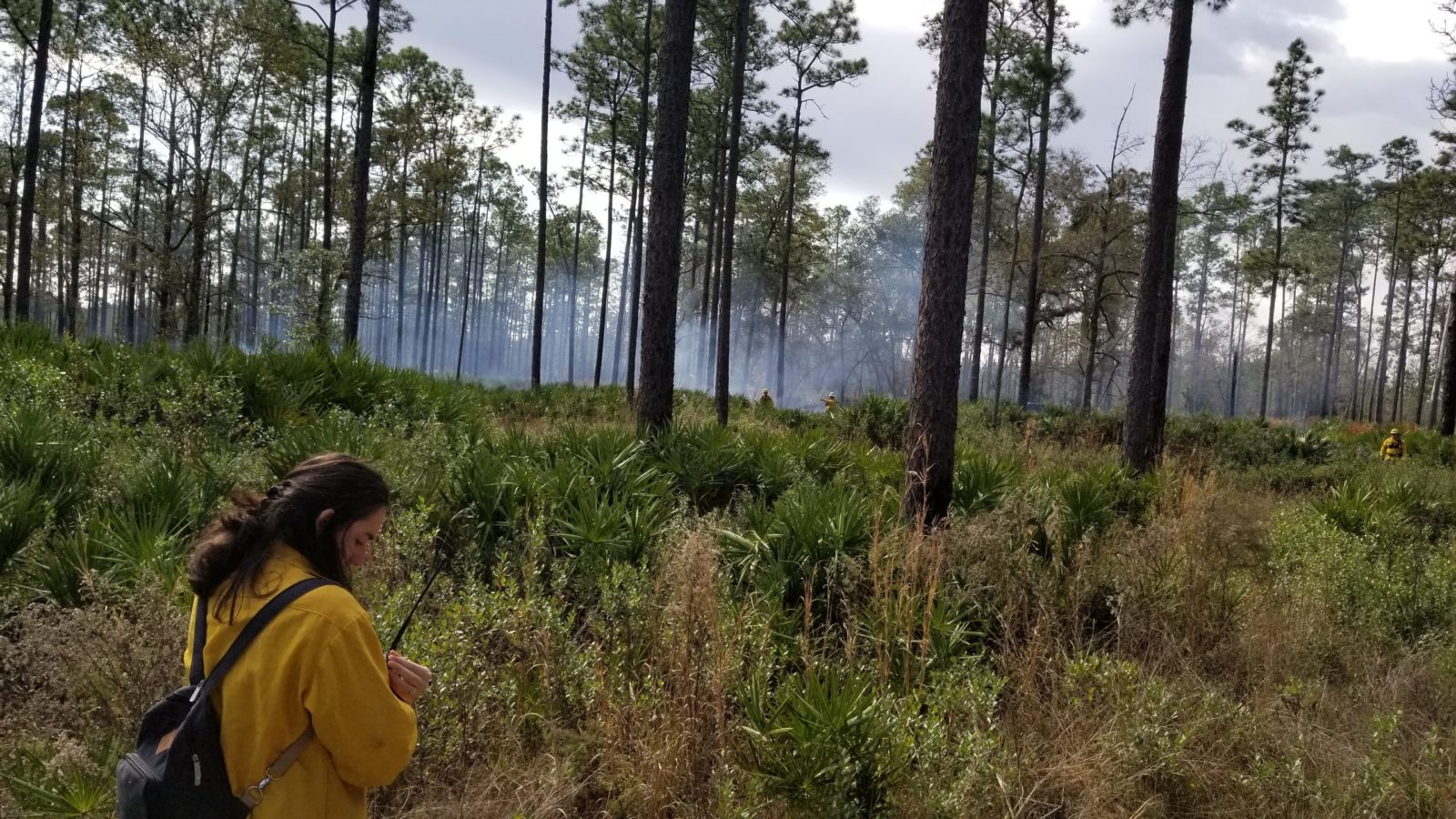
Characterized as high-density, longleaf pine-dominated forests, the surface is very level, poorly drained and often interspersed with frequent and (sometimes large) swampy patches or wet prairies. Flatwoods can start just above the tidewater and extend inland to about 130 feet above sea level. Productivity is high and longleaf pines reach heights above 120 feet. This longleaf pine habitat type has the highest diversity of ground cover of herbs and shrubs. Since the soils are relatively poorly drained and typically have low reserves of available nutrients, numerous orchids and carnivorous plants are common in the ground cover. These habitats are often described as both the Atlantic Coastal Flatwoods and the Gulf Coastal Flatwoods.
Soils
With moderately to poorly drained terrain, the soils are typically acidic, have low reserves of available nutrients, are low in organic matter content, and maintain an ash-colored silty clay appearance.
Common Plants
Tarflower, wiregrass, toothache grass, bluestems, silk grass, hatpins, muhly grass, pineweeds, pitcher plants, sundews, flytraps, Catesby's lily, white star grass, morning glory, milkweeds, quail pea, butterfly pea, goat's rue, lespedezas, iron weed, and deer tongue
Common Trees and Shrubs
Water oak, sweet gum, red maple, ash, saw palmetto, gallberry, fetterbush, wax myrtle, yaupon, ilex, dwarf live oak, sweet bay, titi, southern magnolia, persimmon, black gum, creeping blueberry, blackberry.