Skip to content
  • Close
  • Home
  • Events
  • News
  • Donate
  • Contact
  • Who We Are
    • About The Alliance
      • Staff
      • Board of Directors
  • What is Longleaf?
    • The Tree
      • Life Stages
      • The History
      • The Economics
      • The Misconceptions
    • The Ecosystem
      • Built by Fire
      • Habitats
      • Species Diversity
    • Restoration & Management
      • Groundcover Restoration
      • Herbicides
      • Longleaf Regeneration
      • Prescribed Fire
    • Photo Gallery
  • What We Do
    • Restoration Through Partnerships
      • America’s Longleaf
      • Mapping
      • Corporate Sustainability Programs
      • Nurseries
      • Longleaf Enhancement Fund
    • Longleaf Assistance
      • TLA Planting Fund
    • Conserving Diverse Forests
      • Rare Species
      • Forests & Water
    • Education & Outreach
      • Longleaf Academy Program
      • Biennial Longleaf Conference
      • Burner Bob®
      • Next Generation
      • The Longleaf Leader
      • The Longleaf Library
      • The Owen Fellowship
  • What You Can Do
    • Support The Alliance
    • Conservation Partners
    • Get Involved
    • Merchandise
    • Subscribe
logo
  • Contact
  • Events
  • Donate
search
newsearch

Education & Outreach

HomeWhat We DoEducation & OutreachLongleaf Academy Program

Longleaf Academy Program

The Longleaf Academy Program was developed to better prepare natural resource professionals and private landowners to manage, restore, and enhance longleaf pine ecosystems. We aim to create a uniformly well-informed network of longleaf ecosystem professionals to extend the reach of The Longleaf Alliance. We recognize that our message for sound management principles goes far beyond the students who participate in our programs as they provide technical assistance to landowners and mentor new natural resource professionals to the field of longleaf.

The Longleaf Academy program will continue to grow and adapt to the needs of landowners and partners; we are committed to being honest brokers of longleaf information and providing timely, science-based advice.

For the latest schedule of course offerings, see our Events page.

Courses offered in the Longleaf Academy Program include:

  • Longleaf 101
  • Understory Diversity 201
  • Herbicides & Longleaf 201
  • Fire & Longleaf 201
  • Groundcover Restoration 201
  • Gopher Tortoise 301

Longleaf 101

academy_Longleaf-101

Our flagship program, Longleaf 101, is an intensive 3-day training that includes classroom and field instruction in “all things longleaf.” Longleaf 101 is intended for participants of all levels of experience working with longleaf pine systems.

Students will come away with an understanding of:
  • Cultural and natural history of longleaf pine
  • Use and effects of fire in longleaf ecosystems
  • Artificial regeneration, including site selection, seedling quality, site preparation, planting, and release techniques
  • Natural regeneration systems
  • Longleaf stand dynamics
  • Silvicultural practices in converting to longleaf
  • Habitat management including threatened and endangered species considerations
  • Native understory restoration
  • Diseases and pest identification
  • Forest products and economics
  • Topics of local significance

Understory Diversity 201
academy_Understory

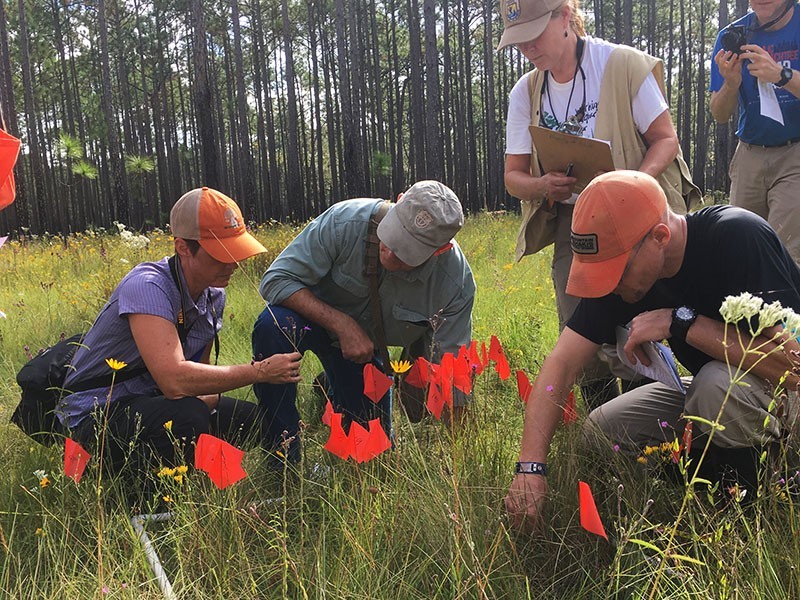
Understory Diversity provides continuing education about the diverse understory of longleaf ecosystems, with an emphasis on native warm season grasses, composites and legumes. This 2-day course consists of both classroom lectures and hands-on field exercises.

Students will learn about:
  • Basic botany terminology
  • Plant identification of the primary species of native warm season grasses, composites and legumes
  • Native plants important to wildlife
  • Restoration and management methods
  • Topics of local significance

Herbicides & Longleaf 201
academy_herbicides

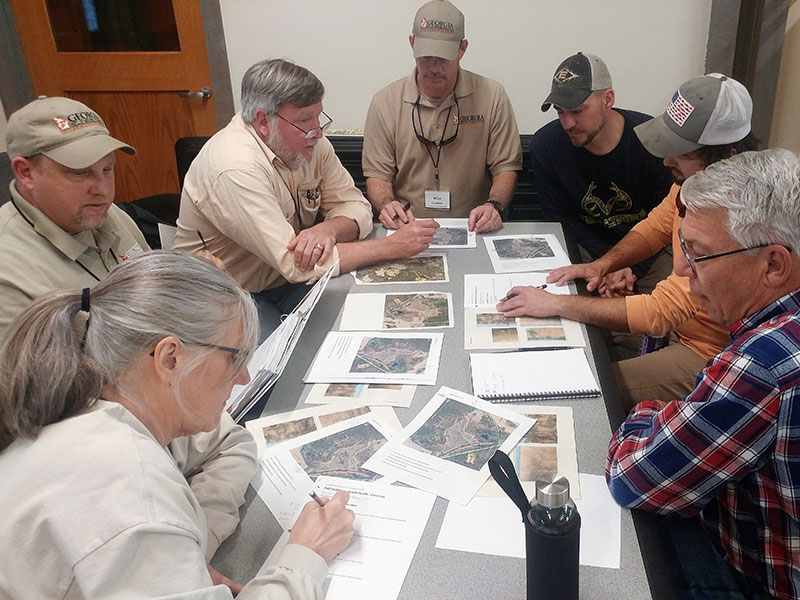
The Herbicides & Longleaf 201 course provides instruction in the selection of herbicides for ecological restoration and longleaf management. This 2-day course consists of classroom lectures and exercises. Field trips may also be associated with the course.

Topics covered include:
  • Herbicide application rates and timing
  • Surfactants and adjuvants
  • Application equipment and methods
  • Longleaf-specific herbicide effects
  • Site prep and release treatments
  • Practices to minimize impacts to longleaf pine and other desired species
  • Invasive species identification and control
  • Topics of local significance

Fire & longleaf 201
academy_fire

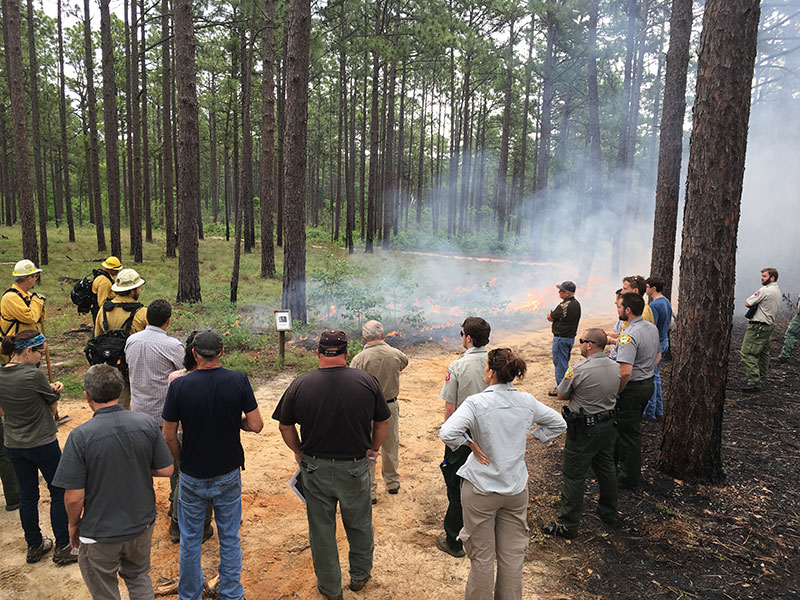
This 3-day course is designed for landowners and natural resource professionals of all experience levels interested in the use of prescribed fire in longleaf pine ecosystems. Fire is recognized as a necessary tool for maintaining well-managed longleaf stands, whether your objectives are ecological or economic. The goals of this course are to develop lifelong students of fire and to educate about the longleaf-specific considerations when planning a prescribed burn. Participants are encouraged to have begun the certified burner process in their home state in conjunction with Fire and Longleaf 201.

Weather permitting, we will incorporate a live fire demonstration to give students the opportunity to observe and participate in a prescribed burn.

Topics covered include:
  • Fire behavior
  • Fire weather parameters and forecasts
  • Ignition techniques
  • Fireline tools
  • Introducing the use fire in young longleaf stands
  • Re-introducing fire to long unburned stands
  • Burn plan development
  • Smoke management techniques
  • Topics of local significance

Groundcover Restoration 201
academy_Groundcover

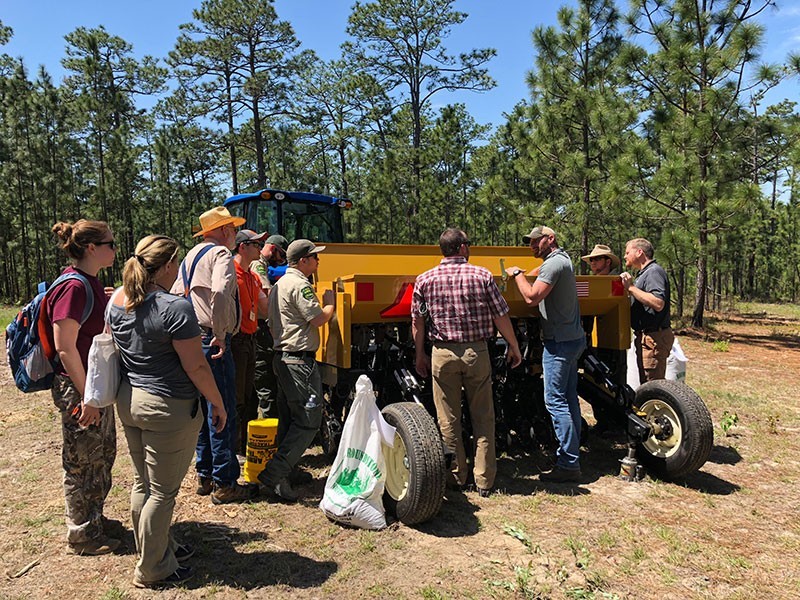
Groundcover Restoration focuses almost entirely on the “nuts and bolts” of restoration. Prior students of our Understory Diversity course will find that this new Academy offers the practical counterpart to the plant identification and ecology lessons learned in U201.

The Groundcover Restoration course follows a 2.5-day curriculum, with classroom lectures, field exercises, demonstrations, and hands-on learning activities to guide students through the principles and practices of restoring groundcover to longleaf systems.

Topics include:
  • Determining restoration needs
  • Management planning for restoration projects
  • Site prep options to preserve existing groundcover
  • Selection of plant materials
  • Considerations for choosing seed sources, ecotypes, and mixes
  • Demonstrations of various types of equipment used in seed collection, site prep, and planting
  • Topics of local significance

Gopher Tortoise 301
academy_Gopher-Tortoise-301

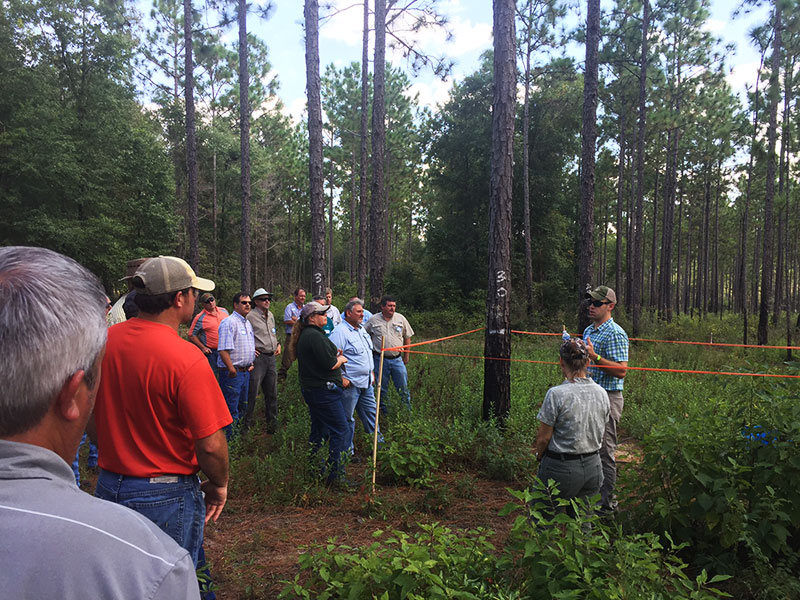
The Gopher Tortoise course is a special session and not offered as frequently as our 101 and 201 courses. This course was developed in cooperation with U.S. Fish and Wildlife Service, Westervelt Ecological Services and the Gopher Tortoise Council, and includes in-depth classroom and field instruction in "all things gopher.” The intent is to better prepare natural resource professionals to address gopher tortoise management problems specific to the federally listed range of the species.

Topics covered include:
  • Biology of the tortoise
  • Life history and population dynamics
  • Habitat requirements and management
  • Habitat conservation plans, conservation easements, in-lieu fees, and mitigation banks
  • Current status in listed and non-listed range
  • Restoring fire to enhance tortoise habitat
  • Threats and mitigations including forestry BMPs, solar conversion, pathogens, head-starting and translocation mitigations
  • Topics of local significance

BROWSE THIS SECTION

  • Restoration Through Partnerships
    • America’s Longleaf
    • Mapping
    • Nurseries
    • Longleaf Enhancement Fund for Seed & Seedling Production
    • Corporate Sustainability Programs
  • Longleaf Assistance
  • Conserving Diverse Forests
    • Rare Species
    • Forests & Water
    • Georgia Sentinel Landscape Prescribed Fire Program
  • Education & Outreach
    • Longleaf Academy Program
    • Biennial Longleaf Conference
    • Burner Bob®
    • Next Generation
    • The Longleaf Leader
    • The Longleaf Library
    • The Owen Fellowship

From our feed

Red-cockaded Woodpeckers (RCWs, Leuconotopicus bor Red-cockaded Woodpeckers (RCWs, Leuconotopicus borealis) are unique among woodpeckers, nesting only in LIVING pine trees rather than dead ones. Mature longleaf pines infected with red heart disease (Porodaedalea pini) are ideal cavity trees because the fungus softens the interior heartwood, making excavation easier. As mature pine forests declined due to logging, development, and fire suppression, RCW populations became increasingly fragmented, and the fire-dependent ecosystems they relied on were disappearing. Biologists have been working since the 1970s to secure the future of this iconic species. One of the most important factors in its recovery was ensuring adequate nesting habitat. Early efforts focused on drilling cavity starts in suitable trees, eventually leading to the development and installation of artificial cavity inserts. While artificial cavities are not a long-term solution for sustaining RCW populations, they have played a critical role in the species’ recovery. After 51 years on the endangered species list, the Red-cockaded Woodpecker was down-listed to threatened in 2024. This significant milestone reflects decades of collaborative conservation efforts across the Southeast and demonstrates the success of targeted strategies to protect and improve habitat for rare species. 📷 Photo credits: Michael Hubbard, Brady Beck, and Macey Kenney #Longleafpine #conservation #rcw #goodfire #redcockadedwoodpecker
Sit back and breathe. #WorldRainDay #longleaf #lon Sit back and breathe. #WorldRainDay #longleaf #longleafpine Video by Ashlynn Moretti
Happy bog day to everyone who celebrates the wonde Happy bog day to everyone who celebrates the wonders of bogs!  Bogs have so many unique hidden features within them and hold so many benefits in one ecosystem. Bogs are natural water filters that help provide clean water, mitigate flooding, and are powerful carbon sinks. Bogs also provide food - some of our favorite everyday snacks like blueberries and cranberries can be found in bogs. Lastly, bogs are inhabited by many rare and unique plant and animal species that rely on their acidic and waterlogged soils. Our world would not be the same without bogs, and that is why we must protect and conserve these areas! What are some of your favorite plant species you can find in bogs?  Photo credits📸: Ashlynn Moretti & Julianne Jones - @ambystomajones#BogDay2026 #Carnivorousplants #Longleafpine#Biodiversity #InternationalBogDay
We’re celebrating World Snake Day with “your month We’re celebrating World Snake Day with “your month – your snake” plus bonus fun facts about each species. Which snake are you?✍️ Graphics by Ashlynn Moretti 📸 Photo Credits:1. Ben Stegenga2-3. Julianne Jones (@ambystomajones)4. Sergio Ibarra CC-BY-NC5-7. Julianne Jones8. Thrashedout (Kevin) CC-BY-NC9-11. Julianne Jones 12. Jay York CC-BY-NC13. Anomalocarys CC-BY-NC #SnakeDay2026 #Herpetology #Snakes #WildlifeConservation #Reptiles

Conservation partners

Manulife

Manulife

PRT

PRT

RMS

RMS

Norfolk Southern

Norfolk Southern

Bartlett

Bartlett

advantage

advantage

Blanton

Blanton

Drax

Drax

Enviva

Enviva

Graphic Packaging International

Graphic Packaging International

Kronospan

Kronospan

  • Home
  • Who We Are
  • What is Longleaf?
  • What We Do
  • What You Can Do
  • The Longleaf Library
  • Photo Gallery
  • Merchandise
  • Events
  • News
  • Donate
  • Contact
  • Subscribe
footer-logo

12130 Dixon Center Road
Andalusia, Alabama 36420
Phone: 334.427.1029


©2025 The Longleaf Alliance
HLJ Creative Web Design