Skip to content
  • Close
  • Home
  • Events
  • News
  • Donate
  • Contact
  • Who We Are
    • About The Alliance
      • Staff
      • Board of Directors
  • What is Longleaf?
    • The Tree
      • Life Stages
      • The History
      • The Economics
      • The Misconceptions
    • The Ecosystem
      • Built by Fire
      • Habitats
      • Species Diversity
    • Restoration & Management
      • Groundcover Restoration
      • Herbicides
      • Longleaf Regeneration
      • Prescribed Fire
    • Photo Gallery
  • What We Do
    • Restoration Through Partnerships
      • America’s Longleaf
      • Mapping
      • Corporate Sustainability Programs
      • Nurseries
      • Longleaf Enhancement Fund for Seed & Seedling Production
    • Longleaf Assistance
    • Conserving Diverse Forests
      • Rare Species
      • Forests & Water
      • Georgia Sentinel Landscape Prescribed Fire
    • Education & Outreach
      • Longleaf Academy Program
      • Biennial Longleaf Conference
      • Burner Bob®
      • Next Generation
      • The Longleaf Leader
      • The Longleaf Library
      • The Owen Fellowship
  • What You Can Do
    • Support The Alliance
    • Conservation Partners
    • Get Involved
    • Merchandise
    • Subscribe
logo
  • Contact
  • Events
  • Donate
search
newsearch

Photo Gallery

HomeWhat is Longleaf?Photo Gallery

Photo Gallery

Below are several photo collections related to longleaf pine. Click on a photo to enlarge the view. For photo permission requests, please contact Sarah Crate.

  • Historical Photos
  • Plant Photos
  • Animal Photos
  • Restoration & Management Photos

Historical Photos

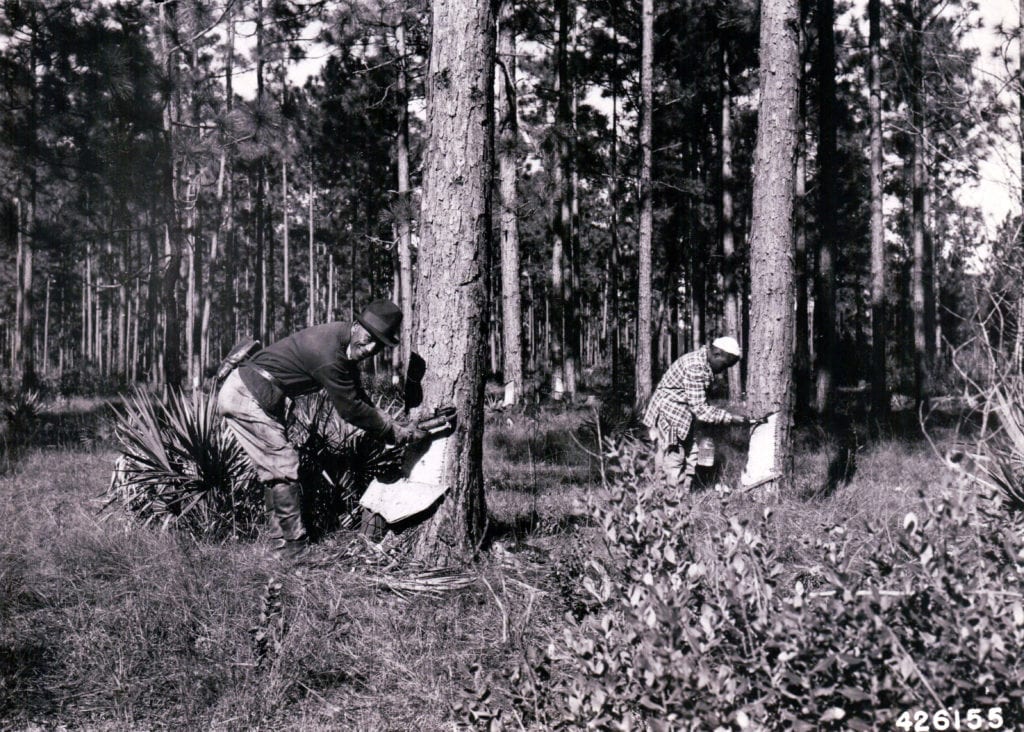
Chemical stimulation to gum yield - chipper and acid application at Olustee, Florida. October, 1942. Photo by C. S. Shopmeyer, U.S. Forest Service.
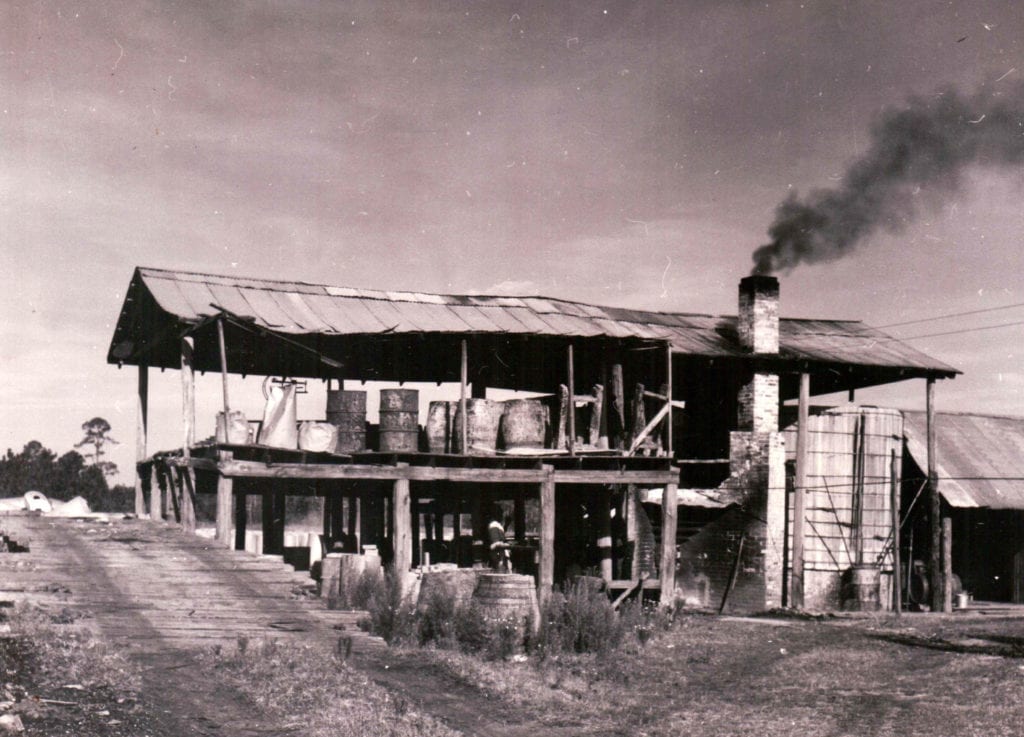
Distilleries produced refined turpentine and rosin from crude pine resin. Florida. Photo by Panshin, et al. U.S. Forest Service.
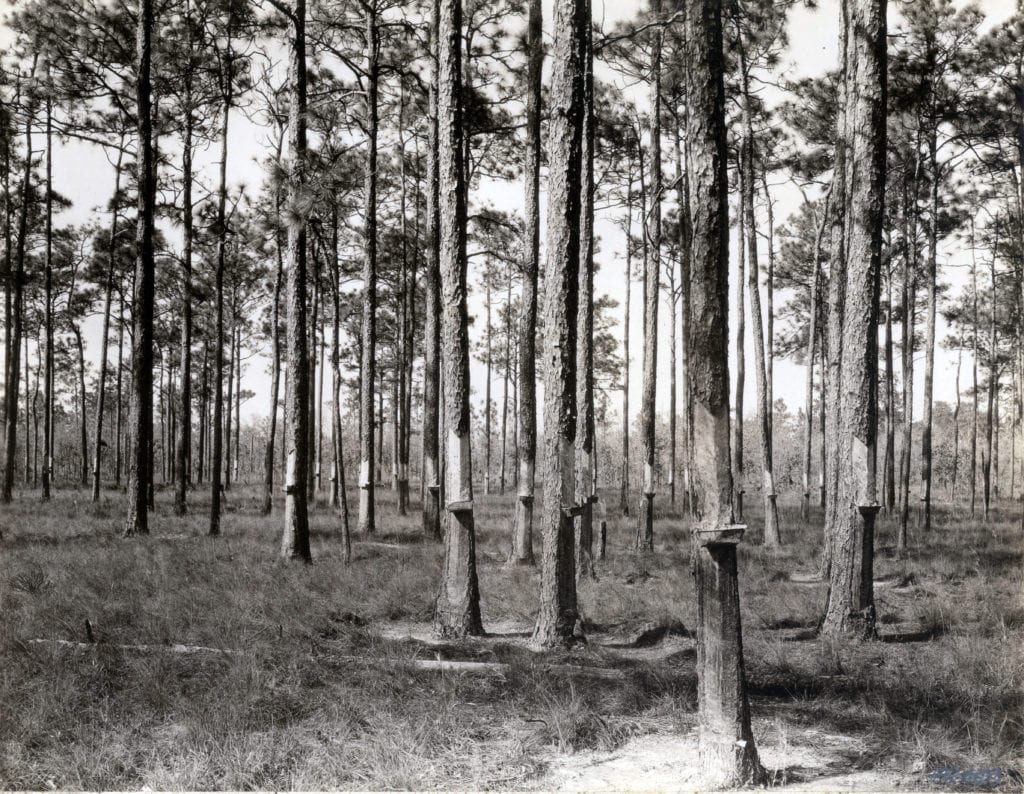
Naval stores orchard using the cup and gutter technique to collect resin—a less intrusive method compared to the early practice of "boxing." Photo by Panshin, et al. U.S. Forest Service.
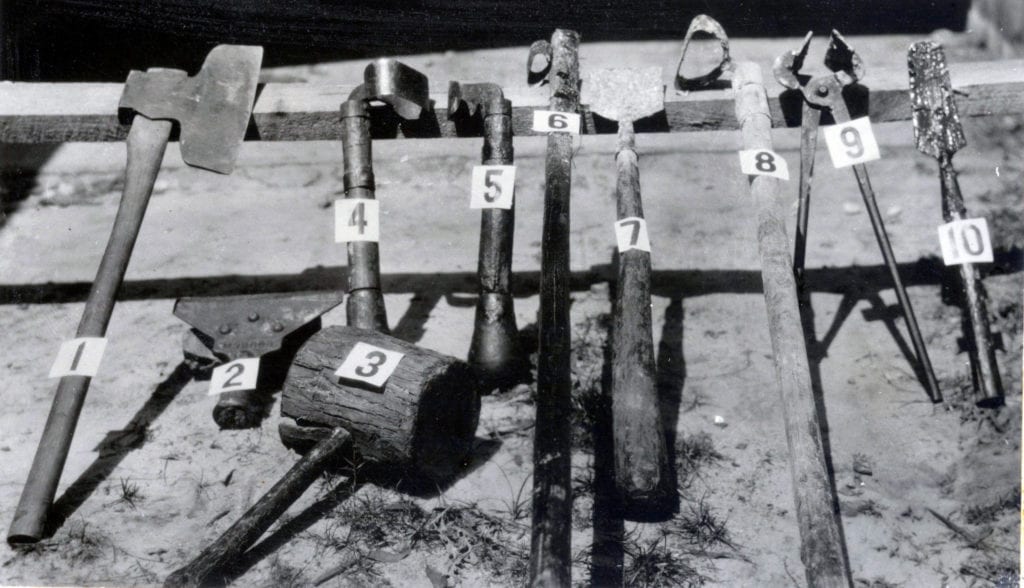
Turpentine tools: 1. Broad axe; 2. Gutter chisel or Pringle axe; 3. Maul; 4. Hogal; 5. Hack; 6. Puller; 7. Push down scraper; 8. Pull down scraper; 9. Apron and gutter puller; 10. Dip iron. Photo by U.S. Forest Service.

Plants
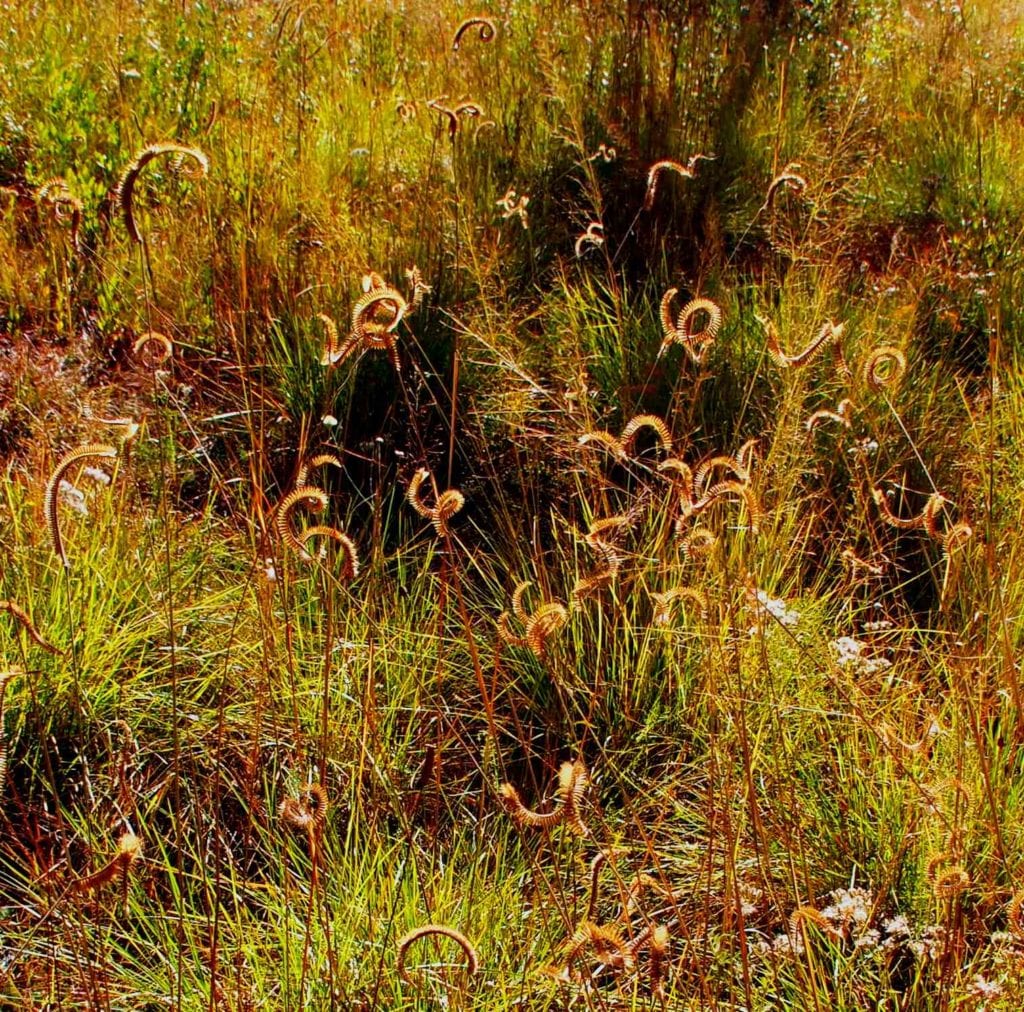
Toothache grass gets its common name from the fact that it makes your mouth numb if chewed. Photo by Randy Tate.
The white-topped pitcher plant is endemic to the Southeast and found in wetlands embedded in longleaf forests. Behind it is Liatris spicata. Photo by JJ Bachant.
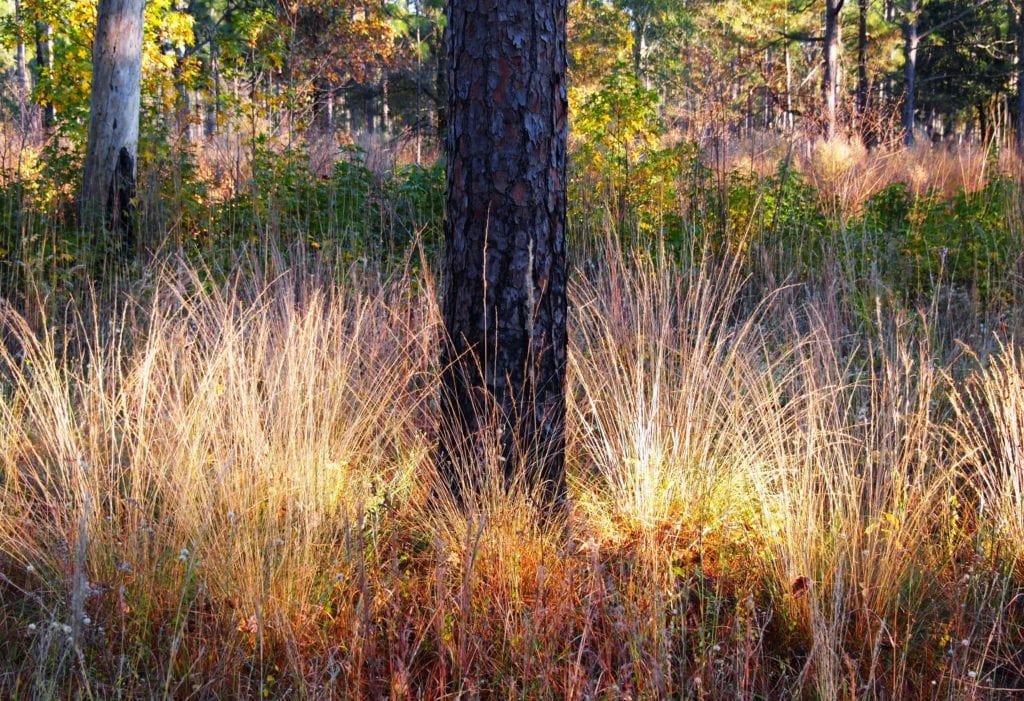
Wiregrass is an essential component to the understory in much of the range of longleaf and provides fuel to help carry fire. Photo by Randy Tate.
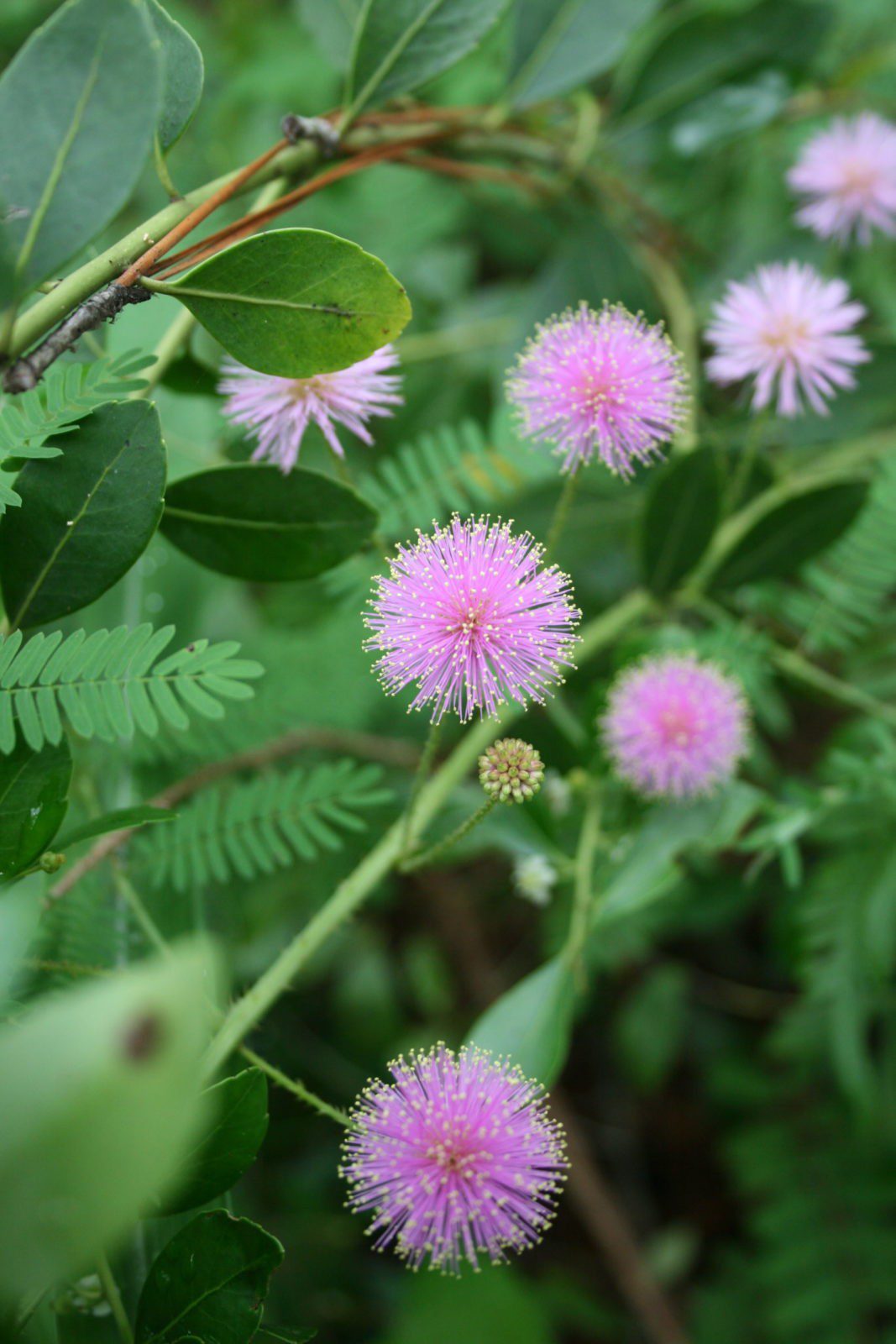
The sensitive briar is named for the fact that its leaves fold up when touched. Photo by Carol Denhof.
A tiger swallowtail resting on a blazing star. Photo by Carol Denhof.
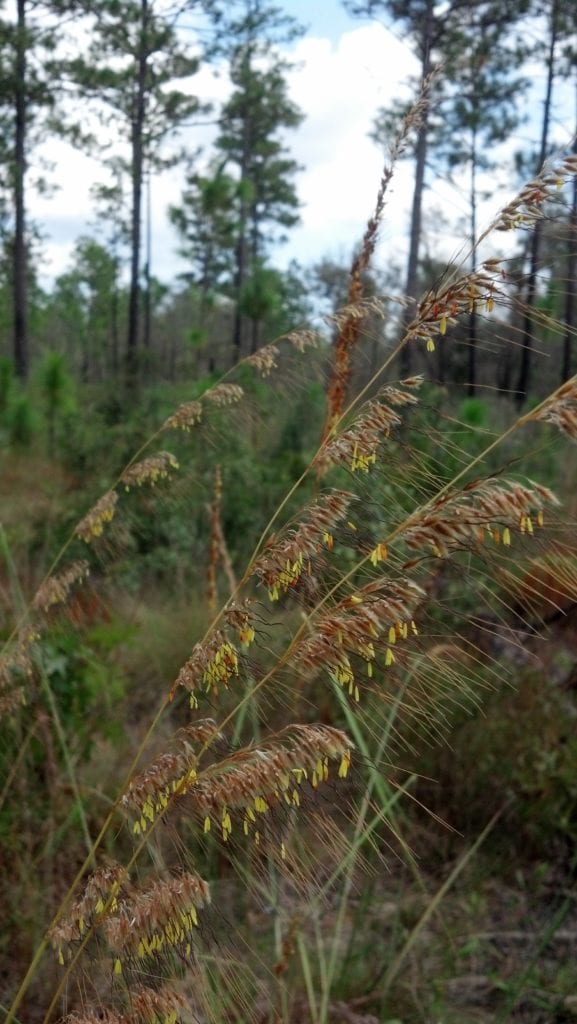
Lopsided-indiangrass is one of several native bunchgrasses found in longleaf habitats. Photo by Carol Denhof.
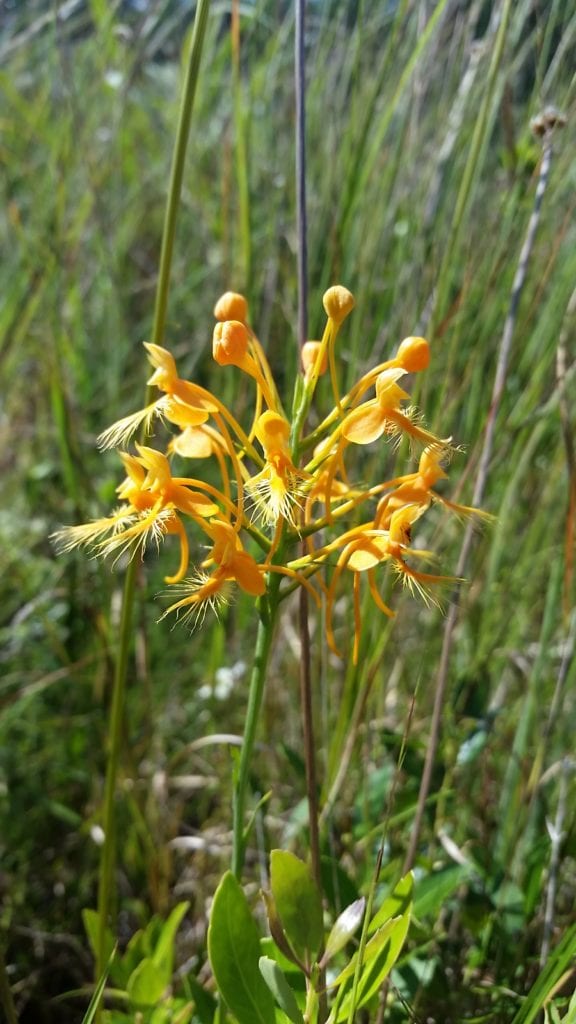
The beautiful oranged-fringed orchid is often found in longleaf sandhills. Photo by Carol Denhof.

Animals
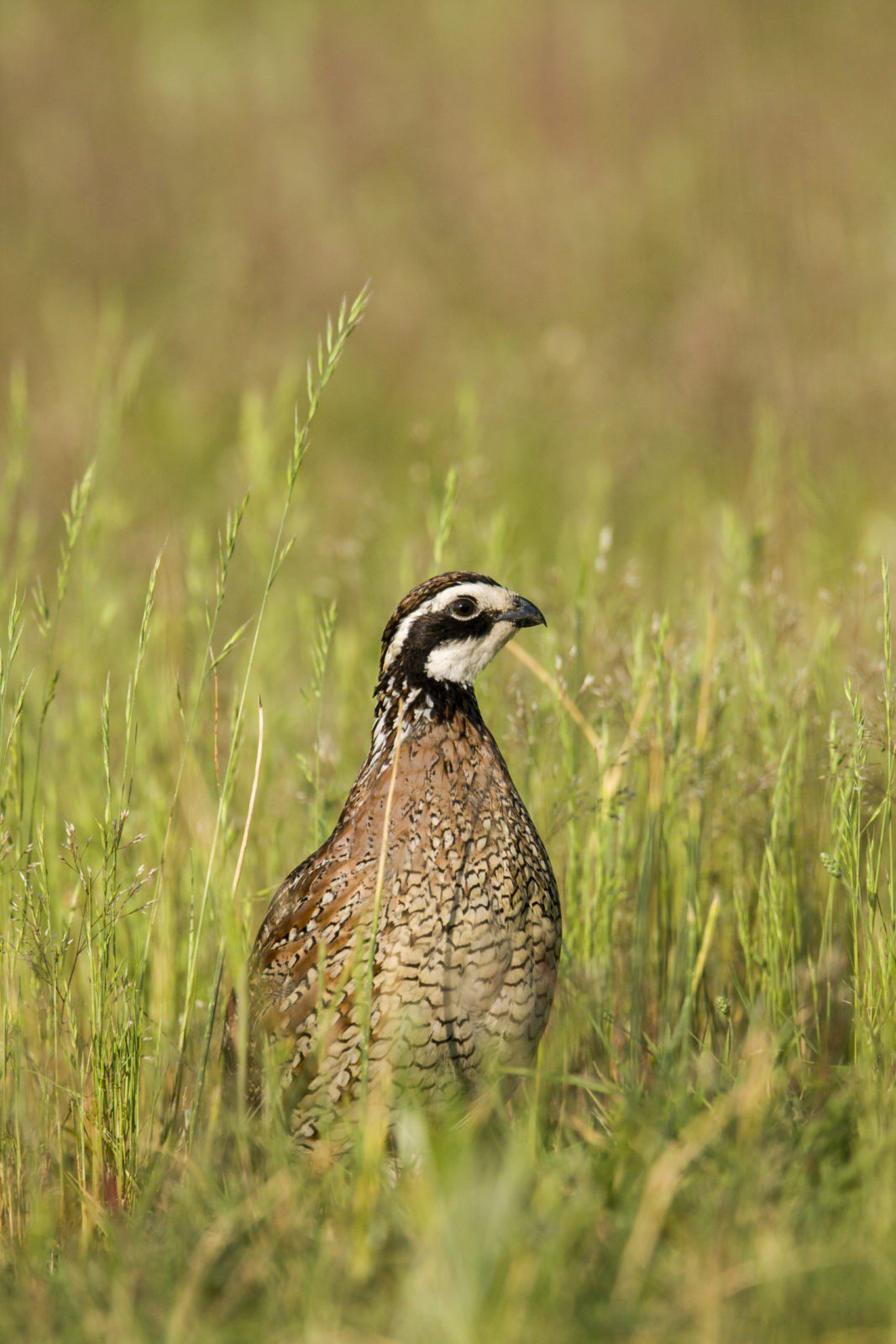
Prescribed burning to maintain quail habitat benefits many habitats, including longleaf pine savannas. Photo by Brady Beck.
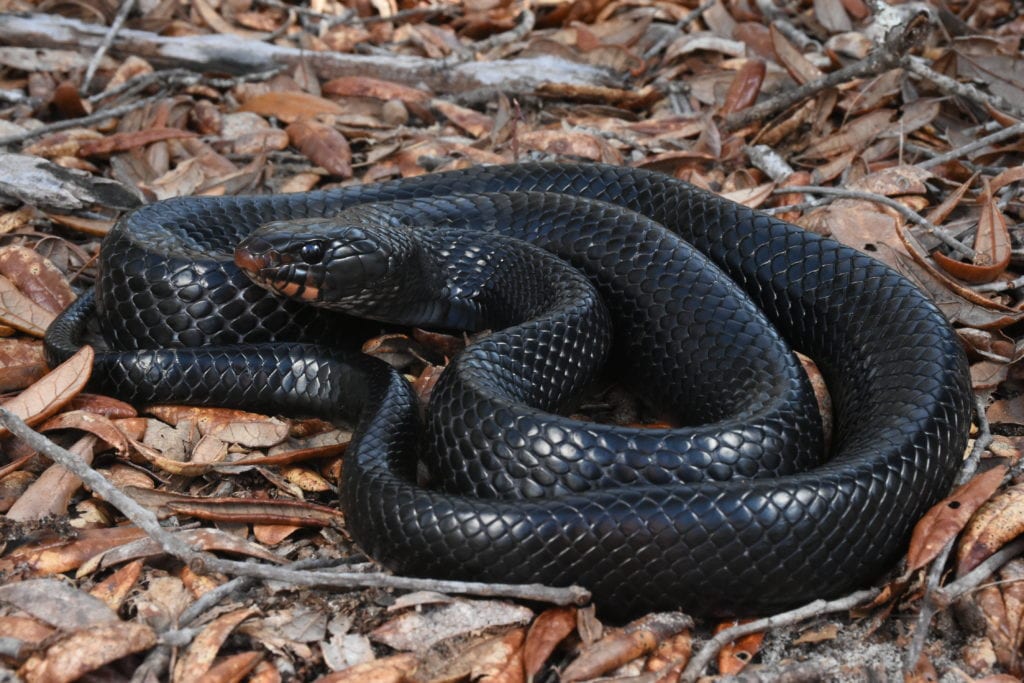
The Eastern indigo snake uses both the uplands and the wetlands within the longleaf landscape. Photo by Ben Stegenga.
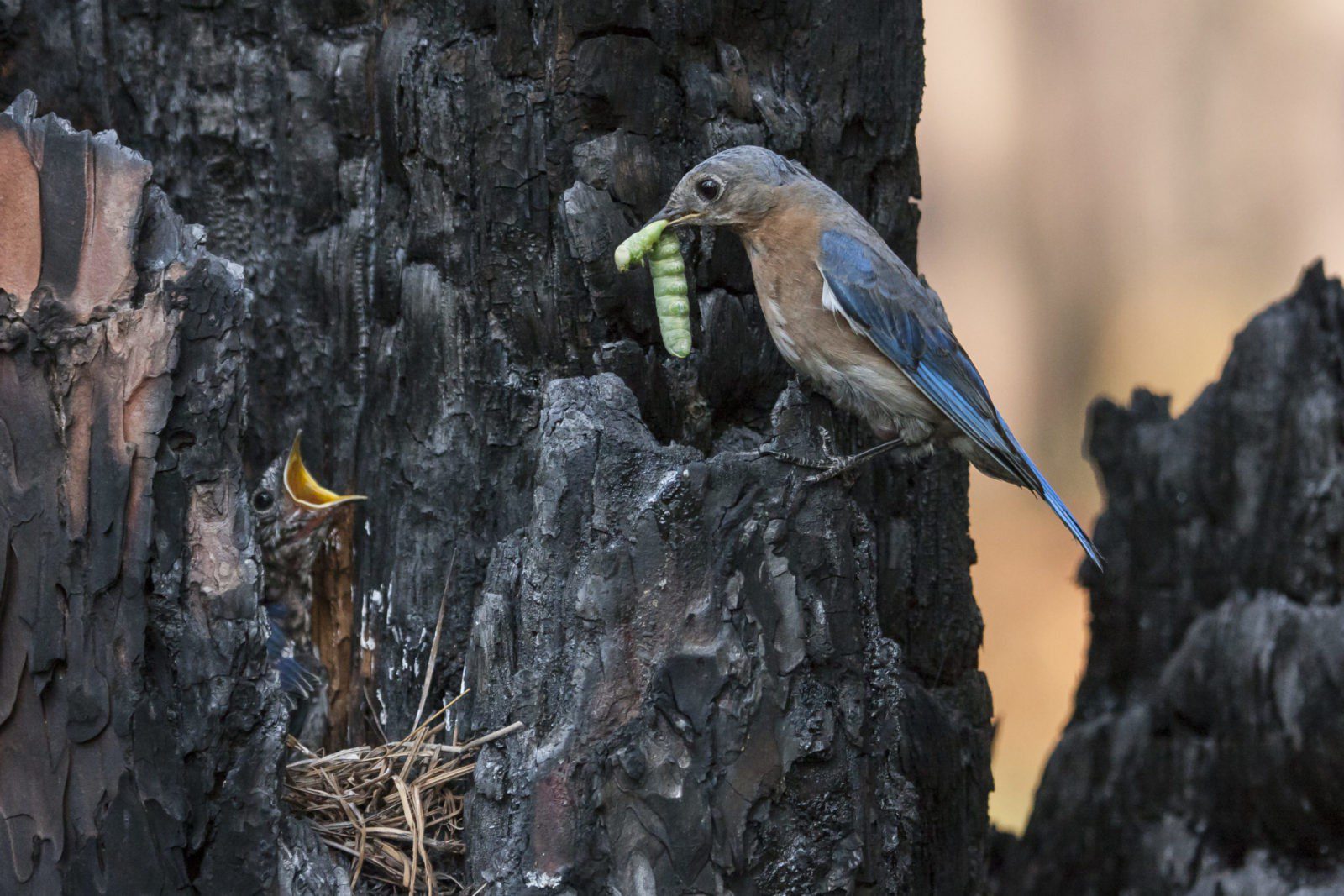
An eastern bluebird feeds young in its charred stump nest cavity. Photo by Brady Beck.
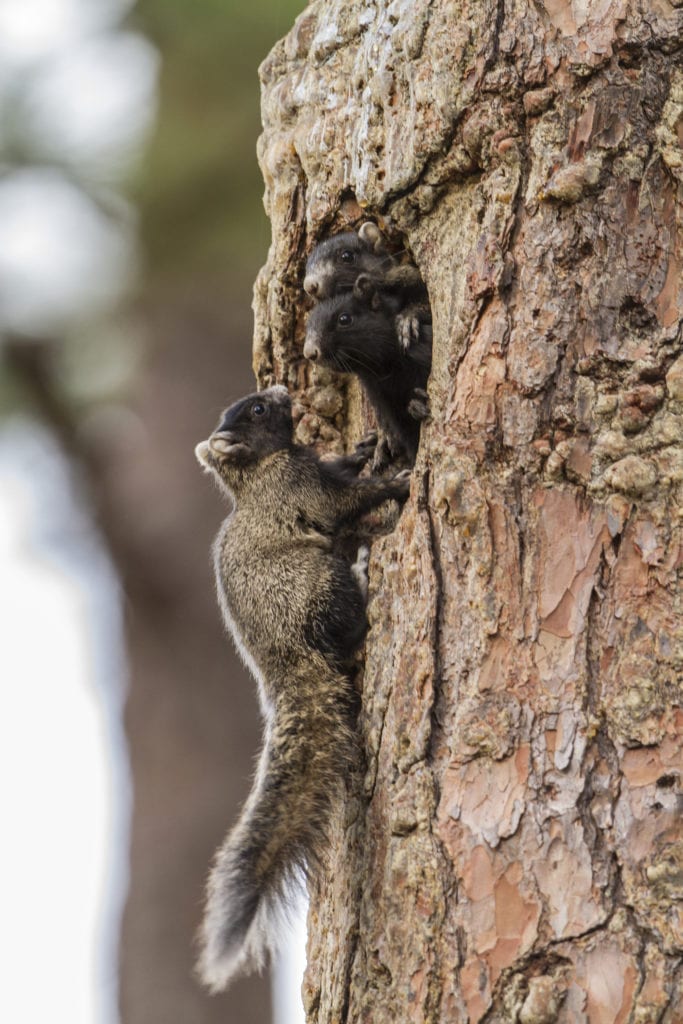
The eastern fox squirrel's large size allows it to consume unopened longleaf cones. Photo by Brady Beck.
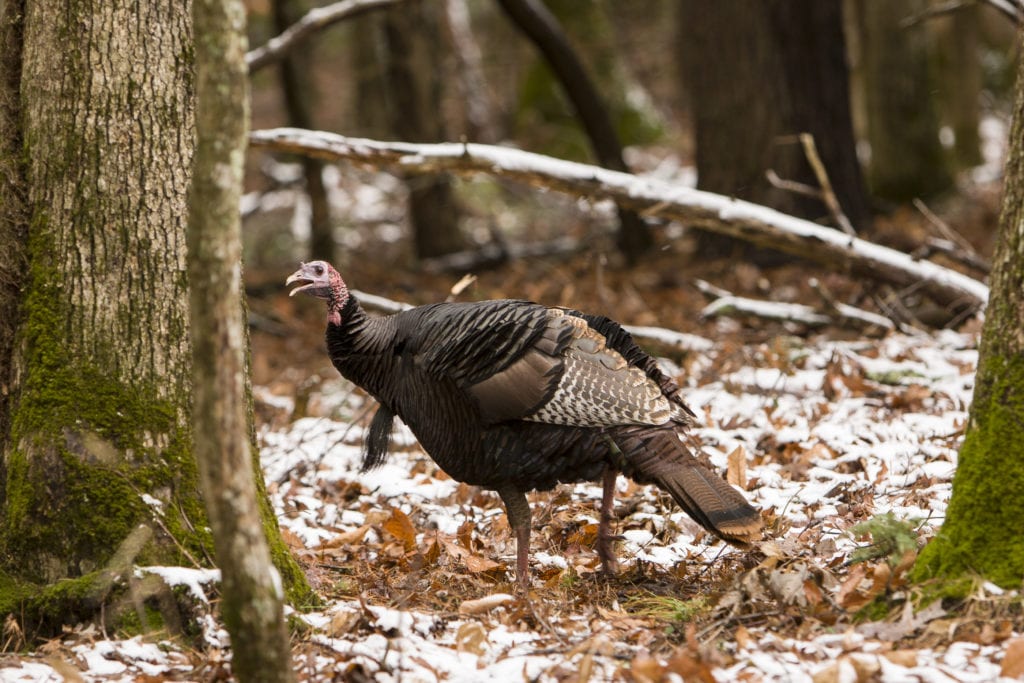
Wild turkeys have been shown to prefer longleaf woods that are frequently burned. Photo by Brady Beck.
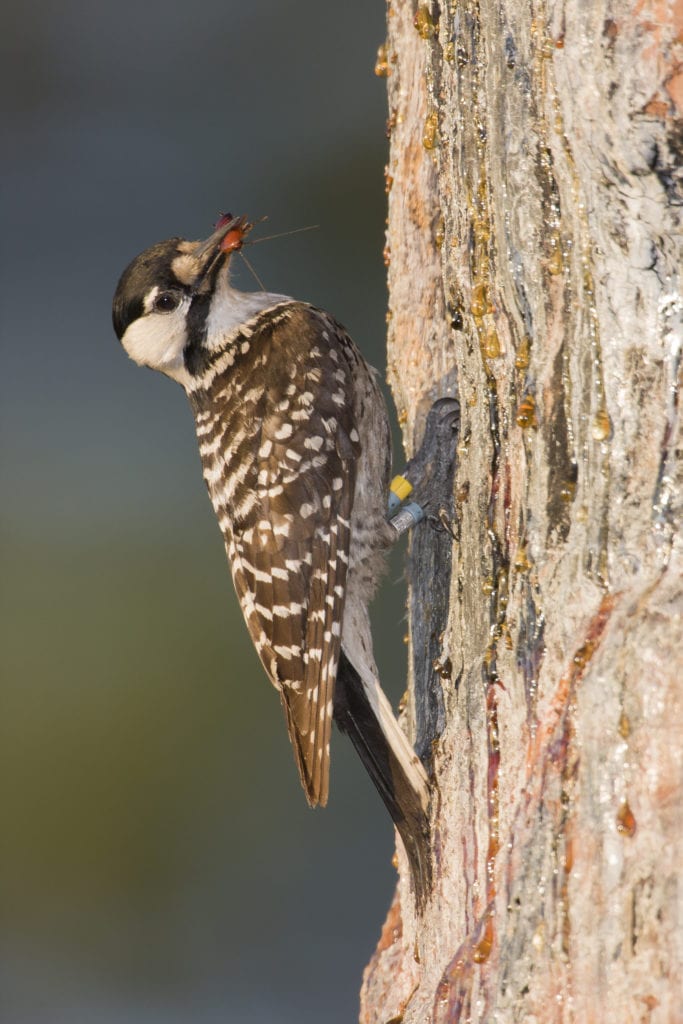
Longleaf pine savannas provide ideal habitat for the endangered red-cockaded woodpecker. Photo by Brady Beck.
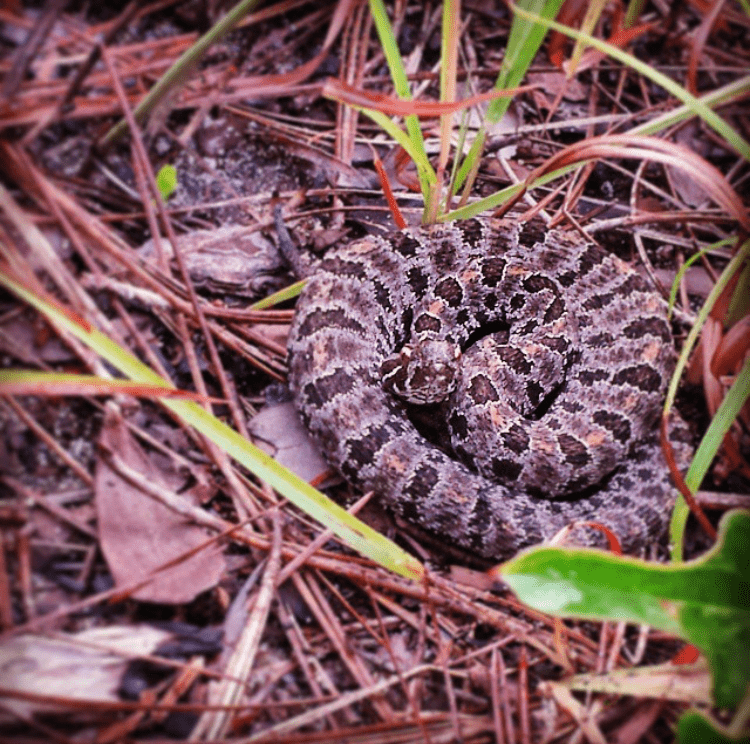
The small pygmy rattlesnake is seldom seen but fairly common in longleaf woodlands. Photo by Kris Dwitter.
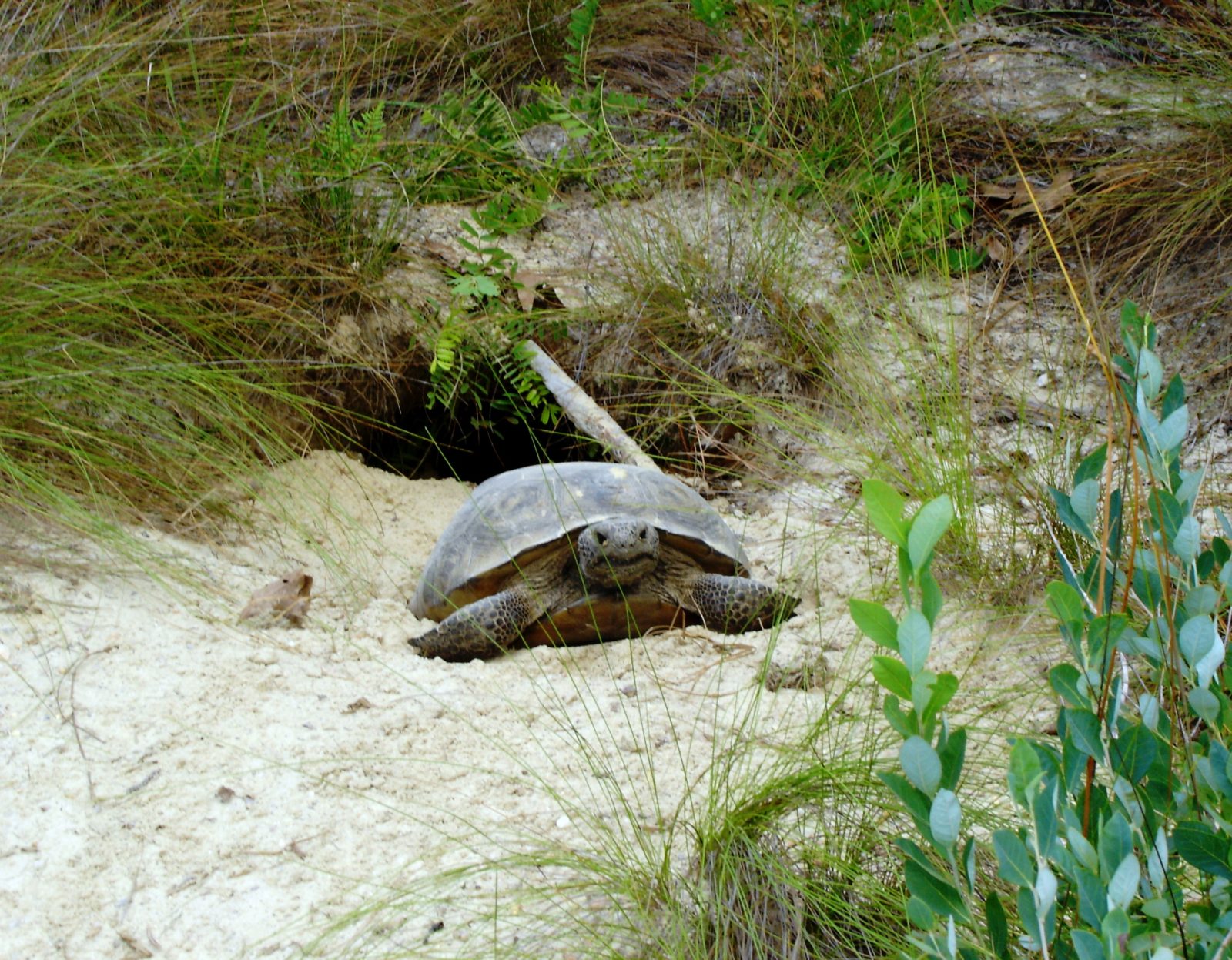
A gopher tortoise on the apron of its burrow. Photo by Randy Tate.

Restoration & Management
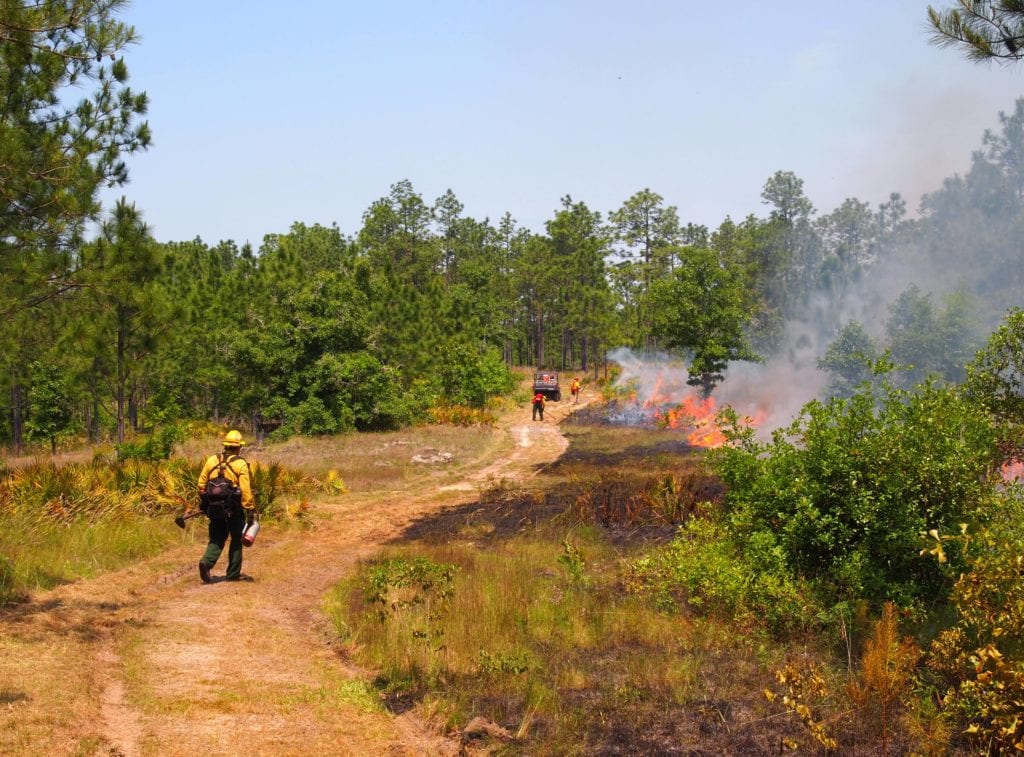
Georgia's Interagency Burn Team conducting a prescribed burn at The Nature Conservancy's Broxton Rocks Preserve in Coffee County, GA. Photo by Randy Tate.
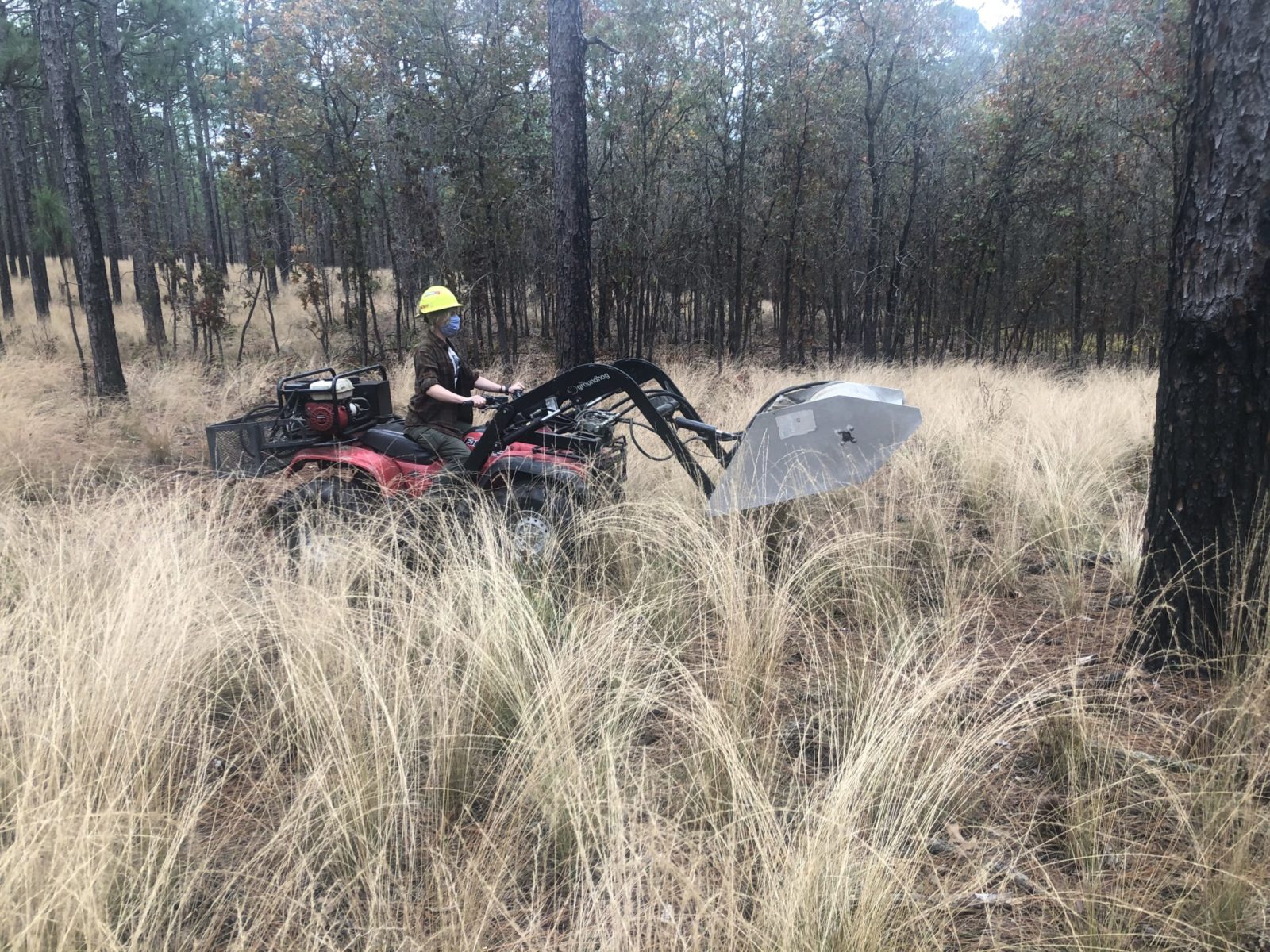
A seed harvester, or flail vac, is crucial in gathering sufficient native seed to conduct native groundcover restoration at scale. Carvers Creek State Park, NC. Photo by Thomas Crate.
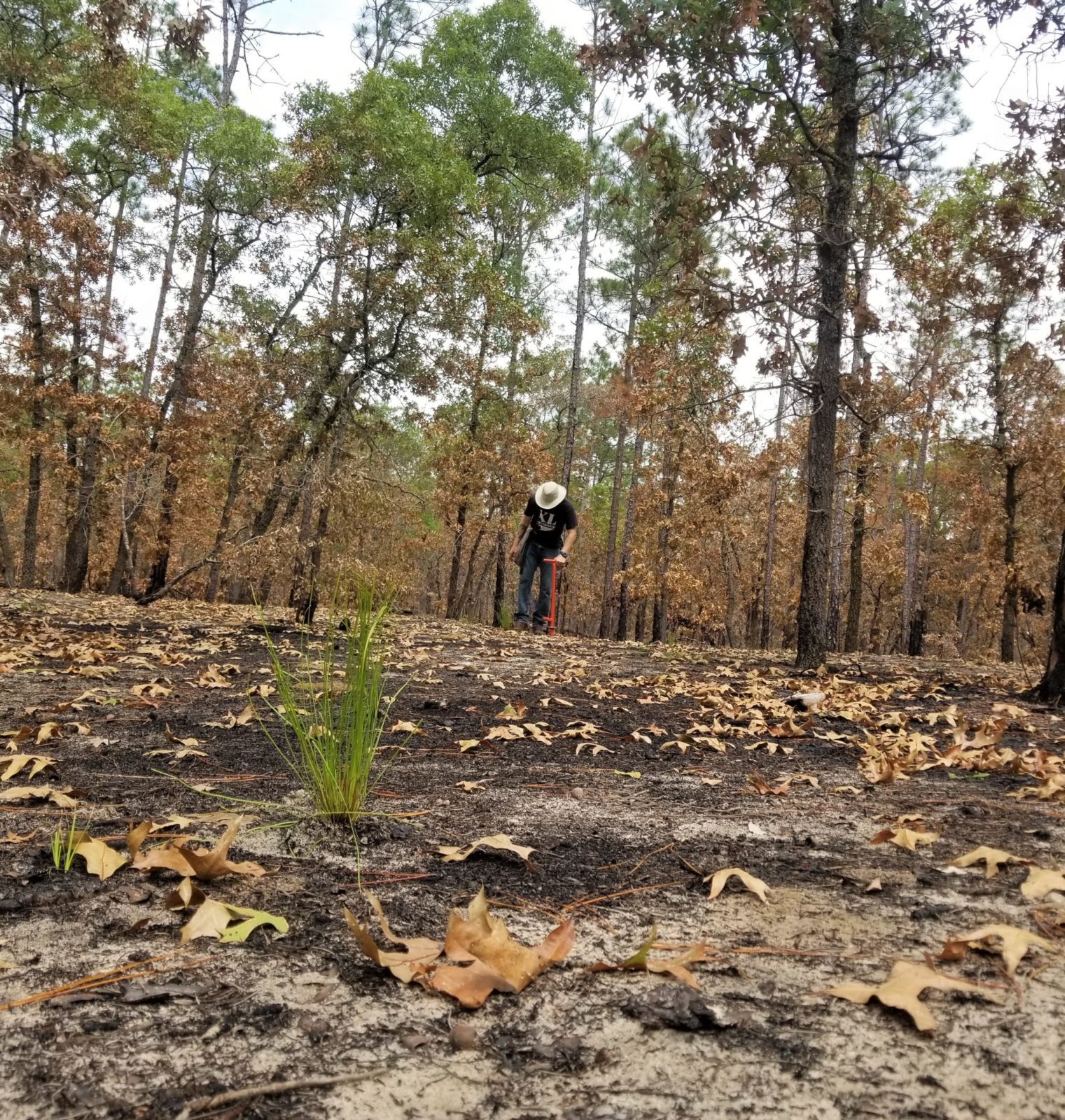
Following a site prep burn, longleaf seedlings were planted at the Orianne Indigo Snake Preserve in Telfair County, GA. Photo by Jacob Barrett.
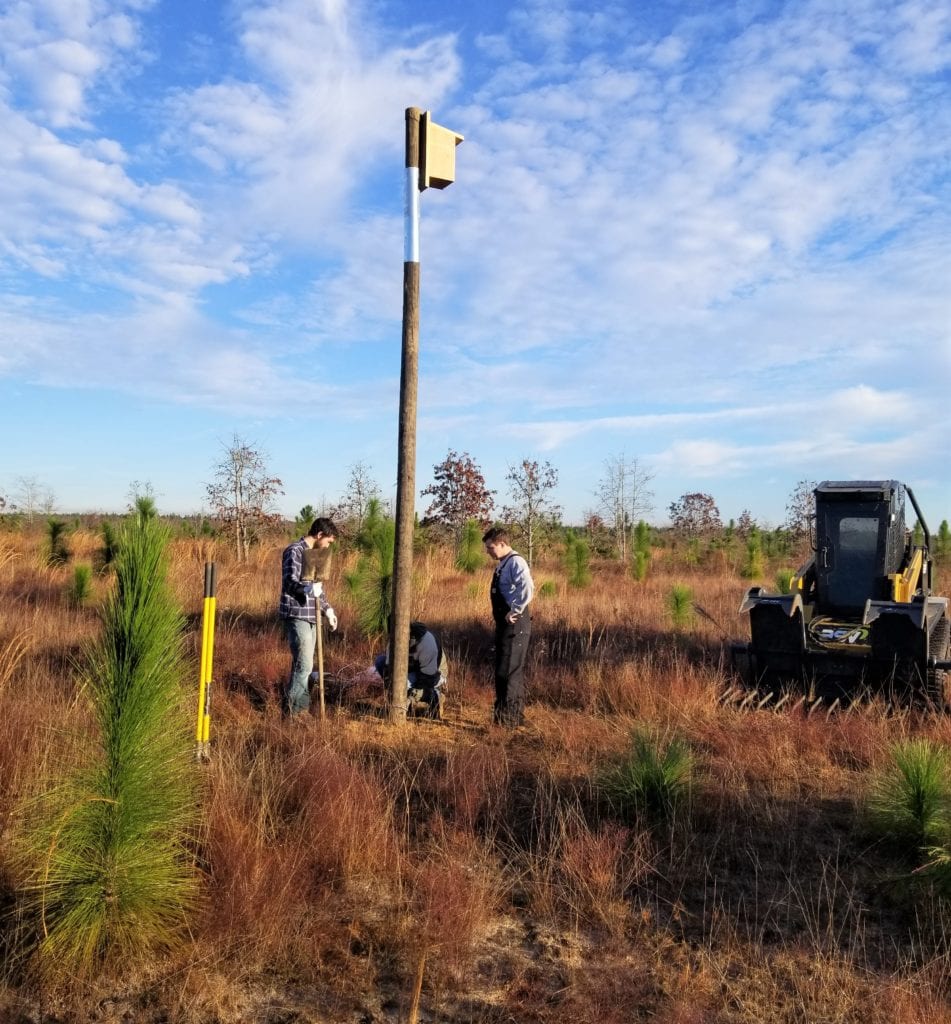
An American Kestrel nest box, bring installed at the Orianne Indigo Snake Preserve, will help this decling native falcon rebound. Photo by Jacob Barrett.
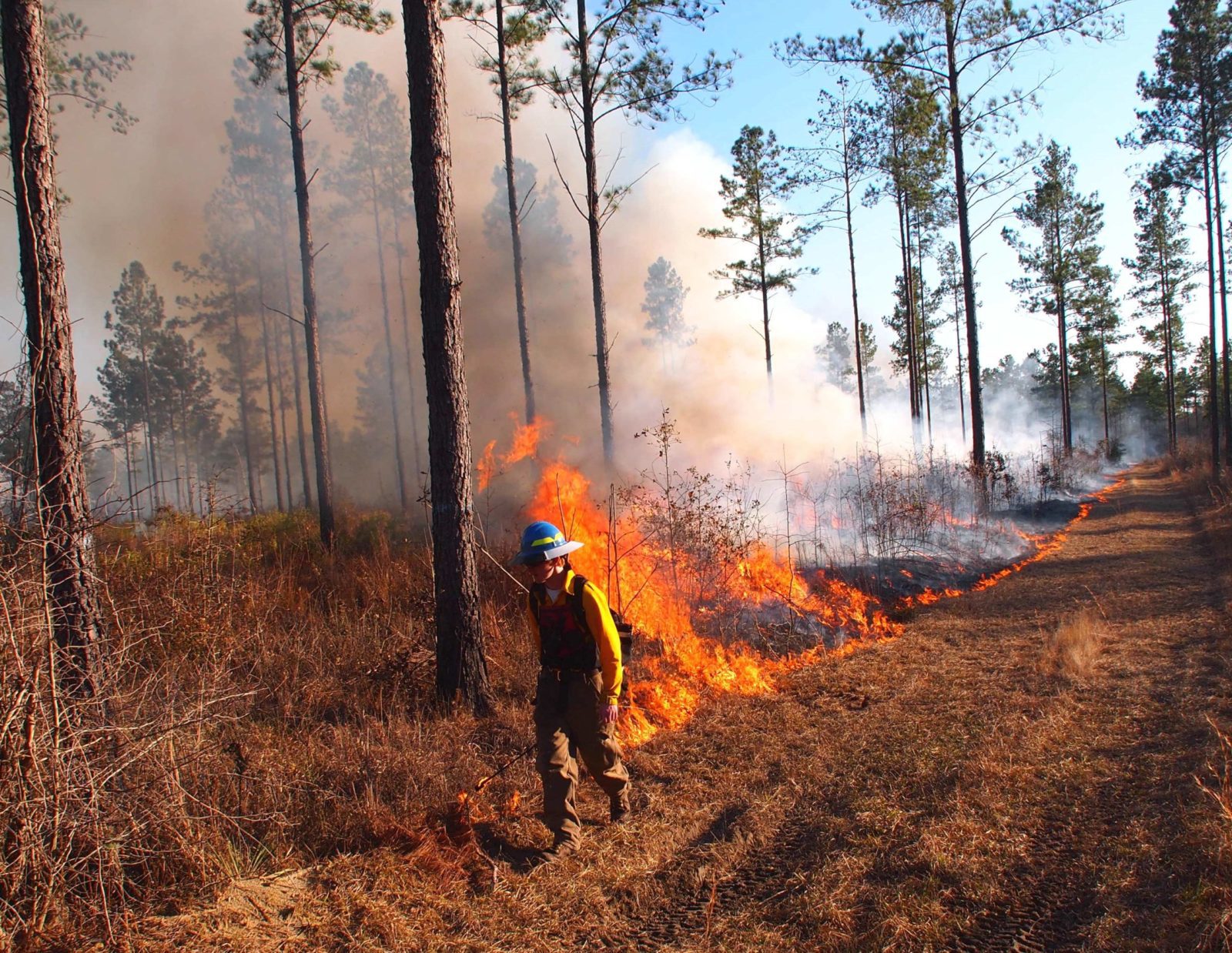
An Orianne Society fire tech lays down a line of fire pulling nicely off the firebreak. Photo by Randy Tate.

BROWSE THIS SECTION

  • The Tree
    • Life Stages
    • The Economics
    • The History
    • The Misconceptions
  • The Ecosystem
    • Built by Fire
    • Habitats
    • Species Diversity
  • Restoration & Management
    • Groundcover Restoration
    • Herbicides
    • Longleaf Regeneration
    • Prescribed Fire
  • Photo Gallery

From our feed

You’re a Mighty Pine Friend! On Valentine’s Day, You’re a Mighty Pine Friend! On Valentine’s Day, as many of us set aside time to express heartfelt gratitude, we would like to take this opportunity to personally thank you for your contributions to The Longleaf Alliance and the longleaf pine ecosystem. On behalf of our dedicated staff and Board of Directors, we are deeply grateful that you’ve chosen to conserve, restore, and care about the natural world. The Alliance quite literally couldn’t operate without its unbe-LEAF-able supporters. 📷 Longleaf Alliance Board of Directors and Executive Staff at Brosnan Forest, a private 14,400-acre preserve near Charleston, SC. [Carol Denhof]#WeLoveOurMembers #WLOMW2026 #WLOM2026 #ForTheLoveOfLongleaf #WeHeartLongleaf #LongleafLove #RestoreLongleaf #longleafalliance #longleafpineecosystem #longleaf #longleafpine #longleafpines #ThankYouNorfolkSouthern
#WeLoveOurMembers Trivia Challenge – Burner Bob®, #WeLoveOurMembers Trivia Challenge – Burner Bob®, our favorite prescribed fire advocate, is a Bobwhite Quail. While Bob lives in the longleaf pine forest, his quail family can also be found in other habitats including grasslands, scrub, and old fields.Which map represents the species range of Northern Bobwhite Quail?Comment with your guesses to enter the "We Love Our Members" ✨GIVEAWAY✨ Today is the last chance to win one of 3 prizes!#BirdsOfThePine #WLOM2026 #WLOMW2026 #BeOurValentine #ForTheLoveOfLongleaf #WeHeartLongleaf #LongleafLove #RestoreLongleaf #longleafalliance #longleafpineecosystem #longleaf #longleafpine #longleafpines #Pinuspalustris
We 💖 Our Members Spotlight 🌱 “I’d like to recogni We 💖 Our Members Spotlight 🌱“I’d like to recognize Ernst Conservation Seeds for their steady and impactful 20-year conservation partnership with The Longleaf Alliance. Ernst’s dedicated staff provide native plant materials that are so important for restoration, reclamation, and habitat enhancement. They identify, collect, and propagate new species and ecotypes that meet clients’ needs, from eastern Canada to the southeastern United States. They are undoubtedly making a direct impact on the restoration of our beloved longleaf pine ecosystem. It is an honor to work closely with dedicated partners like Ernst.” - Carol Denhof, TLA President@ernstseeds  #WLOM2026 #WLOMW2026 #BeOurValentine #ForTheLoveOfLongleaf #WeHeartLongleaf #LongleafLove #RestoreLongleaf #longleafalliance #longleafpineecosystem #longleaf #longleafpine #longleafpines #Pinuspalustris
Patrick Elliott’s stunning longleaf ecosystem illu Patrick Elliott’s stunning longleaf ecosystem illustration is bursting with biodiversity! His artwork features 164 different species of plants and animals found across longleaf pine forests in Florida, Georgia, and Alabama. Every inch of the piece highlights just how rich and vibrant the longleaf ecosystem truly is. Explore the species key at https://longleafalliance.org/wp-content/uploads/2026/02/Ecosystem-Print-Teacher-Set.pdfThanks for playing along with "We Love Our Members" Trivia. ✨GIVEAWAY✨ winners will be announced next week!#WLOM2026 Trivia answer #EcosystemArt #Biodiversity #WeLoveOurMembers #WLOMW2026 #BeOurValentine #ForTheLoveOfLongleaf #WeHeartLongleaf #LongleafLove #RestoreLongleaf #longleafalliance #longleafpineecosystem #longleaf #longleafpine #longleafpines #Pinuspalustris

Conservation partners

Manulife

Manulife

PRT

PRT

RMS

RMS

Norfolk Southern

Norfolk Southern

Bartlett

Bartlett

advantage

advantage

Blanton

Blanton

Drax

Drax

Enviva

Enviva

Graphic Packaging International

Graphic Packaging International

Kronospan

Kronospan

  • Home
  • Who We Are
  • What is Longleaf?
  • What We Do
  • What You Can Do
  • The Longleaf Library
  • Photo Gallery
  • Merchandise
  • Events
  • News
  • Donate
  • Contact
  • Subscribe
footer-logo

12130 Dixon Center Road
Andalusia, Alabama 36420
Phone: 334.427.1029


©2025 The Longleaf Alliance
HLJ Creative Web Design