Skip to content
  • Close
  • Home
  • Events
  • News
  • Donate
  • Contact
  • Who We Are
    • About The Alliance
      • Staff
      • Board of Directors
  • What is Longleaf?
    • The Tree
      • Life Stages
      • The History
      • The Economics
      • The Misconceptions
    • The Ecosystem
      • Built by Fire
      • Habitats
      • Species Diversity
    • Restoration & Management
      • Groundcover Restoration
      • Herbicides
      • Longleaf Regeneration
      • Prescribed Fire
    • Photo Gallery
  • What We Do
    • Restoration Through Partnerships
      • America’s Longleaf
      • Mapping
      • Corporate Sustainability Programs
      • Nurseries
      • Longleaf Enhancement Fund for Seed & Seedling Production
    • Longleaf Assistance
    • Conserving Diverse Forests
      • Rare Species
      • Forests & Water
      • Georgia Sentinel Landscape Prescribed Fire
    • Education & Outreach
      • Longleaf Academy Program
      • Biennial Longleaf Conference
      • Burner Bob®
      • Next Generation
      • The Longleaf Leader
      • The Longleaf Library
      • The Owen Fellowship
  • What You Can Do
    • Support The Alliance
    • Conservation Partners
    • Get Involved
    • Merchandise
    • Subscribe
logo
  • Contact
  • Events
  • Donate
search
newsearch

Education & Outreach

HomeWhat We DoEducation & OutreachBurner Bob®

Meet Burner Bob®

Burner Bob® is a Bobwhite Quail who lives in the longleaf forest with other animal friends such as gopher tortoises, indigo snakes, and Red-cockaded Woodpeckers. He devotes his life to explaining that the longleaf forest with its many plants and animals has evolved over time to being burned on a regular basis. The forests need fire to survive and thrive so Burner Bob® shows people how to burn them safely.

Burner Bob® – A Cool Dude with a Hot Message!®

Pyrodiversity Enkindles Biodiversity™

Burner Bob® and The Longleaf Alliance support prescribed fire to create healthy habitats for the plants and animals that call the longleaf ecosystem home.

Plant diversity in regularly burned longleaf pine habitats rivals the diversity in tropical rainforests. An area with a variety in fire characteristics — or pyrodiversity — will support more species of plants and, in return, more animals.

Walk in the Woods  | Save the Indigo |  Coloring Books  |  Request An Appearance

A Walk in the Woods with Burner Bob® & Friends

Take a walk with Burner Bob®, prescribed burner Shan Cammack, and their spunky fire ecologist friends as they visit The Fire Forest. 🔥🌲🔥

Along the way, they meet Burner Bob®'s plant and animal friends including the longleaf pine, gopher tortoise, and indigo snake, who thrive when their longleaf home is burned regularly.

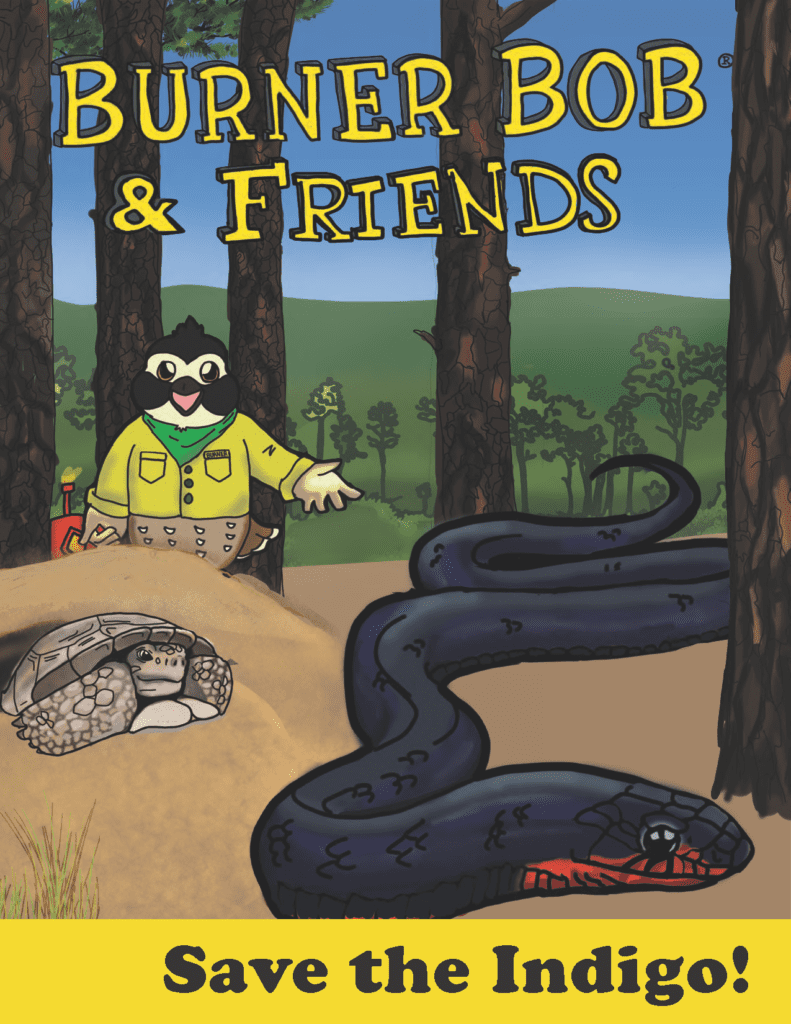
Save the Indigo - NEW Video and Coloring Book!

Introducing the Indigo is an award-winning short film for young people about a threatened species in the Southeast - the eastern indigo snake.

The longest snake native to North America, the indigo faces loss of habitat and other challenges.

Watch Now

Learn more about the eastern indigo snake and his friend the gopher tortoise with Burner Bob® & Friends newest coloring book - Save the Indigo.
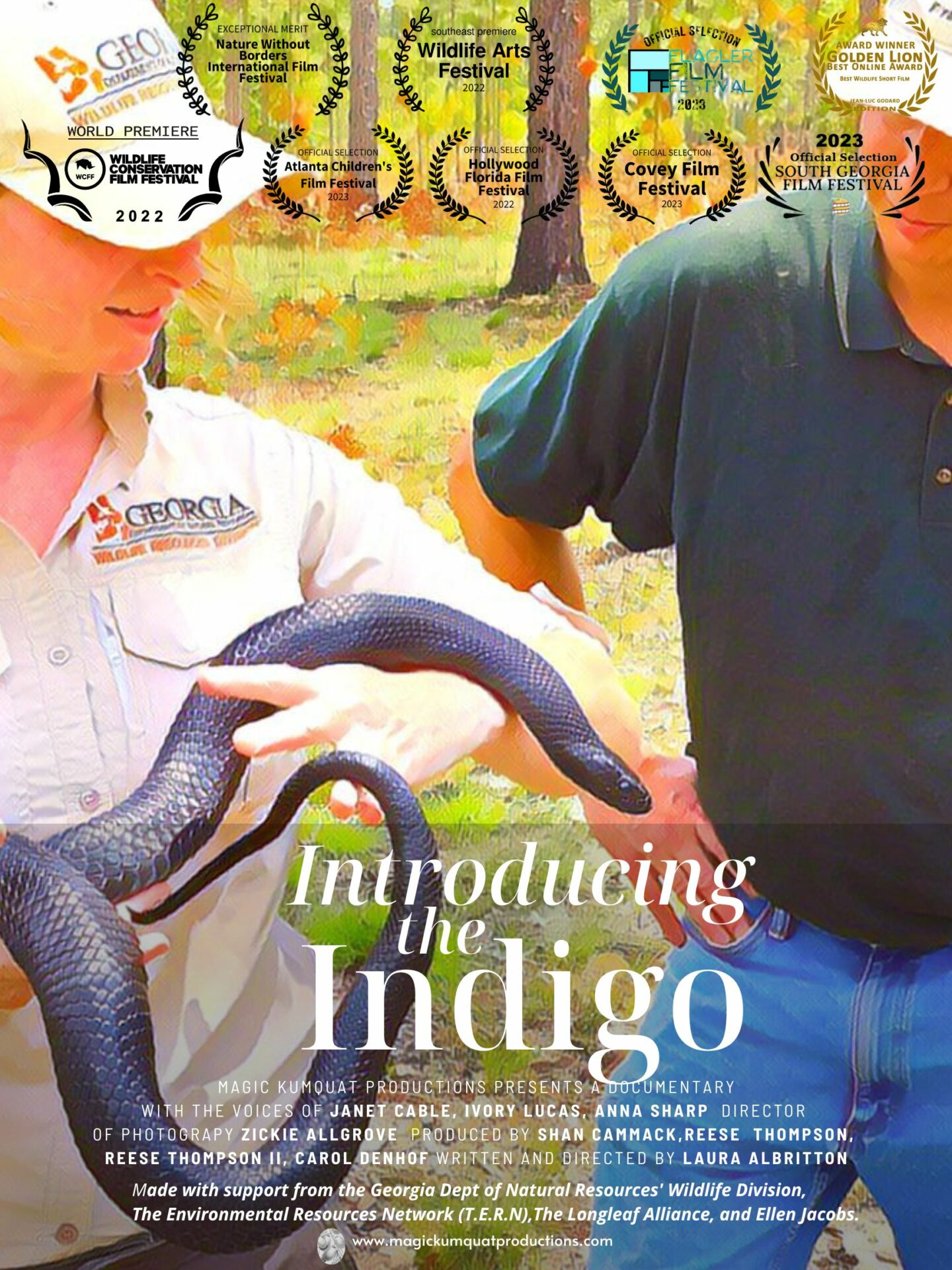
Introducing the Indigo

Burner Bob® & Friends Educational Resources

Learn more about Bob and why his longleaf home needs prescribed fire in his coloring book series Burner Bob® & Friends.
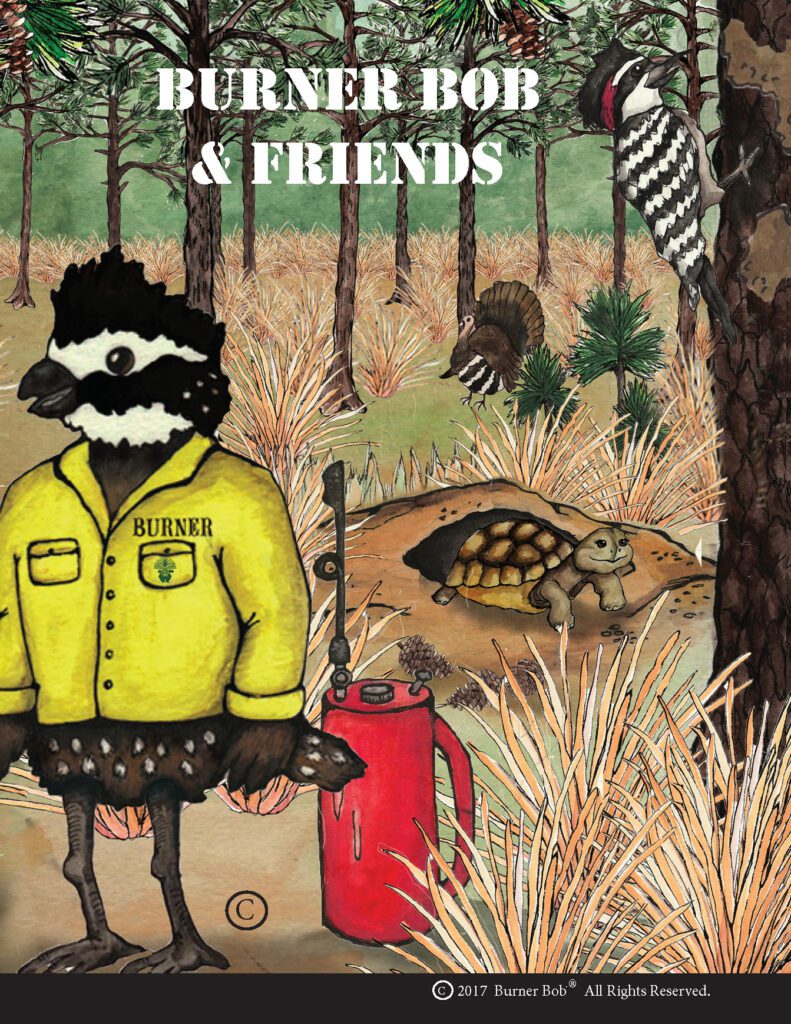
Burner-Bob-and-Friends_Coloring Book
Burner Bob® & Friends
Save the Indigo Coloring Book Cover
Save the Indigo

Request FREE printed copies of Burner Bob®'s coloring books using this form.

If your organization needs a special printing of the coloring book for distribution, please use this form instead.

Spread the Flame

Would you like to meet Burner Bob® in person?  Please contact us to request an appearance at your next fire or longleaf related event.

Burner Bob® Appearance request form

BROWSE THIS SECTION

  • Restoration Through Partnerships
    • America’s Longleaf
    • Mapping
    • Nurseries
    • Longleaf Enhancement Fund for Seed & Seedling Production
    • Corporate Sustainability Programs
  • Longleaf Assistance
  • Conserving Diverse Forests
    • Rare Species
    • Forests & Water
    • Georgia Sentinel Landscape Prescribed Fire Program
  • Education & Outreach
    • Longleaf Academy Program
    • Biennial Longleaf Conference
    • Burner Bob®
    • Next Generation
    • The Longleaf Leader
    • The Longleaf Library
    • The Owen Fellowship

From our feed

Curious about our Longleaf Academies? Our next cou Curious about our Longleaf Academies? Our next course is FREE for landowners to attend!  There's never been a better opportunity to come learn with us. (Link to register in our bio)If you can't join us in Alabama later this month, swipe to check out the other Longleaf Academies in the works this year...
TREE-ATHLON: The ultimate, long lasting endurance TREE-ATHLON: The ultimate, long lasting endurance event 🥇🌲This Winter Olympics season, we’re taking inspiration from a contender who’s been training for centuries: the longleaf pine.Event 1: The Super “G”All young longleaf pines compete in the Super “G” aka the grass stage – a period where the trees focus their growth underground to develop an extensive root system. Dense longleaf needles protect the tree’s growth bud from fire and will regrow post-burn. Time spent in the grass stage varies greatly with growing conditions. Event 2: The Fire SprintOnce a longleaf pine is ready to initiate height, the race is on! The tree grows rapidly as it transitions into the “bottle brush” or “rocket” stage, moving its growth bud above typical flame heights. During this time, longleaf pines are more vulnerable to fire damage until their bark thickens and protects the inner trunk.Event 3: The Long-RunLongleaf pines continue to grow tall. Lower limbs are pruned by frequent fire, keeping most flames below the tree’s canopy. Dropped needles provide fuel for more frequent fires, along with native groundcover plants that thrive in the open conditions associated with fire-maintained longleaf habitats. Longleaf pines can live for centuries, the longest of all southern pine species. This tree and associated ecosystems are gold champions in resilience. Swipe to see all the longleaf life stages...#Olympics #longleaf #LongleafPine  #grassstage
Did you know that February 2nd is Groundhog Day AN Did you know that February 2nd is Groundhog Day AND World Wetlands Day? It's true! And we're celebrating with one of our favorite critters that uses both burrows (like the famous Punxsutawney Phil) and embedded wetlands in the longleaf landscape…Gopher frogs depend on fire-maintained longleaf pine habitat as adults but breed and develop in adjacent open-canopied, fish-free ephemeral wetlands. The frogs spend most of their time in upland burrows made by other animals (like their eponym the gopher tortoise) as well as other underground hiding spots (like holes from decaying/burned tree stumps and roots).Gopher frogs generally breed during the late fall into spring, with peak activity after heavy rains in February and March. Prior to breeding, the frogs will relocate to a nearby wetland. Active mostly at night, the gopher frog isn’t a good candidate to predict weather with its shadow, but their presence can be an indicator of healthy upland and wetland habitat. Once found throughout the southeastern Coastal Plain, gopher frogs are now reduced to a number of isolated populations. 📷 Gopher frog emerging from an upland stump hole [Brady Beck Photography]📷 Gopher frog found at breeding wetland site following winter rains [Samantha Dillon/TLA]📷 Gopher frog egg mass attached to wetland plants [Jeff Hall/NCWRC]📷 Ephemeral wetland breeding site surround by upland pine forest [Melanie Olds/USFWS]#GopherFrog #longleaf #longleafpine #PrescribedFire #WorldWetlandDay #GroundhogDay
Prescribed fire today often happens at the interse Prescribed fire today often happens at the intersection of people and nature — the wildland-urban interface. From protecting homes, trails, and boardwalks to safeguarding power lines, signage, and fences, careful planning is key. It also means looking out for what nature depends on, like red-cockaded woodpecker (RCW) cavity trees.📷Longleaf Alliance and Florida Forest Service staff protecting an RCW cavity tree (marked with a white band) on a prescribed burn operation at Blackwater State Forest. [Samantha Dillon]Learn how fire professionals balance safety, conservation, and community at the West Florida Fire & Nature Festival on March 7th (9am-3pm) at the University of West Florida!If you're not local to Pensacola, check out one of the upcoming prescribed fire festivals from our partners >> swipe to see the map & dates...#goodfire #prescribedfire #wildlife #longleaf #floridawildlife #keepFLwild #rcw #firefestival #rxfire

Conservation partners

Manulife

Manulife

PRT

PRT

RMS

RMS

Norfolk Southern

Norfolk Southern

Bartlett

Bartlett

advantage

advantage

Blanton

Blanton

Drax

Drax

Enviva

Enviva

Graphic Packaging International

Graphic Packaging International

Kronospan

Kronospan

  • Home
  • Who We Are
  • What is Longleaf?
  • What We Do
  • What You Can Do
  • The Longleaf Library
  • Photo Gallery
  • Merchandise
  • Events
  • News
  • Donate
  • Contact
  • Subscribe
footer-logo

12130 Dixon Center Road
Andalusia, Alabama 36420
Phone: 334.427.1029


©2025 The Longleaf Alliance
HLJ Creative Web Design