Skip to content
  • Close
  • Home
  • Events
  • News
  • Donate
  • Contact
  • Who We Are
    • About The Alliance
      • Staff
      • Board of Directors
  • What is Longleaf?
    • The Tree
      • Life Stages
      • The History
      • The Economics
      • The Misconceptions
    • The Ecosystem
      • Built by Fire
      • Habitats
      • Species Diversity
    • Restoration & Management
      • Groundcover Restoration
      • Herbicides
      • Longleaf Regeneration
      • Prescribed Fire
    • Photo Gallery
  • What We Do
    • Restoration Through Partnerships
      • America’s Longleaf
      • Mapping
      • Corporate Sustainability Programs
      • Nurseries
      • Longleaf Enhancement Fund for Seed & Seedling Production
    • Longleaf Assistance
    • Conserving Diverse Forests
      • Rare Species
      • Forests & Water
      • Georgia Sentinel Landscape Prescribed Fire
    • Education & Outreach
      • Longleaf Academy Program
      • Biennial Longleaf Conference
      • Burner Bob®
      • Next Generation
      • The Longleaf Leader
      • The Longleaf Library
      • The Owen Fellowship
  • What You Can Do
    • Support The Alliance
    • Conservation Partners
    • Get Involved
    • Merchandise
    • Subscribe
logo
  • Contact
  • Events
  • Donate
search
newsearch

Conserving Diverse Forests

HomeWhat We DoConserving Diverse ForestsForest & Water

Forests & Water

Healthy forests produce safe and reliable drinking water.

Two-thirds of the freshwater in the United States comes from forested watersheds. Watersheds that are healthy and well-managed, produce clean water. That means that well managed, fire-maintained longleaf ecosystems help to protect our water supply.

Clean water is less expensive to treat, benefits local economies and communities, provides wildlife habitat, scenic vistas, carbon sequestration, recreational opportunities, and human health and well-being.

Georgia and South Carolina – Lower Savannah River Watershed

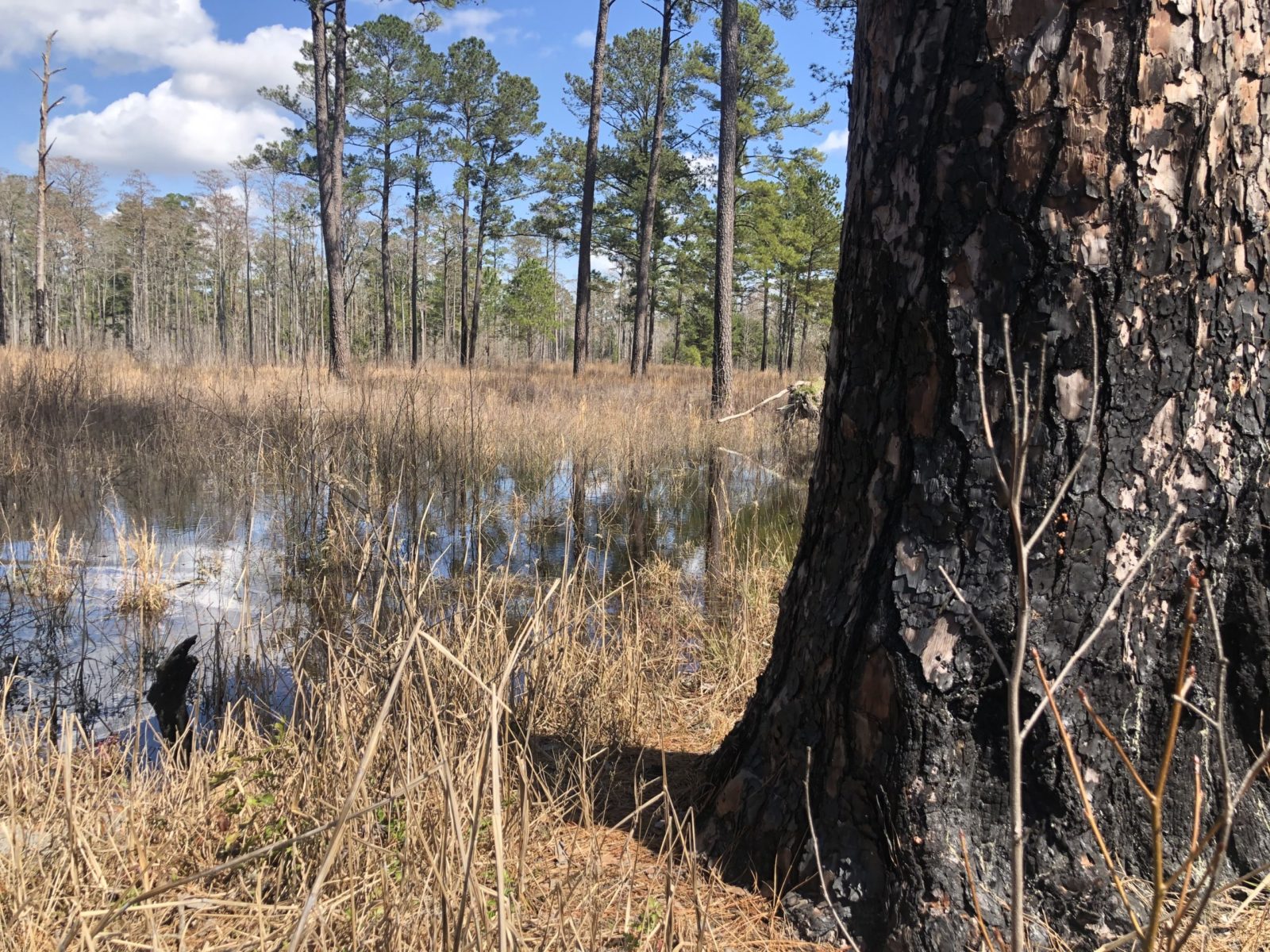
Forest landowners are a key part of supporting health watersheds and our drinking water. In South Carolina and Georgia, The Longleaf Alliance partners with the Southeastern Partnership for Forests and Water, the Savannah River Clean Water Fund, and the Georgia and South Carolina Forestry Commissions to provide assistance to forest landowners.
Wetland_Lisa Lord (1)

We work closely with our natural resource partners, land trusts, drinking water utilities, and landowners to manage and permanently protect and restore forests, with a focus on lands that contribute to protecting water quality in the lower Savannah River Basin. The overall goal is to retain 60% of the forest cover in the watershed.

Savannah River Web Mapping Application
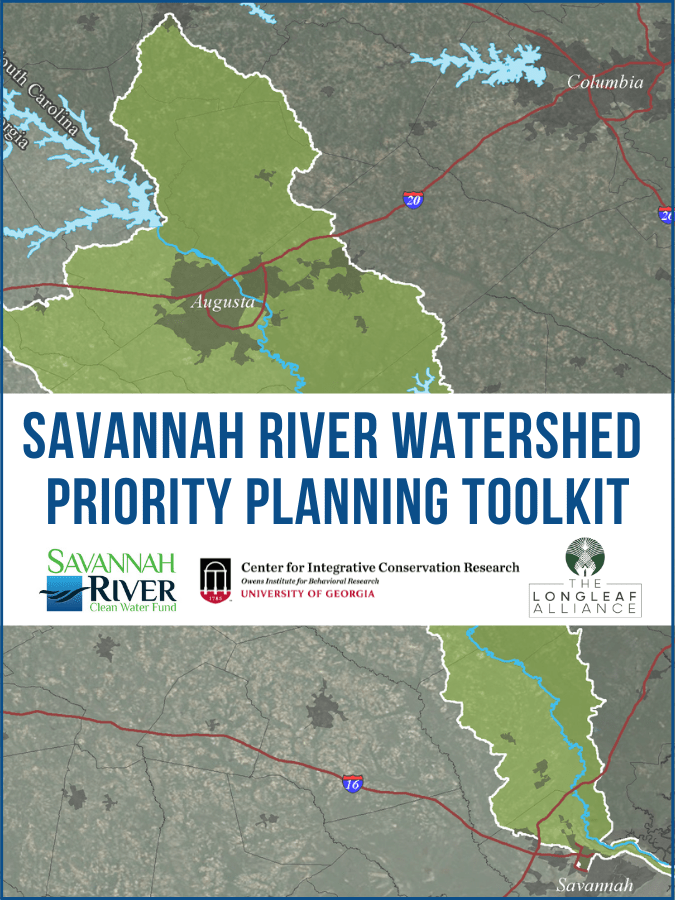
Savannah River Watershed Priority Planning Toolkit

The Savannah River Watershed Conservation Priority Index (CPI) Map shows the areas of greatest importance for the conservation of clean drinking water by protecting health forests in the lower Savannah River watershed.

Savannah River Conservation Priority Map
User Guide - ArcGIS Online Web Mapping
Data Use Agreement & Request Form

Additional Resources

Longleaf Pine: A Tall Drink of Water

Healthy Forests = Clean Water Fact sheet

Clean Water Fact Sheet

BROWSE THIS SECTION

  • Restoration Through Partnerships
    • America’s Longleaf
    • Mapping
    • Nurseries
    • Longleaf Enhancement Fund for Seed & Seedling Production
    • Corporate Sustainability Programs
  • Longleaf Assistance
  • Conserving Diverse Forests
    • Rare Species
    • Forests & Water
    • Georgia Sentinel Landscape Prescribed Fire Program
  • Education & Outreach
    • Longleaf Academy Program
    • Biennial Longleaf Conference
    • Burner Bob®
    • Next Generation
    • The Longleaf Leader
    • The Longleaf Library
    • The Owen Fellowship

From our feed

Meet Ren Wright, a self‑taught Alabama artist and Meet Ren Wright, a self‑taught Alabama artist and endangered species biologist whose work is rooted in a lifelong love of wildlife and conservation. From restoring fire‑adapted ecosystems in the Conecuh National Forest to creating nature‑inspired art, Ren blends science and creativity beautifully.Ren is the artist behind the West Florida Fire & Nature Festival poster and new custom stickers designed for The Longleaf Alliance to be debuted at the event on March 7, 2026. If you love nature‑inspired art, check out more of Ren’s work at www.wrenillustrated.com#goodfire #prescribedfire #wildlife #firefestival #floridawildlife #rxfire #longleaf
We’re thrilled to kick off the very first West Flo We’re thrilled to kick off the very first West Florida Fire & Nature Festival on March 7th! Join us for an exciting outdoor event highlighting the role of prescribed fire in Florida’s forests. 🔥🌲Connect with local organizations that are using “good fire” to protect wildlife and reduce wildfire risk in our community—plus enjoy food trucks, free face painting, fire equipment, and more!#goodfire #prescribedfire #wildlife #firefestival #floridawildlife #rxfire #longleaf@uwf @flforestservice
📢 Calling all graduate students 📢 NEXT FRIDAY (Jan 📢 Calling all graduate students 📢 NEXT FRIDAY (Jan 23rd) is the deadline for applications for The Owen Fellowship!!!The Owen Fellowship is a two-year program offered in conjunction with the Biennial Longleaf Conference and aims to advance longleaf pine research with a $20,000 award for graduate students. This is the 3rd year of this amazing opportunity with previous recipients including Kelly Petersen and Ian Warr, both graduate students at the University of Georgia. Information about past project and application details at longleafalliance.org > news (link in bio)/
The Southeast kicked off January 2026 with an unus The Southeast kicked off January 2026 with an unusually warm “winter thaw,” but that cozy trend is over. A significant Arctic blast is pushing south, and forecasters are predicting sub-freezing temperatures across much of the longleaf pine range. When temperatures drop for extended periods, or when extreme temperature fluctuations occur, there is a risk of freeze injury to longleaf pine seedlings.KNOW THE RISKS: ✔ Pine root and stem tissue is susceptible to injury when temperatures fall below 25°F.✔ Without the insulating properties of soil, lifted bareroot seedlings and containerized seedlings are especially vulnerable. ✔ Store unplanted seedlings in temperatures above 32° and wait to plant until conditions improve.✔ Planted seedlings are more protected in the ground but may still be vulnerable to freeze damage at ground level and surface roots, or the soil may not have properly settled to provide adequate insulation.More details at longleafalliance.org > news (link in bio)

Conservation partners

Manulife

Manulife

PRT

PRT

RMS

RMS

Norfolk Southern

Norfolk Southern

Bartlett

Bartlett

advantage

advantage

Blanton

Blanton

Drax

Drax

Enviva

Enviva

Graphic Packaging International

Graphic Packaging International

Kronospan

Kronospan

  • Home
  • Who We Are
  • What is Longleaf?
  • What We Do
  • What You Can Do
  • The Longleaf Library
  • Photo Gallery
  • Merchandise
  • Events
  • News
  • Donate
  • Contact
  • Subscribe
footer-logo

12130 Dixon Center Road
Andalusia, Alabama 36420
Phone: 334.427.1029


©2025 The Longleaf Alliance
HLJ Creative Web Design